

Digital consulting for Luxembourg SMBs: Unlock growth
April 18, 2026
Top 4 AI tools for document processing and reporting 2026
April 21, 2026
TL;DR:
- Successful AI lead generation relies on targeting quality over volume, with human oversight for better results.
- European SMBs must prioritize GDPR compliance, transparency, and seamless integration when choosing AI tools.
- Hybrid human-AI approaches, with careful configuration and patience, yield sustainable lead generation improvements.
The market for AI lead generation tools has never been more crowded, and for small to medium-sized business owners in Europe, choosing the right solution can feel genuinely overwhelming. Vendor claims range from modest productivity gains to miraculous pipeline transformations, yet the reality for most SMBs sits somewhere far more nuanced. Many businesses invest in AI-powered outreach, only to find themselves drowning in low-quality contacts that never convert. The challenge is not finding an AI tool; it is finding the right approach, one that respects GDPR, fits your team’s capacity, and genuinely improves lead quality rather than just volume. This article breaks down exactly what to look for, which tools are worth your attention in 2026, and how to build a sustainable AI lead generation strategy.
Table of Contents
- What makes great AI lead generation? Key criteria
- Top AI lead generation tools for SMBs in 2026
- Automation, human oversight, and hybrid models
- Risks, compliance, and getting real results
- A practical perspective: What most guides miss about AI lead generation for SMBs
- Supercharge your lead generation with expert AI and digital strategy support
- Frequently asked questions
Key Takeaways
| Point | Details |
|---|---|
| Quality over quantity | Prioritise lead quality and compliance rather than just generating high volumes. |
| Hybrid models work best | Combining AI with human oversight offers the best results for European SMBs. |
| Focus on compliance | Choose AI tools with built-in GDPR support and transparent processes. |
| Start practical | Begin with small, auditable pilots to ensure real results before scaling. |
What makes great AI lead generation? Key criteria
Before evaluating any platform, you need a clear framework for what good looks like. Too many SMBs jump straight to product demos without asking the right questions first, and that is where costly mistakes begin.
The most common misconception is that more leads automatically means better results. In reality, hybrid human-AI approaches can yield 2 to 4 times higher response rates, but only when quality controls are built into the process from the start. Without them, you end up with a full inbox and an empty sales pipeline. Volume without targeting is simply noise.
For SMBs specifically, the evaluation criteria need to reflect your operational reality:
- Affordability: Monthly costs should scale with usage, not lock you into enterprise contracts from day one.
- GDPR compliance: Any tool processing European personal data must demonstrate clear data handling policies, consent mechanisms, and audit trails. This is not optional.
- Integration: The tool must connect with your existing CRM, email platform, or marketing stack without requiring expensive custom development.
- Ease of use: Your team should be able to operate it without specialist AI knowledge. Steep learning curves drain productivity.
- Human-in-the-loop options: The best platforms allow your team to review, approve, or override AI decisions at critical points in the workflow.
Verifying vendor claims is equally important. Ask for case studies from businesses similar to yours in size and sector. A platform that performs brilliantly for a US-based SaaS company may struggle in the context of a Luxembourg professional services firm bound by strict data regulations. Understanding AI in European marketing means appreciating that the regulatory and cultural context shapes tool selection significantly.
Pro Tip: Prioritise platforms that offer transparent reporting dashboards. If you cannot see exactly what the AI is doing and why, you cannot audit it, and you certainly cannot improve it.
“Transparency and compliance are not bureaucratic hurdles; they are the foundation of sustainable AI adoption in Europe. Businesses that build auditability into their AI workflows from the outset protect their reputation and their bottom line.” For a fuller picture of trusted AI in Europe, understanding the readiness landscape matters.
You will find that AI strategies for SMEs consistently emphasise this balance between ambition and regulatory responsibility. The businesses getting the best results are not the ones moving fastest; they are the ones moving most deliberately.
Top AI lead generation tools for SMBs in 2026
With a clear set of criteria established, you can now evaluate specific tools with confidence. The market in 2026 offers several strong options for SMBs, each with distinct strengths and trade-offs.
Scrapus stands out for its precision in data extraction and lead qualification. A Scrapus case study demonstrates 90% precision using reinforcement learning and natural language processing (NLP), though edge cases involving unusual data formats or niche industries can still produce errors. It is a strong choice for businesses that need clean, structured lead data from complex sources.
HubSpot AI features are embedded within a platform many SMBs already use. The AI scoring and sequence tools are practical, well-documented, and integrate naturally with existing marketing workflows. GDPR support is robust, though the full feature set can become expensive as your contact list grows.
Apollo.io offers broad prospect database access combined with AI-driven outreach sequencing. It is particularly useful for outbound-focused teams, though European users should carefully review data sourcing to ensure compliance with local regulations.
Instantly.ai focuses on email outreach automation with AI personalisation at scale. It suits businesses running high-volume prospecting campaigns but requires careful human oversight to avoid deliverability issues and potential GDPR exposure.
Here is a summary comparison to help you assess fit:
| Tool | Pricing level | GDPR support | Ease of setup | Integration options | SMB fit |
|---|---|---|---|---|---|
| Scrapus | Mid-range | Moderate | Moderate | Good | Strong for data-intensive use |
| HubSpot AI | Mid to high | Strong | Easy | Excellent | Broad general fit |
| Apollo.io | Mid-range | Moderate | Moderate | Good | Best for outbound teams |
| Instantly.ai | Low to mid | Limited | Easy | Moderate | High-volume email focus |
When browsing top AI tools for SMBs, you will notice that no single platform dominates every category. Your ideal choice depends on your sales motion, team size, and compliance requirements. Exploring AI tools in digital marketing can help you align tool selection with your broader marketing strategy.
The most important piece of advice here is this: be sceptical of vendors who promise guaranteed results. Real-world performance varies significantly by industry, target audience quality, and the effort your team puts into configuration and ongoing refinement.
Automation, human oversight, and hybrid models
One of the most significant decisions you will make in AI lead generation is how much to automate. Full automation is appealing precisely because it promises to free your team from repetitive tasks. The reality, however, is more complicated.
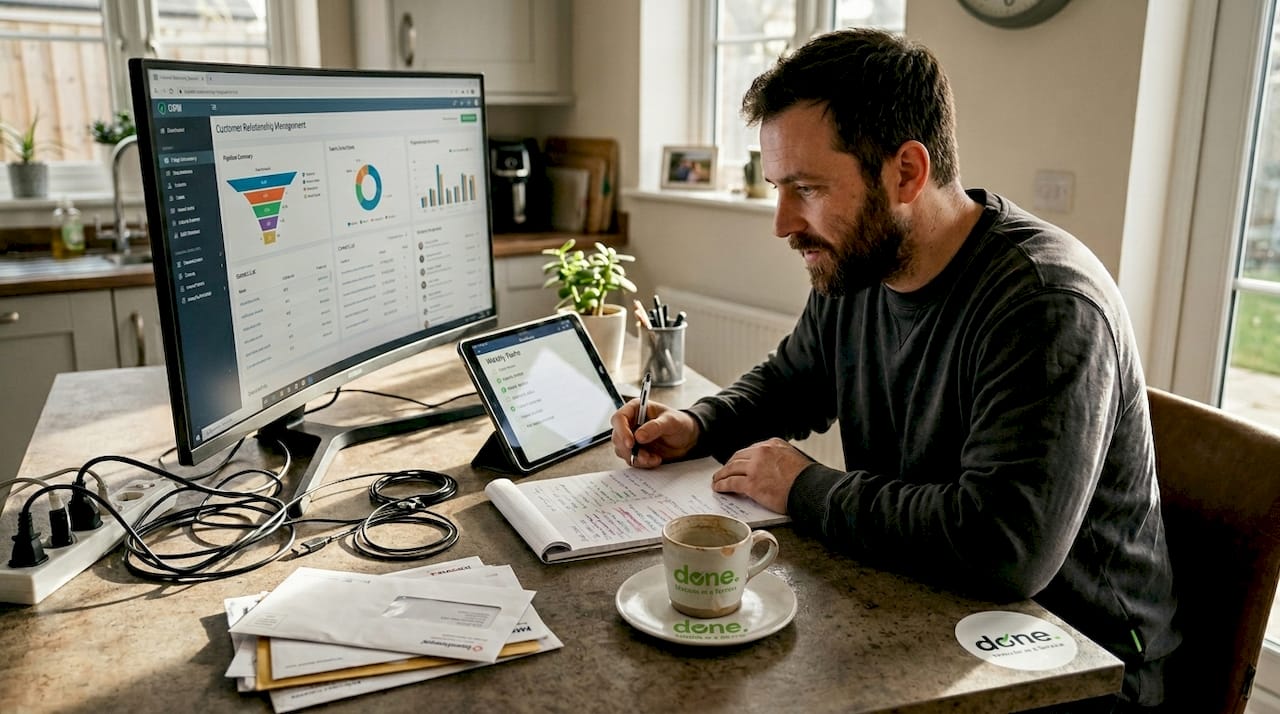
Research consistently shows that best results come from hybrid human-AI models rather than total automation. The efficiency gains of AI are maximised when your team retains control over the moments that matter most: qualifying a prospect, personalising a key message, or deciding whether a lead is genuinely sales-ready.
Setting up a hybrid workflow does not need to be complex. Here is a straightforward process:
- Define your ideal customer profile (ICP): Feed the AI clear criteria, including industry, company size, geography, and intent signals, so it targets the right people from the outset.
- Automate initial outreach: Use AI to send personalised first-touch emails or LinkedIn messages based on the ICP parameters.
- Set a human review checkpoint: Before any lead receives a follow-up or enters your CRM as a qualified prospect, a team member reviews the AI’s assessment.
- Conduct a GDPR audit monthly: Check that data sources, consent records, and processing activities remain compliant. Document everything.
- Refine and iterate: Use response data to improve the AI’s targeting parameters every four to six weeks.
Pro Tip: Assign one specific team member as the lead quality gatekeeper. This person reviews AI-qualified leads before they reach the sales team, which prevents wasted calls and protects your reputation with genuine prospects.
“Full automation works well for repetitive, high-volume tasks like initial outreach sequencing. But when a conversation becomes complex, nuanced, or relationship-dependent, human judgement is irreplaceable. The SMBs thriving with AI understand exactly where that line sits.”
Learning how to transform your website to support these hybrid workflows is also valuable, since your website is often the first destination for leads generated through AI outreach. A well-structured digital marketing workflow ties all these elements together into a coherent, measurable system.
Risks, compliance, and getting real results
Even the best AI lead generation strategy carries risks if it is not managed carefully. Understanding those risks upfront helps you build a process that is both effective and sustainable.
The main risks to watch for include:
- GDPR fines: Processing personal data without a lawful basis or adequate consent mechanisms can result in significant penalties under European law.
- Poor data quality: AI tools are only as good as the data they process. Inaccurate or outdated contact information wastes budget and damages sender reputation.
- Reputation loss: Over-aggressive or poorly targeted outreach frustrates prospects and can harm your brand’s credibility in your market.
- Over-reliance on volume: Chasing quantity at the expense of relevance is a common failure mode. As compliance hurdles persist for European businesses, low-quality outreach creates both regulatory and commercial exposure.
To give you a realistic picture, here is how AI-driven and hybrid approaches compare on key performance indicators:
| Metric | AI-only automation | Hybrid AI with human oversight |
|---|---|---|
| Average response rate | 8 to 12% | 18 to 28% |
| Lead qualification rate | 20 to 30% | 45 to 60% |
| GDPR compliance incidents | Higher risk | Lower risk |
| Cost per qualified lead | Often higher | More efficient over time |
Tracking the right KPIs from the start is essential. Focus on lead qualification rate, cost per qualified lead, conversion rate from lead to meeting, and compliance audit pass rate. These metrics tell you far more than raw outreach volume.
Exploring lead generation fundamentals will help you establish sensible baselines before layering AI onto your process. Run a pilot programme on a small audience segment first, measure results rigorously, and only scale what is demonstrably working.
For European SMBs, the EU trustworthy AI focus is increasingly shaping how regulators and customers view AI adoption. Businesses that demonstrate responsible, transparent AI use gain a genuine competitive advantage. Pairing your tools with robust staff training is equally important; your team needs to understand what the AI is doing and why, not just how to operate the interface. Understanding AI and compliance in the European context will help you build processes that hold up under scrutiny.
A practical perspective: What most guides miss about AI lead generation for SMBs
Most articles about AI lead generation promise results that arrive quickly and scale effortlessly. We have worked with enough SMBs across Europe to know that the reality is quite different, and that is worth saying plainly.
AI does not fix a broken sales funnel. It amplifies what is already there. If your messaging is unclear, your targeting is vague, or your follow-up process is inconsistent, AI will simply accelerate those problems at scale. The businesses that see lasting gains are the ones that start with honest self-assessment, not with a new software subscription.
Timelines matter too. Most SMBs need three to six months of careful configuration, testing, and refinement before AI lead generation genuinely outperforms their previous approach. Guides that promise results within weeks are setting unrealistic expectations. Patience and systematic iteration are the actual competitive advantages here.
We also see businesses underestimate the importance of keeping humans deeply involved, not just at review checkpoints, but in strategy and interpretation. Understanding how AI transforms businesses for European SMEs means recognising that the technology is a tool, not a strategy.
“The uncomfortable truth: AI will not save a broken sales funnel. It only amplifies what is already working, good or bad.”
Build auditability in from day one. Prioritise compliance as a feature, not an afterthought. Start small, measure carefully, and scale only what the data supports. That approach is far less glamorous than the vendor pitch decks suggest, but it is the one that delivers lasting results.
Supercharge your lead generation with expert AI and digital strategy support
Putting these ideas into practice is where many SMBs get stuck. Choosing the right tools, configuring them correctly, staying compliant, and building a hybrid workflow that your team actually uses consistently is a significant undertaking.
At Done.lu, we specialise in helping SMBs across Europe navigate exactly this challenge. Whether you are exploring AI consulting for SMBs for the first time or ready to implement a full AI-powered lead generation system, our team provides hands-on support at every stage. From initial audit through to tool implementation and staff training, we work alongside you to build something that actually delivers qualified leads. Browse our AI tools for SMEs guide or explore our best AI tools guide to find the right starting point for your business. Book a consultation with us and take the first practical step towards smarter, compliant lead generation.
Frequently asked questions
How does AI improve lead generation versus traditional methods?
AI can produce 2 to 4 times higher response rates compared to fully manual approaches by automating personalised outreach at scale, but human oversight remains essential for maintaining lead quality and compliance.
What are the main compliance risks with AI lead generation in Europe?
Non-compliance with GDPR, including inadequate consent records and unclear data processing agreements, can result in substantial fines and lasting reputational damage; always choose platforms with clear audit trails and human review controls built in.
Is full automation or a hybrid human-AI model better for SMBs?
A hybrid human-AI model consistently delivers better results for most SMBs, balancing the efficiency of automation with the judgement and compliance control that human oversight provides.
How do I know if an AI lead gen tool is right for my business?
Look for proven SMB results, clear GDPR readiness documentation, integration with your existing tools, and the ability to review and adjust the AI process at key stages before you commit to scaling.