

Website accessibility guide for Luxembourg SMEs 2026
April 7, 2026
How AI transforms businesses: a guide for SMEs in Europe
April 9, 2026
TL;DR:
- Consistent branding increases revenue and builds trust, recall, and customer loyalty.
- Establishing clear brand foundations before website design prevents costly rework.
- Strategic, measurable branding efforts drive growth more than visual trends or aesthetics.
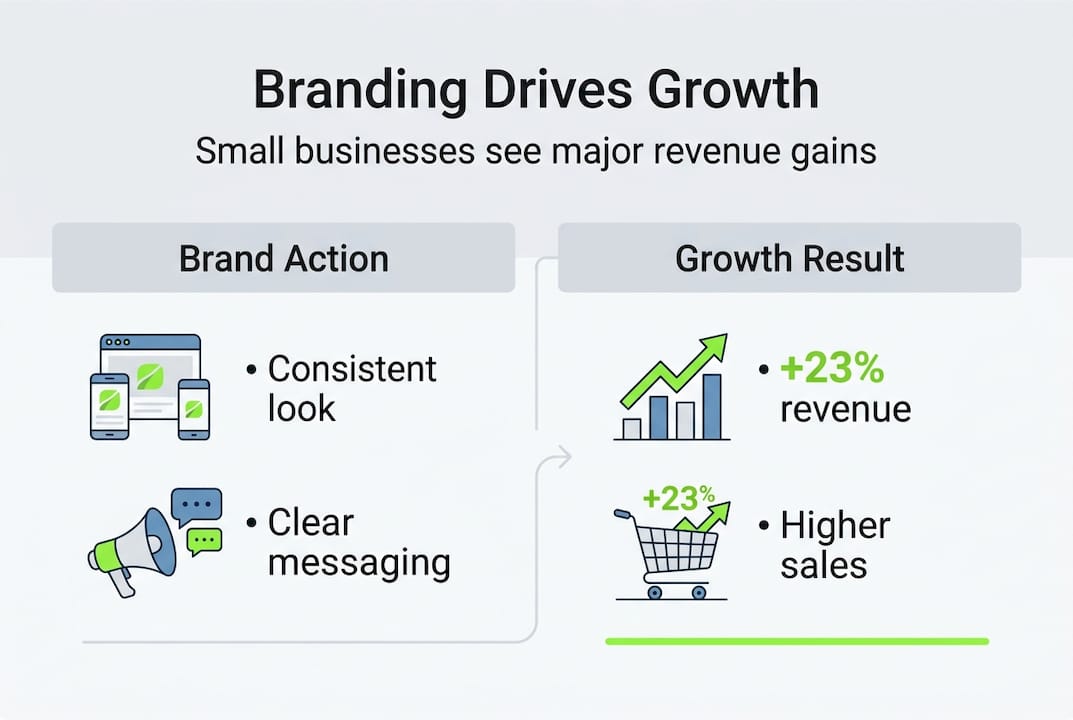
Your website might be live, functional, and full of information, yet still failing to convert visitors into customers. Often, the culprit is inconsistent or unclear branding. When your logo, colours, fonts, and tone of voice pull in different directions, visitors lose confidence in your business before they even read your offer. Consistent branding leads to 23% revenue growth, which means every mismatched button or off-brand headline is quietly costing you sales. This guide walks you through every stage of effective website branding, from laying the foundations to verifying results, so your site becomes a recognisable, trustworthy, and measurable growth tool for your business.
Table of Contents
- Why website branding matters for SMEs
- Preparation: key components for effective branding
- Step by step: building your branded website
- Common pitfalls and how to verify results
- Why most website branding advice misses the mark
- Need help with website branding?
- Frequently asked questions
Key Takeaways
| Point | Details |
|---|---|
| Consistent branding drives growth | Businesses with consistent website branding see up to 23% more revenue. |
| Start with brand essentials | Clarify your mission, values, audience, and visual assets before branding your site. |
| Apply branding step by step | Update your website’s design, content, and structure for a unified brand experience. |
| Avoid common mistakes | Don’t chase trends—focus on strategy, consistency, and tracking real results. |
Why website branding matters for SMEs
Website branding is more than a logo and a colour scheme. It is the entire experience a visitor has when they land on your site: the language you use, the images you choose, the way your navigation feels, and the confidence your design communicates. For small and medium-sized enterprises (SMEs) in Luxembourg and across Europe, getting this right is not optional. It is a direct driver of revenue, customer loyalty, and competitive advantage.
The evidence is clear. Consistent branding increases revenue by 23%, and strategic rebrands can yield sales and conversion growth ranging from 30% to 389%. A bakery that repositioned its visual identity and messaging saw a 30% uplift in sales within months. A workwear supplier that overhauled its e-commerce branding recorded a 389% increase in conversions. These are not outliers; they are what happens when branding aligns with business goals.
The role of web design in branding is often underestimated. Design choices communicate trust signals before a single word is read. A cluttered layout, inconsistent typography, or a colour palette that clashes with your sector norms can push a potential customer away in under three seconds. Conversely, a clean, coherent design tells visitors you are professional, reliable, and worth their attention.
Here is a summary of what strong, consistent website branding delivers:
- Higher trust: Visitors are more likely to enquire or purchase from a site that feels polished and coherent.
- Better recall: Consistent visual and verbal cues make your brand memorable, which matters when buyers return to compare options.
- Improved conversions: Clear calls to action, aligned with your brand voice, reduce friction in the buyer journey.
- Stronger differentiation: In competitive markets, a distinctive brand identity sets you apart from generic competitors.
- Long-term loyalty: Customers who identify with your brand values return more often and refer others.
The impact on business growth from well-executed branding is not just aesthetic. It is strategic. Consider the table below, which illustrates how branding investment translates into measurable outcomes:
| Branding action | Typical outcome |
|---|---|
| Consistent visual identity across site | Up to 23% revenue increase |
| Strategic rebrand with messaging refresh | 30% to 389% conversion growth |
| Aligned brand voice and copy | Higher engagement and lower bounce rate |
| Professional logo and colour palette | Improved first-impression trust scores |
For SMEs, the key insight is that branding is not a luxury reserved for large corporations. It is one of the highest-return investments you can make in your digital presence. Exploring branding strategies for more sales is a practical starting point for understanding how these principles apply to your specific sector.
With the stakes of branding clear, let us see what you need before starting.
Preparation: key components for effective branding
Before you touch your website, you need a solid branding foundation. Rushing into design changes without this groundwork is one of the most common and costly mistakes SMEs make. Defining your brand foundation, which includes your mission, values, target audience, and key competitors, is the essential first step before building any visual system.
Start with your brand mission and values. Your mission is a clear, one or two sentence statement of why your business exists and who it serves. Your values are the principles that guide every decision, from how you write a product description to how you handle a customer complaint. These are not marketing slogans. They are internal compasses that keep your branding coherent over time.
Know your audience and your competitors. Who are your ideal customers? What do they care about? Where do they spend time online? Equally important: what do your competitors look like, and how can your brand occupy a distinct position? This research shapes every visual and verbal choice you make.
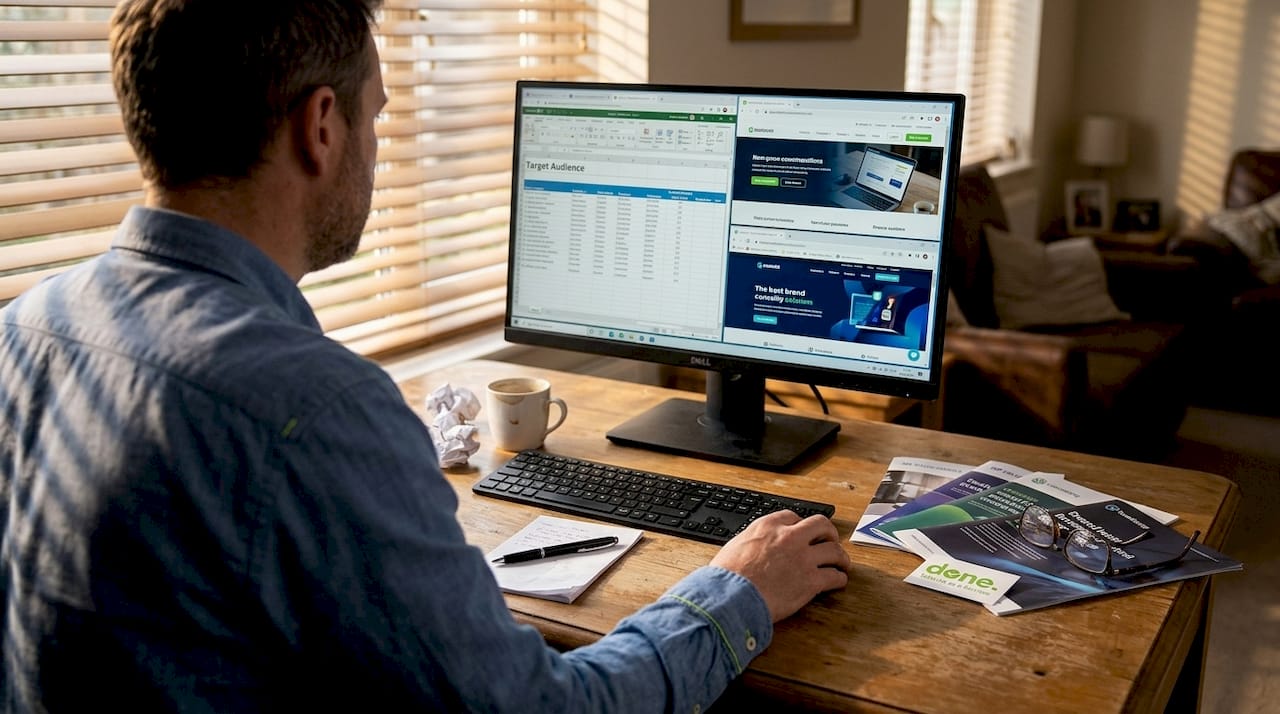
Inventory your visual assets. Before updating your site, gather everything you have: your logo (in all formats), your colour palette (with exact hex codes), your approved fonts, and your image library. If any of these are missing or inconsistent, address them now. A brand style guide, even a simple one-page document, will save you hours of rework later.
Here is a comparison of common branding tools available to SMEs:
| Tool | Best for | Cost |
|---|---|---|
| Canva Brand Kit | Colour, font, and logo management | Free or low cost |
| Coolors.co | Generating and testing colour palettes | Free |
| Google Fonts | Selecting and pairing typography | Free |
| Adobe Illustrator | Professional logo creation | Subscription |
| Notion or Google Docs | Building a written brand style guide | Free |
Develop your brand voice. Your voice is how your brand sounds in writing. Is it formal or conversational? Technical or plain-spoken? Warm or authoritative? Document this clearly, because every page of your website, every button label, and every error message should reflect it. Integrating branding in your digital strategy ensures your voice is consistent across all channels, not just your website.
A useful reference is a website design checklist that covers the key elements to verify before and after applying your brand to a site.
Pro Tip: Do not chase design trends. A colour that is fashionable today may feel dated in eighteen months. Prioritise coherence and alignment with your audience over novelty. A brand that looks slightly understated but feels completely consistent will always outperform one that looks trendy but feels disjointed.
Once your branding foundations are in place, here is the step-by-step process to bring your brand to your website.
Step by step: building your branded website
With your foundations documented, you are ready to apply your brand systematically to your website. This is where strategy becomes visible. Follow these steps in order to avoid gaps and rework.
-
Audit your current site. Before changing anything, review every page. Note where colours, fonts, imagery, and tone of voice are inconsistent. Screenshot examples of what is working and what is not. This audit gives you a clear baseline and prevents you from overlooking problem areas.
-
Prepare your brand assets. Ensure your logo files are in the correct formats (SVG for web, PNG with transparent background), your colour palette is documented with hex codes, and your fonts are licensed for web use. Upload these to a shared folder your designer or developer can access.
-
Update navigation, headers, and footers. These elements appear on every page, so they have the highest impact. Apply your brand colours, fonts, and logo here first. Ensure your navigation labels reflect your brand voice, not generic defaults like “Services” when something more specific would work better.
-
Apply your visual identity consistently. Work through each page type: homepage, about, services, contact, and blog. Replace off-brand images with photography or illustrations that match your visual style. Update button colours, link styles, and icon sets to align with your palette. The role of web design for branding at this stage is to ensure every visual element reinforces the same message.
-
Align your copy and voice. Rewrite headlines, body text, and calls to action using your documented brand voice. Consistent branding leads to 10-20% revenue growth, and much of that consistency comes from language, not just visuals. Every call to action should feel like it was written by the same person, because in effect, it should be.
-
Final check and launch. Use your site launch checklist to verify every page before going live. Check mobile responsiveness, page load speed, and accessibility. Confirm that driving conversions is built into your layout, with clear pathways from landing pages to contact forms or purchase pages.
Pro Tip: Test your updated site with a small group of real customers before a full launch. Ask them one question: “What three words would you use to describe this website?” If their answers match your brand values, you are on track. If not, you have valuable feedback before it matters.
Know when to bring in professional help. If your audit reveals deep structural issues, or if you lack design skills in-house, working with an experienced agency will save time and produce better results than a series of partial fixes.
Branding is not a one-off task. Next, we examine common missteps and how to avoid them.
Common pitfalls and how to verify results
Even well-intentioned branding efforts can go wrong. Knowing the most frequent mistakes in advance helps you avoid them and gives you a framework for reviewing your work objectively.
The most common pitfalls SMEs encounter include:
- Inconsistency across pages: One page uses your brand blue, another uses a slightly different shade. These small differences accumulate and undermine trust. Risks of inconsistency are often invisible until they start affecting conversions.
- No written style guide: Without documentation, every new page or update risks drifting from your brand. A style guide is not bureaucracy; it is protection.
- Chasing visual trends: A website redesigned around a trending aesthetic can feel outdated within a year. Avoid chasing trends; always tie branding decisions to your business goals and your audience’s expectations.
- Ignoring mobile experience: Over half of web traffic is mobile. A brand that looks great on desktop but breaks on a phone is a brand that is losing customers.
- Measuring vanity metrics: Page views and social media likes feel good but tell you little about branding effectiveness. Focus on conversions, revenue, and customer feedback instead.
“65% of businesses rebrand within 7 to 10 years, often because their original brand no longer reflects their growth, market position, or audience.”
Knowing when to rebrand is as important as knowing how. A full rebrand is appropriate when your business has fundamentally changed: new market, new audience, merger, or significant reputation shift. A phased update, adjusting colours, fonts, or messaging incrementally, is better when your brand is broadly sound but needs refreshing. Always align the decision with your business goals, not with what looks new.
To verify that your branding is working, track branding success using these indicators:
- Conversion rate: Are more visitors completing enquiry forms, making purchases, or signing up?
- Bounce rate: Are visitors staying longer and exploring more pages after the rebrand?
- Customer feedback: Are clients using words that reflect your brand values when they describe you?
- Revenue trend: Is there a measurable uplift in the months following a branding update?
The contrast between full rebrands and incremental updates matters here. A phased approach lets you measure the impact of each change rather than guessing which element drove results. This is smarter for SMEs with limited budgets and a need to justify every investment.
Finally, what do experienced branding and digital growth professionals believe most SMEs are missing?
Why most website branding advice misses the mark
Most branding guides focus almost entirely on visual identity: pick a colour palette, choose a font, design a logo. These steps matter, but they represent only the surface of what effective branding actually requires. In our experience working with SMEs across Luxembourg and Europe, the businesses that see real, measurable growth from branding are the ones that treat it as a strategic discipline, not a design exercise.
The uncomfortable truth is that a beautiful website with no clear strategy will underperform a modest-looking site with a sharp, consistent message every time. Clarity about who you serve, what you offer, and why it matters will always drive more conversions than a fashionable colour palette.
We also see too many SMEs attempt a complete overhaul at once, then struggle to measure what actually worked. A phased approach, changing one element at a time and tracking results, gives you real data and reduces risk. This is not timidity; it is precision.
The expert rebranding perspective we consistently share with clients is this: branding success is not measured in compliments about your new logo. It is measured in enquiries, conversions, and revenue. Build your brand around those outcomes, and the aesthetics will follow naturally.
Small businesses in particular benefit more from tighter alignment between their brand message and their customer’s actual needs than from chasing what large brands are doing. Choose substance over surface, and measure everything.
Need help with website branding?
Applying everything in this guide takes time, skill, and the right tools. If you are an SME in Luxembourg or Europe looking to build a brand that genuinely drives growth, Done.lu is here to help.
At Done Web Agency Luxembourg, we specialise in building and refreshing websites that reflect your brand with precision and purpose. From initial audit to full implementation, our team handles website development essentials and delivers custom website branding tailored to your sector, your audience, and your goals. We do not offer generic templates or one-size-fits-all solutions. Every project is built around your specific business objectives, with transparent pricing and a continuous improvement methodology. Get in touch with us today to discuss how we can turn your website into a measurable growth asset.
Frequently asked questions
How often should I update my website’s branding?
Most businesses rebrand every 7-10 years, though you should act sooner if your market shifts significantly, your growth stagnates, or your current brand no longer reflects what your business offers.
Can rebranding my website really increase sales?
Yes. Case studies show sales increases ranging from 30% after a bakery rebrand to 389% conversion growth for a workwear supplier, both driven by strategic, audience-focused rebranding.
What’s the biggest website branding mistake SMEs make?
The most common error is prioritising visual trends over brand strategy. Tie branding to business goals and measure conversions rather than chasing what looks current, because trends fade but a coherent strategy compounds over time.
How do I know if my branding is working?
Monitor conversions and revenue alongside customer feedback. If visitors are converting at higher rates and describing your business using your brand values, your branding is doing its job.