

Role of Web Design in Branding: Building Trust Online
February 26, 2026
Digital Marketing Strategy: 30% Better Results for Luxembourg SMEs
February 28, 2026
Every digital marketing manager knows the struggle of turning website visitors into loyal customers. For e-commerce businesses in Luxembourg competing with European retailers, the difference between stagnation and sale growth comes down to applying the right web design principles. This article breaks down the core web design principles proven to drive conversions, build trust, and create a seamless experience for every shopper, helping you pinpoint where your site can deliver higher sales results.
Table of Contents
- Core Web Design Principles For Businesses
- Types Of Web Design Strategies For Growth
- How Design Influences User Engagement And Sales
- Common Design Mistakes That Hurt Growth
- Measuring Web Design’s ROI In E-Commerce
Key Takeaways
| Point | Details |
|---|---|
| Usability is Crucial | Ensure intuitive navigation to avoid customer frustration and drive conversions. |
| Visual Hierarchy Matters | Use strategic design elements to highlight key offers and calls-to-action. |
| Consistency Builds Trust | Maintain uniform design across all pages to enhance credibility and customer confidence. |
| Performance Impacts Sales | Prioritize site speed and mobile responsiveness to optimize user experience and conversions. |
Core Web Design Principles for Businesses
Your website is your sales representative running 24/7. It needs to work as hard as your team does.
The foundation of every high-performing ecommerce site rests on seven core web design principles that directly impact your bottom line. These aren’t aesthetic guidelines—they’re conversion mechanics.
What Drives Real Results
Usability comes first. When customers arrive at your site, they shouldn’t need to think about where to go or what to click. Intuitive navigation means visitors complete their purchasing goals without frustration. A confused shopper becomes a lost sale.
Visual hierarchy directs attention to what matters. Your most important offers, products, or calls-to-action need to stand out visually. A cluttered homepage dilutes your message. Strategic spacing, sizing, and color guide the eye naturally toward revenue-generating elements.
Consistency builds trust and scalability. Every page should feel like it belongs to the same website—same typography, color scheme, button styles, and navigation patterns. Inconsistent design signals unprofessionalism and makes customers question your credibility.
A cohesive brand experience across your entire site increases customer confidence in purchasing decisions.
Accessibility isn’t just ethical—it expands your market. Users with visual or mobility challenges represent real customers. Proper contrast ratios, keyboard navigation, and alt text for images ensure no potential buyer hits a dead end.
Performance directly affects sales. Studies show that even a one-second delay in load time increases bounce rates. For an ecommerce business in Luxembourg competing with European retailers, slow performance costs you conversions and search ranking positions.
Responsiveness is non-negotiable. Your customers shop on phones, tablets, and desktops. A design that looks perfect on desktop but fails on mobile abandons half your traffic. Mobile-first design means building for smaller screens first, then scaling up.
Feedback mechanisms build buyer confidence. Order confirmations, progress indicators, form validation messages, and live chat options show customers they’re not navigating alone.
The Business Impact
These principles work together as a system, not isolated features. Essential web design elements that focus on conversion create compounding improvements—slightly better usability, clearer hierarchy, and faster loading combine to significantly increase sales.
Here’s how key web design principles impact e-commerce business outcomes:
| Principle | Impact on Business | Typical Challenge |
|---|---|---|
| Usability | Increases conversions | Complex navigation |
| Visual Hierarchy | Drives attention to sales | Cluttered layouts |
| Consistency | Builds brand trust | Mixed styles, colors |
| Accessibility | Expands market share | Lack of alt text |
| Performance | Improves search ranking | Slow page loads |
| Responsiveness | Boosts mobile sales | Unresponsive layouts |
| Feedback Mechanisms | Enhances buyer confidence | Missing confirmations |
For small to medium-sized ecommerce businesses, implementing these principles means:
- Reduced cart abandonment from confusion or frustration
- Higher search ranking from better technical performance
- Improved customer retention through professional appearance
- Increased mobile sales as responsive design captures smartphone shoppers
Pro tip: Audit your current site against these seven principles this week—identify the weakest area (usually performance or mobile responsiveness) and fix that first for immediate conversion gains.
Types of Web Design Strategies for Growth
Not all websites are built the same way. Your strategy determines whether your site becomes a revenue generator or an expensive placeholder.
Successful ecommerce businesses don’t redesign randomly. They follow strategic web design approaches tailored to specific business goals. Before touching the design, you need clarity on what you’re actually trying to achieve.
Strategy Starts with Goals
Define your primary objective first. Are you driving direct sales, capturing leads, building brand awareness, or supporting customer service? Each goal demands different design decisions.
Know your audience inside and out. Where do your customers live? What devices do they use? What problems are they solving? A Luxembourg-based ecommerce store selling to other European retailers needs different design choices than one targeting local consumers.
Analyze what your competitors are doing. You don’t copy them—you identify gaps they’re missing and opportunities to differentiate your experience.
Core Design Strategies That Work
Mobile-first design isn’t optional anymore. Build for smartphones first, then scale up to tablets and desktops. Your customers expect the same seamless experience everywhere.
SEO integration means design choices that search engines reward. Fast load times, semantic HTML structure, and mobile responsiveness all boost rankings and traffic.
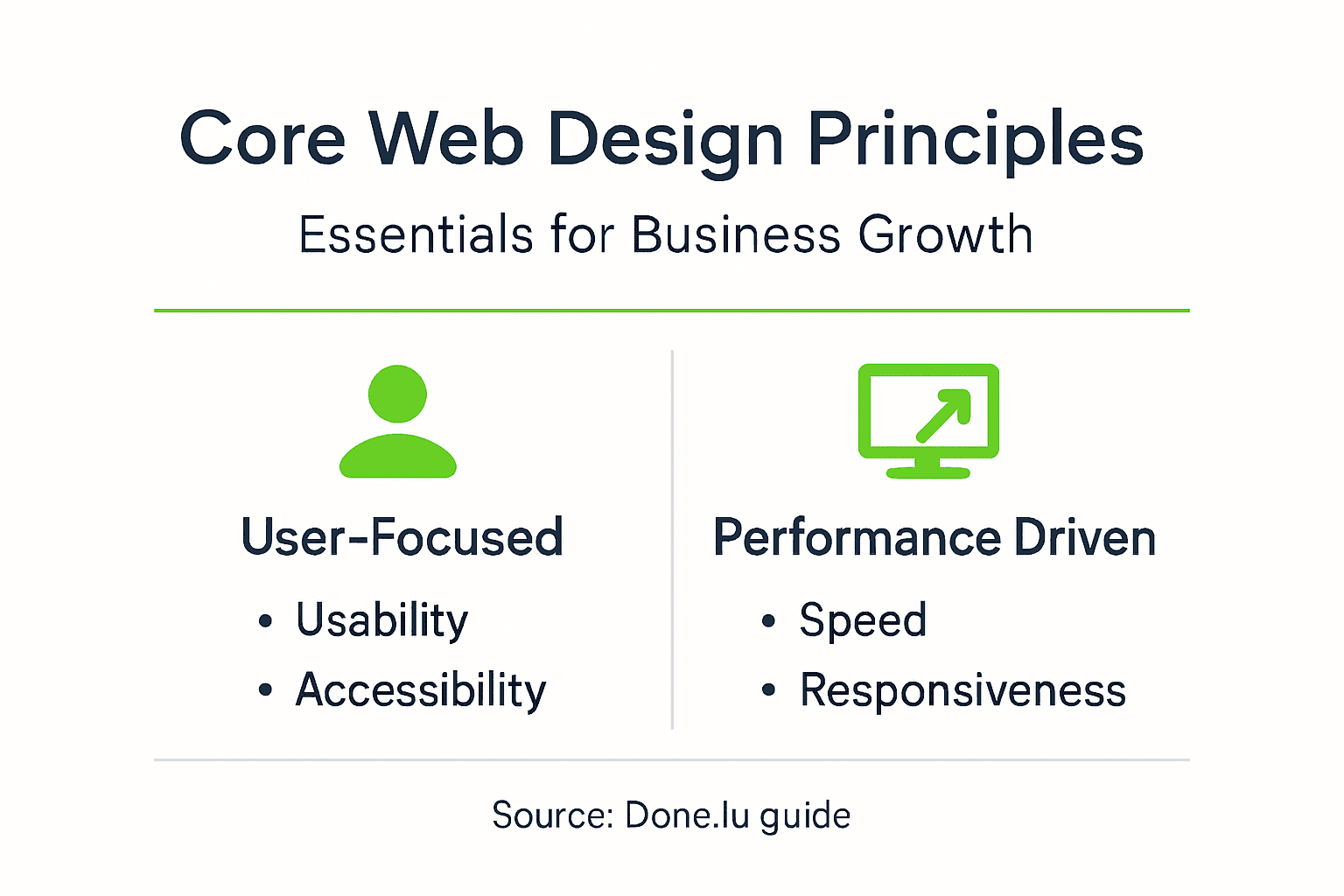
Personalization shows different content to different visitors. A returning customer sees tailored product recommendations while a first-time visitor sees your value proposition. This increases engagement and conversion rates.
Minimalist design removes friction. Every element serves a purpose. Cluttered pages overwhelm visitors and dilute your message.
Accessibility-first design ensures no customer hits a barrier. This includes color contrast, keyboard navigation, and clear labeling. It expands your market reach while improving the experience for everyone.
The best design strategy aligns with your specific business goals and your audience’s actual behavior, not design trends.
Growth-Driven Design Approach
Growth-driven design combines strategy with continuous optimization. Rather than launching a “perfect” site and hoping it works, you launch, test, measure, and refine. This iterative approach catches what actually converts for your business.
Implement these strategies in order:
- Define your business goal and success metrics
- Identify your target audience and their needs
- Choose strategies that align with both
- Design with those strategies in mind
- Launch and measure performance
- Optimize based on real user behavior
Pro tip: Choose one strategy to focus on first—usually mobile responsiveness or page speed for ecommerce—then add others as you see results from that initial investment.
A quick comparison of web design strategies and their primary advantages:
| Strategy | Best Fit For | Main Advantage |
|---|---|---|
| Mobile-First Design | All ecommerce sites | Captures growing mobile traffic |
| SEO Integration | Revenue-driven brands | Boosts organic discoverability |
| Personalization | Repeat customers | Increases engagement rate |
| Minimalist Design | Startups/small teams | Reduces friction, faster UX |
| Accessibility-First | Broad markets | Enhances customer inclusivity |
| Growth-Driven Design | Scaling businesses | Continuous optimization |
How Design Influences User Engagement and Sales
Your website design is not decoration. Every color choice, button placement, and navigation pattern directly impacts whether visitors stay or leave.
The connection between design quality and sales is measurable. User-friendly interfaces increase conversion rates by removing friction from the shopping experience. Poor design kills sales before customers even see your products.
Navigation: The Make-or-Break Element
Customers shouldn’t think about how to find what they want. Intuitive navigation means visitors click naturally toward products or information without confusion. Complex menus and buried links send people straight to your competitors.
A clear, logical structure reduces cognitive load. Visitors spend mental energy finding products instead of understanding your site’s layout. Fewer clicks to checkout directly translate to more completed purchases.
Simplified navigation also increases time on site. The longer engaged visitors stay, the more likely they purchase and return.
Visual Appeal Matters More Than You Think
First impressions happen in milliseconds. Clean, professional design builds instant trust. Outdated fonts, clashing colors, and poor image quality signal that your business might cut corners on product quality too.
Consistent visual design across all pages reinforces professionalism. Visitors recognize your brand immediately, whether they’re viewing product pages or checkout flows.
Color psychology influences behavior. Strategic color choices guide attention and trigger emotional responses that encourage action.
Performance: The Silent Salesman
Page speed is a conversion killer. A one-second delay increases bounce rates significantly. Your Luxembourg customers expect European-standard performance—fast loading on any device, anywhere.

Faster pages also rank better in search results. Design choices that optimize performance boost both user experience and visibility.
Design Elements That Drive Sales
These specific design features directly improve conversions:
- Clear call-to-action buttons that stand out visually
- Product images that load quickly and display clearly
- Simplified checkout processes with minimal form fields
- Trust signals like reviews, security badges, and guarantees
- Mobile-optimized layouts that function perfectly on phones
Good design removes barriers between customers and purchases, making buying easier than leaving.
Engagement Creates Loyalty
Design elements focused on conversion keep customers coming back. Personalized recommendations, easy reordering, and responsive customer support built into the design experience foster long-term relationships.
Engaged customers become repeat buyers and brand advocates. They recommend you to others, expanding your reach without additional marketing spend.
Pro tip: Test one design change weekly—button color, checkout field reduction, or hero image—and measure its impact on conversion rate to prove which changes actually drive sales.
Common Design Mistakes That Hurt Growth
Many ecommerce sites fail silently. Visitors arrive, see problems immediately, and leave without buying anything. These aren’t accidents—they’re predictable design mistakes.
Understanding web design flaws that damage engagement helps you avoid losing sales to preventable issues. Every mistake costs real revenue.
Overloaded Content Kills Conversions
Too much information at once overwhelms visitors. Dense paragraphs, competing visuals, and unclear messaging force customers to work harder to understand your value. They won’t.
Cluttered homepages dilute your strongest selling points. When everything screams for attention, nothing gets it. Visitors bounce within seconds.
Remove anything that doesn’t serve your primary goal—whether that’s selling products or capturing leads. Every element must earn its space.
Poor Mobile Experience Loses Half Your Sales
If your site doesn’t function flawlessly on smartphones, you’re leaving money on the table. Mobile traffic now exceeds desktop for most ecommerce businesses. A poor mobile experience isn’t a nice-to-fix problem—it’s a revenue killer.
Unresponsive layouts break on smaller screens. Buttons become impossible to click. Images take forever to load. Customers switch to a competitor’s mobile-optimized site in seconds.
Inaccessible Design Excludes Real Customers
Poor color contrast makes text unreadable for visitors with vision challenges. Missing alt text on images breaks screen readers. Keyboard navigation fails for users who can’t use a mouse.
These aren’t edge cases—they’re significant market segments. Accessibility problems lock out paying customers while hurting your search rankings.
Navigation Confusion Drives People Away
Visitors should find products without thinking. Unclear menus, confusing category names, and broken search functions create friction that leads to abandonment.
Complex navigation structures frustrate customers. When the path to purchase isn’t obvious, visitors leave and don’t come back.
Design Mistakes That Hurt Growth Most
These issues appear repeatedly on struggling ecommerce sites:
- Auto-playing videos or music that annoy visitors
- Excessive pop-ups blocking content immediately
- Outdated design that signals an untrustworthy business
- Unclear calls-to-action that confuse visitor intent
- Slow loading times that increase bounce rates
- Missing trust signals like security badges or reviews
Design mistakes compound over time—a slightly confusing checkout plus slow performance plus poor mobile design equals massive revenue loss.
Test Before Assuming
Your assumptions about design are usually wrong. What you think looks good might confuse actual customers. Usability testing reveals what really works.
Watch real users navigate your site. Where do they get stuck? What confuses them? These observations guide improvements that actually increase sales.
Pro tip: Record five real customer sessions using a tool like Hotjar or Microsoft Clarity to identify your top three design problems, then fix those first before redesigning everything.
Measuring Web Design’s ROI in E-Commerce
You can’t manage what you don’t measure. If you can’t prove your website redesign increased sales, you’ll struggle to justify future investments.
Design ROI isn’t theoretical—it’s calculable. Design impact on profitability is measurable through systematic evaluation of user behavior and business performance. Every design change should have a measurable business outcome.
Start with Baseline Metrics
Before redesigning, establish what’s happening now. Capture your current performance so you can prove improvement afterward.
Key baseline metrics include conversion rate, average order value, cart abandonment rate, and traffic sources. Document these precisely—“we get a lot of visitors” doesn’t cut it.
Without baseline data, you can’t calculate ROI at all. You need numbers to compare before and after.
Track the Metrics That Matter
Not all metrics are equally valuable. Focus on numbers directly connected to revenue, not vanity metrics like page views.
Most important ecommerce metrics:
- Conversion rate: percentage of visitors who purchase
- Average order value: total revenue divided by number of orders
- Cart abandonment rate: percentage of carts left without purchase
- Customer acquisition cost: total marketing spend divided by new customers
- Customer lifetime value: average revenue per customer over time
- Page load time: seconds until content is visible
- Mobile conversion rate: purchases from mobile vs. desktop users
Connect Design Changes to Revenue
When you improve page speed by reducing image sizes, measure the conversion rate increase that follows. When you simplify checkout, track how abandonment rates decline.
Each design change should have an associated metric. This creates accountability and proves design value.
Calculate Your Design ROI
Simple ROI formula: (Revenue Increase – Design Investment) ÷ Design Investment × 100.
If redesigning your site costs $5,000 and it increases monthly revenue by $2,000, your annual revenue gain is $24,000. Your ROI is approximately 380% in year one.
Real ROI measurement transforms design from a cost center into a profit center that justifies ongoing investment.
Use Analytics Tools Properly
Google Analytics 4, Hotjar, and similar tools reveal how visitors behave. Heatmaps show where people click. Session recordings show where they get stuck.
This data directly connects design improvements to business outcomes. You see the problem, fix it, and measure the result.
Measure Continuously
Design work never truly ends. Launch improvements, measure impact, identify new opportunities. Continuous testing compounds improvements over months and years.
A 2% conversion increase seems small. Over a year, it transforms your profitability.
Pro tip: Set up Google Analytics 4 goals for key actions—product purchase, lead form submission, newsletter signup—then track how design improvements move these metrics weekly.
Unlock Business Growth with Expert Web Design Solutions
The article highlights critical challenges like poor usability, slow performance, and unresponsive design that directly harm ecommerce growth. If your site struggles with confusing navigation, slow load times, or lacks a clear visual hierarchy you are likely losing valuable customers every day. These pain points demand immediate action through strategic web design that enhances usability, boosts conversions, and expands your reach.
At Done.lu, we specialize in crafting tailored, fully responsive websites using growth-driven design methodologies proven to increase sales and user engagement. Our expertise in improving performance, accessibility, and SEO integration lets your business compete confidently in Luxembourg and across Europe. Experience the difference a professional, customer-centric website makes by partnering with our digital agency focused on transforming your online presence.
Take the first step towards turning your website into a powerful sales engine. Visit Done.lu now to explore how our web design and development services deliver measurable growth. Don’t wait for lost sales to add up act today and see your ecommerce business thrive with expert support tailored to your unique goals.
Frequently Asked Questions
What are the core web design principles that impact business growth?
The core web design principles include usability, visual hierarchy, consistency, accessibility, performance, responsiveness, and feedback mechanisms. These elements work together to enhance user experience and drive conversions.
How does website performance affect sales in e-commerce?
Website performance is critical; even a one-second delay in load time can significantly increase bounce rates, resulting in lost potential sales. A fast-loading website enhances user experience and can improve search rankings, ultimately boosting sales.
What role does mobile responsiveness play in web design?
Mobile responsiveness ensures that your website functions effectively across devices, capturing traffic from smartphone and tablet users. A mobile-friendly design can lead to increased engagement and higher sales from mobile shoppers.
How can I measure the impact of web design changes on my business?
To measure the impact, establish baseline metrics such as conversion rate, average order value, and cart abandonment rate before making changes. After implementing design improvements, track these metrics to evaluate how design influences business outcomes.