

Digital marketing advantages for Luxembourg SMEs in 2026
March 6, 2026
How to generate leads online: practical guide for Luxembourg SMEs
March 8, 2026
Many project managers still think their role is just about ticking boxes and tracking tasks. In reality, effective project management integrates risk management, communication, and methodology selection far beyond simple scheduling. For SMEs in Luxembourg, mastering this strategic function transforms how web development projects deliver quality, meet deadlines, and drive business growth. This guide reveals practical methodologies, AI-driven tools, and leadership strategies that turn project management into your competitive advantage.
Table of Contents
- Introduction To Project Management In Web Development
- The Evolving Role Of Project Management In Web Development
- Comparing Project Management Methodologies For Web Development
- Why Project Management Is Critical For Quality, User Experience, And Delivery
- Common Misconceptions About Project Management In Web Development
- Implementing Effective Project Management Practices In SMEs
- Conclusion And Strategic Takeaways For SMEs
- Discover Expert Web Development Solutions For SMEs In Luxembourg
Key takeaways
| Point | Details |
|---|---|
| Strategic integration | Project management combines methodology, technology, and leadership skills to drive successful delivery. |
| Hybrid advantage | Balanced approaches offer flexibility and control tailored to SME constraints and web project complexity. |
| AI automation impact | AI tools reduce delays by 20% and cut manual reporting by 30%, freeing managers for strategic work. |
| Leadership matters | Communication and emotional intelligence differentiate successful project outcomes in web development. |
| Misconception risks | Viewing project management as administrative overhead limits project success and business value. |
Introduction to project management in web development
Project management in web development involves coordinating people, processes, and technology to deliver digital products that meet quality standards, timelines, and budgets. It’s not just about Gantt charts or status meetings. For SMEs, effective project management integrates risk management, communication, methodology selection, and continuous improvement across every stage of website creation.
SMEs face distinct challenges that make project management crucial:
- Limited budgets demand efficient resource allocation without waste
- Small teams require clear communication to avoid duplication or gaps
- Tight deadlines need proactive risk management to prevent delays
- Evolving client requirements call for adaptable methodologies
- Quality expectations must balance against cost constraints
Without structured project management, SME web projects often suffer from scope creep, missed deadlines, and budget overruns. A strategic approach coordinates stakeholders, manages expectations, and ensures technical teams deliver value aligned with business goals.
The integrated role of methodology, communication, and technology creates a framework where each element reinforces the others. Methodology provides structure, communication ensures alignment, and technology enables efficiency. Together, they transform web development from chaotic execution into predictable delivery.
The evolving role of project management in web development
The 2026 project management landscape looks radically different from five years ago. AI-powered tools automate routine tasks, allowing project managers to focus on strategic and creative decisions in web development projects. This shift elevates the profession from administrative coordination to strategic leadership.
AI and automation deliver measurable improvements:
- Schedule accuracy improves and delays reduce by 20% through historical data analysis
- Risk prediction becomes proactive rather than reactive
- Manual reporting tasks drop by 30%, freeing time for stakeholder engagement
- Resource allocation optimises based on real-time project data
Yet technology alone doesn’t guarantee success. Soft skills like emotional intelligence, leadership, and communication are increasingly recognised as critical differentiators in successful project management. Technical tools handle the mechanics, but human skills navigate complexity, resolve conflicts, and inspire teams.
“The most effective project managers in 2026 combine AI-driven insights with emotional intelligence to lead teams through uncertainty and change.”
For SME web projects, this evolution means project managers become strategic partners who:
- Translate business objectives into technical requirements
- Balance stakeholder expectations with realistic constraints
- Foster team collaboration and motivation
- Guide methodology selection based on project characteristics
- Drive website transformation strategies that generate business results
Pro Tip: Invest in developing your project managers’ leadership and communication capabilities alongside technical skills. The combination creates exponentially better outcomes than either skill set alone.
Comparing project management methodologies for web development
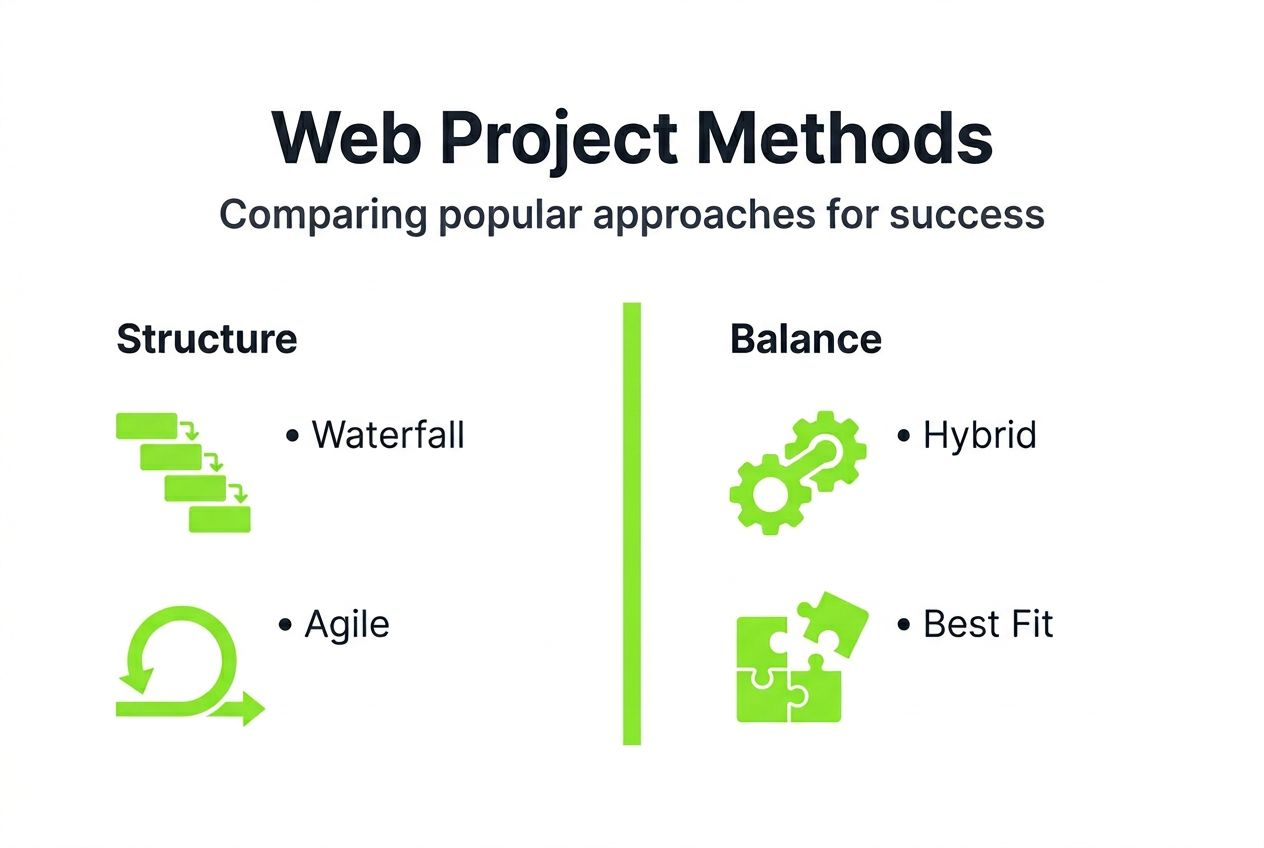
Selecting the right methodology shapes your project’s trajectory from day one. Waterfall, Agile, and Hybrid approaches each suit different SME web project contexts.
Waterfall methodology follows sequential phases: requirements, design, development, testing, deployment. Each phase completes before the next begins. This approach works well for projects with fixed requirements, regulatory constraints, or when comprehensive documentation matters. However, it struggles with changing requirements and delays feedback until late stages.

Agile methodology emphasises iterative development, continuous feedback, and adaptability. Teams work in short sprints, delivering incremental value and adjusting based on stakeholder input. Agile excels when requirements evolve, user feedback drives design, or speed to market matters. The trade-off comes in potentially less predictability and lighter documentation.
Hybrid methodology combines structured planning from Waterfall with Agile’s flexibility. Hybrid approaches balance adaptability and structure for better project outcomes in digital and web projects. This balance particularly suits SMEs navigating both fixed constraints and evolving needs.
| Methodology | Best for | Flexibility | Predictability | Stakeholder engagement |
|---|---|---|---|---|
| Waterfall | Fixed requirements, compliance needs | Low | High | Primarily at milestones |
| Agile | Evolving requirements, user-centric design | High | Medium | Continuous throughout |
| Hybrid | Mixed requirements, balanced control | Medium-High | Medium-High | Regular and structured |
A case study of hybrid project management showed improvements in compliance with delivery deadlines and stakeholder satisfaction, with on-time delivery improved by 25%. The approach allowed teams to plan strategically whilst adapting tactically to emerging challenges.
For custom web design projects, hybrid methodologies enable upfront planning for brand guidelines and technical architecture whilst remaining flexible for user experience refinements based on testing.
Pro Tip: Choose methodology based on your project’s complexity and resource profile, not industry trends. A small brochure website rarely needs full Agile ceremonies, whilst a complex e-commerce platform benefits from iterative development.
Why project management is critical for quality, user experience, and delivery
Project management directly impacts the three dimensions that define web development success: quality, user experience, and delivery performance.
User experience suffers dramatically without project management discipline. Over 70% of users abandon websites that offer poor usability, making project management with a UX focus essential for web development success. Effective project managers:
- Prioritise usability testing and feedback integration
- Allocate resources to UX research and iteration
- Balance aesthetic desires with functional requirements
- Ensure accessibility standards receive attention
- Coordinate design and development teams for consistent experiences
“Quality in web development isn’t accidental. It results from deliberate project management practices that build testing, reviews, and stakeholder feedback into every stage.”
Delivery performance separates successful SME projects from troubled ones. Project management provides the structure to:
- Set realistic timelines based on team capacity and complexity
- Identify risks before they become delays
- Maintain budget discipline through resource tracking
- Communicate progress transparently to stakeholders
- Adjust plans proactively when circumstances change
Quality assurance depends on systematic checks embedded throughout development. Project managers ensure code reviews happen, testing covers key scenarios, and technical debt doesn’t accumulate. They create the conditions where developers can focus on craftsmanship rather than firefighting.
Business impact follows naturally from quality delivery. Satisfied clients return for additional projects. Improved website navigability increases conversion rates. On-time launches capture market opportunities. Budget adherence protects profitability.
Common misconceptions about project management in web development
Several persistent myths limit how SMEs approach project management in web projects. Correcting these misconceptions unlocks better outcomes.
-
Project management is just scheduling and tracking tasks. Reality: Effective project management is a strategic function that integrates risk management, communication, methodology selection, and continuous improvement beyond simple scheduling. It shapes project direction, not just documents progress.
-
Agile is always the best methodology for web projects. Reality: Agile suits certain contexts brilliantly but struggles with fixed-scope contracts, regulatory requirements, or teams lacking Agile experience. Hybrid approaches often serve SMEs better by combining structure with flexibility.
-
Project management is administrative overhead. Reality: Project management creates value by preventing costly mistakes, reducing rework, improving team coordination, and ensuring deliverables meet business needs. The cost of poor project management far exceeds investment in proper practices.
-
Technology replaces the need for project managers. Reality: AI and automation handle routine tasks, but strategic decisions, stakeholder management, and team leadership require human judgement and emotional intelligence. Technology empowers project managers rather than replacing them.
-
Successful projects don’t need formal project management. Reality: Small successes sometimes happen despite poor practices, but consistent delivery at scale requires systematic approaches. As web development fundamentals grow more complex, informal coordination breaks down.
Understanding these realities helps SMEs invest appropriately in project management capabilities rather than treating them as optional luxuries.
Implementing effective project management practices in SMEs
Improving your web development project management follows a systematic path tailored to SME constraints and opportunities.
-
Assess current practices honestly. Document how you currently manage projects: methodology, tools, communication patterns, success metrics. Identify gaps between current state and desired outcomes. Survey team members and stakeholders for their perspectives.
-
Select appropriate methodology. Based on project characteristics, choose Waterfall, Agile, or Hybrid approaches. Consider requirements stability, stakeholder availability, team experience, and regulatory needs. Start with pilot projects before organisation-wide adoption.
-
Adopt AI and automation tools. Implement project management platforms with AI capabilities for scheduling, risk prediction, and reporting. Start with tools addressing your biggest pain points. Train teams thoroughly on new technologies.
-
Enhance communication structures. Establish regular stakeholder check-ins with clear agendas. Create documentation standards everyone follows. Use collaborative tools that maintain transparency. Build feedback loops at every project stage.
-
Develop project manager capabilities. Invest in training covering both technical skills and soft skills. Focus on leadership development, conflict resolution, and strategic thinking. Encourage continuous learning through certifications and workshops.
-
Monitor and iterate continuously. Track metrics like schedule adherence, budget variance, stakeholder satisfaction, and quality indicators. Review lessons learned after each project. Adapt processes based on what works and what doesn’t.
Common pitfalls to avoid:
- Rigidly applying one methodology without adaptation to project context
- Focusing exclusively on tools whilst neglecting leadership development
- Implementing changes without team buy-in or training
- Ignoring feedback from team members about process pain points
- Failing to celebrate successes and recognise improvement
For comprehensive guidance, explore resources on website project planning workflows, navigability improvements, and step-by-step web design processes.
Pro Tip: Regularly revisit your methodology and technology choices as projects evolve and your team matures. What works for a five-person team differs from what a fifteen-person team needs.
Conclusion and strategic takeaways for SMEs
Project management stands at the centre of successful web development, determining whether projects deliver quality results on time and within budget. The triple pillars of methodology, technology, and human factors work together to create the conditions for consistent success.
For Luxembourg SMEs, hybrid methodologies offer the balanced flexibility and structure that match your constraints and opportunities. AI integration transforms routine tasks into strategic time, reducing delays and improving predictions. Yet leadership, communication, and emotional intelligence remain the differentiators that technology cannot replace.
As you move forward, assess your current practices honestly, select methodologies matching your project characteristics, and invest in both tools and people development. The organisations that thrive in 2026 recognise project management as strategic capability, not administrative overhead.
Discover expert web development solutions for SMEs in Luxembourg
Applying these project management insights transforms theory into delivered websites that drive business results. Done Web Agency Luxembourg brings proven expertise helping SMEs navigate web development complexity with structured methodologies, clear communication, and quality outcomes.

Whether you’re exploring what web development involves, considering why investing in web development makes strategic sense, or seeking custom web development benefits tailored to your business, Done delivers solutions designed for SME timelines and budgets. Our team combines technical excellence with project management discipline to ensure your digital projects succeed.
Visit Done.lu to discover how expert guidance and proven practices can elevate your web development outcomes.
FAQ
What is the role of AI in modern project management for web development?
AI automates routine tasks by 30%, allowing managers to focus on strategic activities like stakeholder alignment and creative problem-solving. It analyses historical project data to improve schedule accuracy, predict risks proactively, and optimise resource allocation in real time.
How do hybrid project management methodologies benefit SME web projects?
Hybrid methodologies balance flexibility with structured planning, improving delivery and stakeholder satisfaction. They allow strategic planning for fixed constraints whilst adapting tactically to emerging requirements, making them ideal for SMEs navigating both compliance needs and evolving business goals.
What common mistakes should SMEs avoid in web development project management?
Avoid over-reliance on single methodologies without adapting to project context or team capabilities. Invest equally in leadership and communication skills, not just technical tools. Leverage AI automation to eliminate routine reporting and scheduling tasks, freeing your team for strategic work that drives value.
How can SMEs measure the success of their web development project management?
Track delivery metrics including adherence to deadlines, budget variance, and scope changes throughout the project lifecycle. Assess user experience through feedback surveys, usability testing results, and abandonment rates post-launch. Monitor stakeholder satisfaction scores and team velocity to identify improvement opportunities for future projects.