

How AI boosts digital marketing for European SMEs
March 21, 2026
Why website maintenance matters for Luxembourg SMEs
March 23, 2026
Small and medium enterprises across Europe face mounting pressure to compete digitally whilst managing tight budgets and limited resources. The gap between ambitious marketing goals and operational capacity continues to widen, leaving many SMEs struggling to keep pace with larger competitors. AI tools offer a practical solution to this challenge, enabling businesses to enhance digital marketing effectiveness and streamline workflows without massive investment. This guide walks you through assessing your readiness, selecting appropriate tools, implementing them successfully, and overcoming common obstacles to achieve measurable digital transformation.
Table of Contents
- Key takeaways
- Understanding your current digital capabilities and resources
- Selecting the right AI tools for your SME’s digital marketing and automation needs
- Implementing AI tools effectively to optimise workflows and digital marketing
- Troubleshooting common challenges and ensuring ethical use of AI tools
- Enhance your digital journey with Done’s expert services
- What are AI tools, and how can they benefit my SME?
Key Takeaways
| Point | Details |
|---|---|
| Digital readiness assessment | Before selecting any AI tool, assess your SME’s current digital maturity and identify skill gaps to ensure AI complements solid foundations. |
| Stakeholder engagement | Involve key stakeholders from marketing, operations and IT early to build consensus and spot resistance points before implementation. |
| Integration focus | Choose tools that integrate with your existing CRM, website platform and email system to avoid data silos and duplicate work. |
| Agile culture | Adopt an agile culture with experimentation and learning from failures to maximise adoption and successful digital transformation. |
Understanding your current digital capabilities and resources
Before selecting any AI tool, you need a clear picture of where your SME stands digitally. Digital maturity levels range from basic digital presence to advanced data-driven operations. Most European SMEs sit somewhere in the middle, with functional websites and social media but limited automation or analytics integration.
Assess your workforce skills honestly. Do your marketing team members understand data analytics? Can your operations staff adapt to new software quickly? Digital transformation enablers include a skilled workforce capable of working alongside AI tools, not just technical infrastructure. Identify specific skill gaps now rather than discovering them mid-implementation.
Organisational culture plays a massive role in AI adoption success. Agile management approaches that embrace experimentation and learning from failures create fertile ground for AI tools. Resistance to change remains one of the biggest barriers, alongside resource shortages. If your team views new technology as threatening rather than enabling, you will struggle regardless of which tools you choose.
Resource requirements extend beyond software subscriptions. Budget for training time, potential integration costs with existing systems, and ongoing support. Many SMEs underestimate the human resources needed to maximise AI tool benefits. A digital marketing strategy aligned with available resources prevents overextension and ensures sustainable adoption.
Why does upfront assessment matter so much? Because AI tools amplify existing capabilities rather than replacing fundamental business processes. If your data collection practices are inconsistent or your marketing goals remain vague, AI will simply automate confusion faster. Clear digital marketing advantages emerge when tools enhance solid foundations.
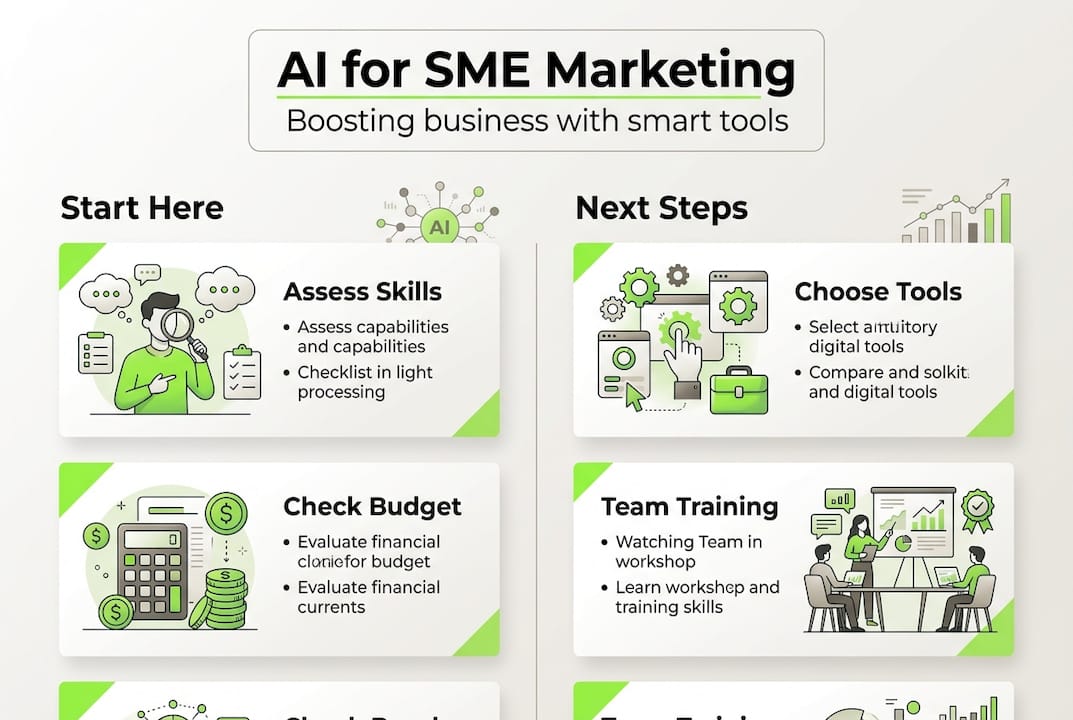
Pro Tip: Involve key stakeholders from marketing, operations, and IT early in your assessment process to build consensus and identify potential resistance points before they derail implementation.
Selecting the right AI tools for your SME’s digital marketing and automation needs
AI tools for SMEs fall into several practical categories. Customer engagement tools include chatbots and personalisation engines that improve website interactions. Content generation platforms assist with copywriting, social media posts, and email campaigns. Analytics tools transform raw data into actionable insights about customer behaviour and campaign performance. Email marketing automation manages sequences, segmentation, and timing based on user actions. Workflow automation handles repetitive tasks across departments, freeing staff for strategic work.
Evaluating tools requires looking beyond flashy features to practical fit. Integration ease matters enormously because disconnected tools create data silos and duplicate work. Can the tool connect with your existing CRM, website platform, and email system? Cost structures vary widely, from per-user subscriptions to usage-based pricing. Scalability ensures the tool grows with your business rather than requiring replacement as you expand.
Support quality separates frustrating experiences from smooth implementations. Does the vendor offer onboarding assistance, training resources, and responsive troubleshooting? Compliance with GDPR and other privacy regulations is non-negotiable for European SMEs. Verify that any tool you consider handles data appropriately and provides necessary documentation.
| Tool Category | Example Tools | Best For | Typical Cost |
|---|---|---|---|
| Customer Engagement | Intercom, Drift | Real-time chat, lead qualification | €50-200/month |
| Content Generation | Jasper, Copy.ai | Blog posts, social media, email copy | €30-100/month |
| Email Marketing | Mailchimp, ActiveCampaign | Automated sequences, segmentation | €20-150/month |
| Analytics | Google Analytics 4, Mixpanel | User behaviour, conversion tracking | Free-€200/month |
| Workflow Automation | Zapier, Make | Cross-platform task automation | €20-100/month |
Research shows 58% of European SMEs adopted AI for customer engagement, data analysis, and email marketing. These aren’t experimental technologies but proven applications delivering measurable results. Start with one category addressing your biggest pain point rather than attempting comprehensive transformation immediately.
Advanced SMEs can explore combining AI with IoT sensors and Big Data Analytics for revenue growth opportunities. A retail business might use foot traffic sensors with AI analytics to optimise staffing and inventory. A service provider could analyse customer interaction patterns to predict churn and trigger retention campaigns. These integrations require higher digital maturity but offer significant competitive advantages.
Marketing automation basics remain accessible to most SMEs, whilst sophisticated digital marketing workflows build on these foundations progressively.
Pro Tip: Prioritise tools offering free trials or freemium tiers to test functionality with your actual data and workflows before committing to annual contracts.
Implementing AI tools effectively to optimise workflows and digital marketing
Successful implementation starts well before software installation. Prepare your team through targeted training focused on practical use cases rather than technical specifications. Marketing staff need to understand how AI-generated insights inform campaign decisions, not how algorithms work mathematically. Create clear data governance policies covering collection, storage, access, and usage to prevent privacy violations and ensure consistency.

GDPR compliance requires explicit attention during AI tool setup. Configure data retention periods, consent mechanisms, and access controls according to regulations. Many tools offer compliance features, but you must activate and monitor them properly. Document your data processing activities as required by privacy laws.
Follow this implementation sequence for best results:
- Launch a pilot project with one team or department using the new AI tool for a specific, measurable objective
- Establish feedback loops where users report issues, successes, and improvement ideas weekly
- Measure results against predefined KPIs like time saved, conversion rate improvements, or lead quality increases
- Refine processes based on pilot learnings before expanding to additional teams
- Scale gradually, adding functionality or users in phases rather than all at once
- Maintain ongoing training as tools update and new features become available
Common implementation traps destroy value quickly. Over-automation removes human judgement where it matters most, like personalising high-value customer communications. AI excels at pattern recognition and repetitive tasks but cannot replace strategic thinking or creative problem-solving. Neglecting human oversight leads to embarrassing errors when AI misinterprets context or generates inappropriate content.
Ethical risks emerge when AI tools perpetuate biases present in training data. Review AI-generated customer segments, content recommendations, and automated decisions regularly for fairness and accuracy. Transparency with customers about AI usage builds trust rather than creating suspicion.
Measure implementation success through concrete KPIs aligned with your objectives. Productivity metrics might include tasks automated, time saved per week, or cost per lead reduction. Marketing performance indicators could track email open rates, conversion improvements, personalisation effectiveness, or customer engagement scores. Studies confirm AI adoption boosts labour productivity by 4% primarily through capital deepening, providing a benchmark for your expectations.
Effective website lead generation combines AI tools with strategic planning. The technology enables better targeting and timing, whilst your digital marketing strategy provides direction and purpose.
Pro Tip: Blend AI-generated insights with human creativity for optimal marketing outcomes, using AI to identify patterns and opportunities whilst relying on your team’s judgement for messaging and positioning decisions.
Troubleshooting common challenges and ensuring ethical use of AI tools
Data privacy risks top the list of AI implementation challenges for European SMEs. Customer information flowing through AI tools must remain secure and compliant with GDPR throughout its lifecycle. Regular privacy impact assessments identify vulnerabilities before they become breaches. Encryption, access controls, and data minimisation principles protect sensitive information whilst enabling AI functionality.
Integration costs frequently exceed initial estimates when legacy systems lack modern APIs or require custom development. Budget conservatively and prioritise tools with pre-built connectors to your existing platforms. Resistance within teams often stems from fear of job displacement or discomfort with new workflows. Address concerns directly through transparent communication about how AI tools augment rather than replace human work.
Generative AI challenges for SMEs include data privacy, ethical issues, and integration costs, despite significant benefits in content creation and automation. Acknowledging these obstacles upfront enables proactive mitigation rather than reactive crisis management.
Practical risk mitigation strategies include:
- Conduct quarterly privacy audits of all AI tools to verify compliance and identify emerging risks
- Establish clear escalation procedures when AI-generated outputs require human review before publication
- Create diverse training datasets to minimise bias in AI recommendations and automated decisions
- Document all AI tool configurations and data flows for transparency and troubleshooting
- Maintain human oversight of customer-facing AI interactions with regular quality reviews
- Budget 15-20% contingency for integration challenges and unexpected compatibility issues
- Develop rollback plans allowing quick return to manual processes if AI tools fail critically
Ethical AI usage demands ongoing attention as tools evolve and new capabilities emerge. Bias manifests subtly in customer segmentation, content recommendations, and automated pricing. Test AI outputs across different customer demographics to ensure fair treatment. Transparency with customers about AI usage in marketing communications and service delivery builds trust and meets regulatory expectations.
Integration hurdles often arise from data format incompatibilities or authentication complexities between systems. Work with vendors to resolve technical issues quickly, and consider middleware platforms that bridge gaps between incompatible tools. Many integration problems stem from unclear requirements, so document data flows and desired outcomes precisely before implementation.
Ongoing training keeps your team current as AI tools add features and best practices evolve. Schedule quarterly refresher sessions covering new functionality, addressing common mistakes, and sharing success stories. Regular audits verify that tools continue delivering value and operating within ethical and legal boundaries. Update your digital marketing strategy as AI capabilities expand to leverage new opportunities.
Staff turnover creates knowledge gaps that undermine AI tool effectiveness. Document processes thoroughly and cross-train team members to prevent single points of failure. When key users leave, their AI tool expertise leaves with them unless you have captured and shared that knowledge systematically.
Enhance your digital journey with Done’s expert services
Navigating AI adoption whilst managing daily operations stretches most SME resources thin. Done specialises in helping European businesses like yours integrate web development excellence with sophisticated digital marketing strategies that leverage AI tools effectively. Our team understands the unique challenges facing Luxembourg and European SMEs, from GDPR compliance to multilingual market requirements.
We have guided over 150 businesses through digital transformation projects, combining technical expertise with practical marketing knowledge. Whether you need to optimise your existing digital marketing workflow or build a comprehensive digital marketing strategy from scratch, our approach focuses on measurable results aligned with your business objectives. Explore how our services can accelerate your AI adoption journey whilst avoiding common pitfalls that derail implementations.
What are AI tools, and how can they benefit my SME?
What exactly are AI tools in the context of SME digital marketing?
AI tools are software applications that use artificial intelligence technologies like machine learning and natural language processing to automate and improve business processes. For SMEs, they typically handle tasks such as customer engagement through chatbots, email campaign optimisation, content generation, and data analysis. These tools learn from patterns in your data to make predictions, recommendations, and decisions that would otherwise require significant human time and expertise.
How do AI tools specifically benefit small and medium enterprises?
AI tools benefit SMEs by enhancing digital marketing effectiveness, increasing operational productivity, and supporting data-driven decisions without requiring large technical teams. They level the playing field against larger competitors by automating repetitive tasks, personalising customer interactions at scale, and uncovering insights hidden in business data. The measurable impact includes improved conversion rates, reduced marketing costs, and freed staff capacity for strategic work that drives growth.
Which AI tools are best suited for digital marketing in European SMEs?
Common AI tools for European SMEs include customer engagement chatbots for real-time website interactions, email marketing automation platforms for personalised sequences, and analytics tools that transform data into actionable insights. Research shows 58% of European SMEs adopted AI for customer engagement, data analysis, and email marketing, proving these applications deliver practical value. Choosing the right tools depends on your specific needs, available budget, existing digital infrastructure, and team capabilities. Start with marketing automation basics that address your biggest operational pain points before expanding to more sophisticated applications.
How can SMEs overcome challenges like data privacy and integration costs when adopting AI?
Start with thorough data privacy assessments and ensure strict compliance with GDPR before implementing any AI tool that processes customer information. Document your data flows, establish clear governance policies, and choose vendors that provide robust privacy controls and transparency. Consider phased AI tool integration that spreads costs over time and reduces operational disruptions, beginning with pilot projects that prove value before full deployment. Train staff comprehensively and maintain open communication channels to reduce resistance and address ethical concerns proactively. Studies confirm generative AI challenges include data privacy, ethical issues, and integration costs despite significant benefits, but proper planning and gradual implementation mitigate these obstacles effectively. Review your digital marketing strategy to align AI adoption with broader business objectives and available resources.
Recommended
- Digital marketing advantages for Luxembourg SMEs in 2026
- Digital Marketing Strategy: 30% Better Results for Luxembourg SMEs
- What is digital marketing: 25% more leads for Luxembourg SMEs
- Master Digital Marketing Workflow for Lead Generation Success – Done
- Consulting – Brew Bytes | Digital Transformation & AI Strategy