
Website project planning workflow for SMEs: cut overruns 30%
March 4, 2026
Digital marketing advantages for Luxembourg SMEs in 2026
March 6, 2026
Many SMEs in Luxembourg believe digital marketing is just about social media, but the reality is far more complex and strategic. In truth, effective digital marketing in Luxembourg combines multiple channels and requires careful planning to drive real business growth. This guide clarifies what digital marketing truly means for SMEs, explores core channels, presents a strategic framework, and provides practical steps to generate measurable results in 2026.
Table of Contents
- Introduction To Digital Marketing For SMEs
- Core Components And Channels Of Digital Marketing
- Common Misconceptions About Digital Marketing
- Strategic Framework For Effective Digital Marketing
- SME Implementation Roadmap And Common Challenges
- Summary And Next Steps For Luxembourg SMEs
- Discover How Done.lu Can Boost Your Digital Marketing In Luxembourg
Key takeaways
| Point | Details |
|---|---|
| Digital marketing drives measurable SME growth | Understanding digital marketing is critical for competitive positioning and lead generation in Luxembourg. |
| Multiple channels outperform single tactics | Effective strategies combine SEO, SEM, social media, email, content marketing, and automation beyond social media alone. |
| Strategic frameworks organise efforts efficiently | Structuring campaigns into awareness, engagement, conversion, and retention stages maximises ROI and resource allocation. |
| Data-driven approaches boost lead generation | SMEs using analytics and optimisation see up to 25% higher lead generation compared to generic campaigns. |
| Practical budgets enable success | Tailored strategies with moderate investment and expert guidance deliver meaningful results for Luxembourg SMEs. |
Introduction to digital marketing for SMEs
Digital marketing encompasses all online strategies and channels SMEs use to reach, engage, and convert their target audiences into customers. For Luxembourg businesses, it represents a cost-effective way to compete with larger enterprises by leveraging technology and data to drive growth.
Digital marketing for SMEs includes channels such as SEO, SEM, social media marketing, email marketing, content marketing, and marketing automation to reach and engage target audiences effectively. Each channel serves distinct purposes, from building brand awareness to nurturing leads through the sales funnel.
The six core channels Luxembourg SMEs regularly deploy include:
- Search engine optimisation (SEO) for organic visibility
- Search engine marketing (SEM) for paid advertising
- Social media marketing for community building
- Email marketing for direct communication
- Content marketing for thought leadership
- Marketing automation for efficiency at scale
Digital transformation depends on establishing a robust online presence through custom web design benefits combined with strategic marketing execution. Without coordinated digital marketing efforts, even the most sophisticated websites fail to generate leads or convert visitors. A comprehensive digital marketing strategy guide helps SMEs navigate this complexity by aligning channels with business objectives.
Understanding these fundamentals positions SMEs to make informed decisions about resource allocation and channel selection. The challenge lies not in choosing every channel, but in identifying which combinations deliver the highest return for specific business goals and budgets.
Core components and channels of digital marketing
Each digital marketing channel serves specific functions within an integrated strategy designed to move prospects through the customer journey.
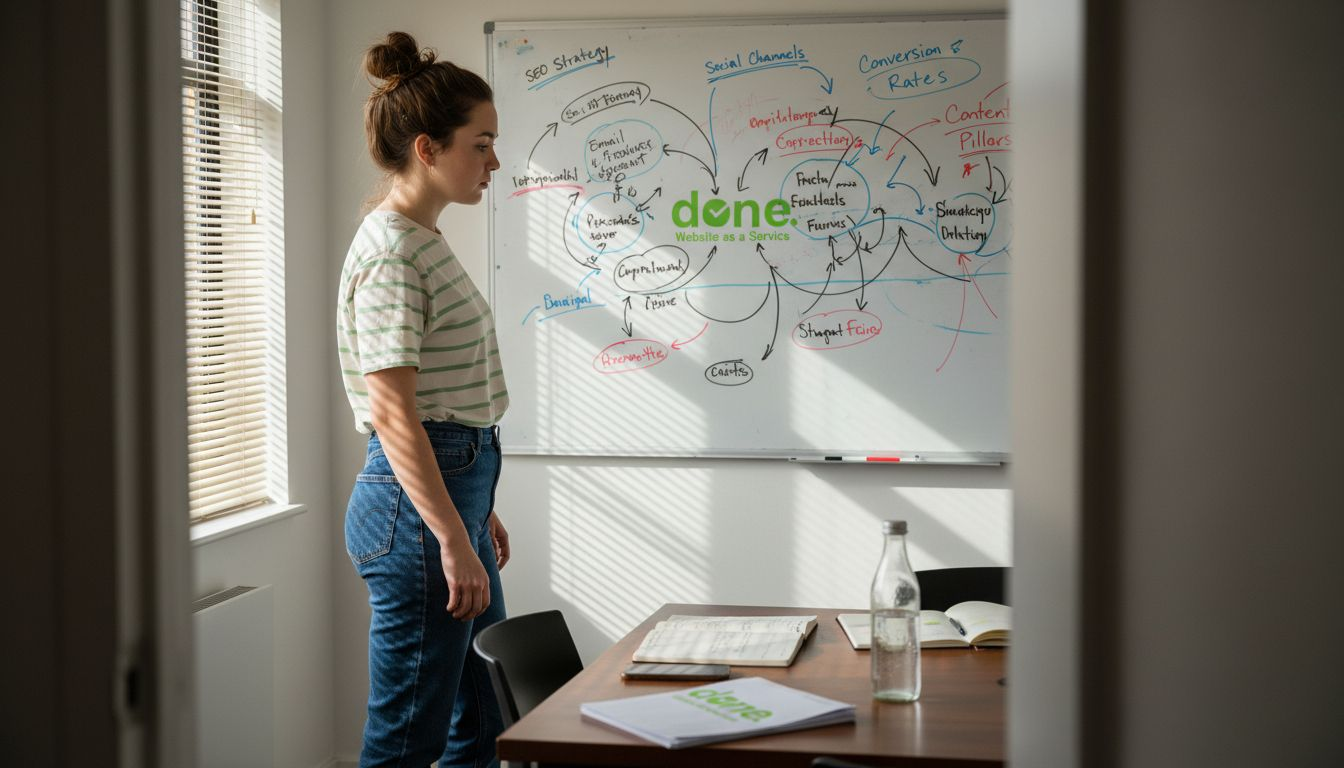
Search engine optimisation improves organic search rankings through technical site improvements, quality content creation, and authoritative backlink building. The role of SEO in digital marketing extends beyond traffic generation to establishing credibility and long-term visibility. SEO typically delivers the highest ROI for SMEs willing to invest time in content development and technical excellence.
Search engine marketing generates immediate visibility through paid advertisements on search platforms like Google. SEM provides precise targeting capabilities and measurable results, making it ideal for product launches or time-sensitive campaigns. Unlike SEO’s gradual build, SEM delivers instant traffic but requires ongoing investment.
Social media marketing builds communities and facilitates direct engagement with target audiences across platforms like LinkedIn, Facebook, and Instagram. The importance of social media management for e-commerce and B2B businesses centres on relationship building rather than immediate sales. Social platforms excel at brand awareness and customer service but typically convert at lower rates than search-based channels.
Email marketing maintains direct communication with prospects and customers through personalised messaging, newsletters, and automated sequences. With average ROI exceeding €40 for every €1 spent, email remains one of the most cost-effective channels for nurturing leads and driving repeat purchases.
Content marketing establishes authority by creating valuable resources that educate target audiences whilst subtly positioning your solution. Blog posts, guides, case studies, and videos attract organic traffic, support SEO efforts, and provide material for social media distribution.
Marketing automation coordinates multi-channel campaigns, personalises user experiences, and scales manual tasks through software. Automation tools track prospect behaviour, trigger timely messages, and score leads based on engagement signals.
Pro Tip: Start with two to three complementary channels that align with your primary business goal. Master execution on these before expanding to additional channels. SMEs spreading resources too thin across all channels typically achieve mediocre results everywhere rather than excellence anywhere.
The critical distinction between digital and traditional marketing lies in measurability, targeting precision, and cost efficiency. Digital channels provide real-time data on campaign performance, allowing rapid optimisation. Traditional channels like print or broadcast offer less precise targeting and limited performance tracking, making ROI difficult to quantify.
Common misconceptions about digital marketing
Several persistent myths prevent Luxembourg SMEs from implementing effective digital marketing strategies.
The most damaging misconception equates digital marketing solely with social media presence. Whilst social platforms play important roles, comprehensive strategies require coordinated efforts across multiple channels. SMEs focusing exclusively on social media miss opportunities in search, email, and content marketing that often deliver superior conversion rates. Digital marketing strategy misconceptions frequently stem from oversimplified advice or anecdotal success stories that don’t translate across industries.
Another common myth promises quick guaranteed sales without strategic planning or sustained effort. Digital marketing requires time to build momentum, particularly for channels like SEO and content marketing. Expecting immediate results leads to premature abandonment of sound strategies before they mature. Realistic expectations acknowledge that most channels need three to six months of consistent execution before delivering significant returns.
Many SMEs adopt generic strategies designed for large enterprises without customisation for their specific context, budget, or target market. What works for multinational corporations rarely translates directly to smaller businesses operating with limited resources. Luxembourg SMEs need tailored approaches that prioritise efficiency and focus on channels offering the highest probability of success given their constraints.
The belief that effective digital marketing requires massive budgets represents another barrier to adoption. Moderate investments combined with data-driven tactics can achieve meaningful results:
- Strategic channel selection eliminates wasteful spending on low-ROI activities
- Continuous optimisation improves performance without increasing budget
- Content repurposing maximises value from each created asset
- Marketing automation reduces manual effort whilst improving personalisation
These misconceptions persist because digital marketing evolves rapidly, creating information asymmetry between practitioners and business owners. Clearing these misunderstandings enables SMEs to approach digital marketing with realistic expectations and effective strategies.
Strategic framework for effective digital marketing
A four-stage framework helps SMEs prioritise marketing efforts aligned with customer journey phases and business objectives.
The awareness stage builds initial visibility amongst target audiences who don’t yet know your business exists. SEO, content marketing, and paid advertising drive discovery by appearing where prospects search for solutions. The primary goal involves generating qualified traffic rather than immediate conversions.
Engagement focuses on capturing attention and demonstrating value through educational content, social proof, and interactive experiences. Email newsletter subscriptions, social media follows, and resource downloads signal prospect interest. This stage nurtures relationships and positions your brand as a trusted authority.
Conversion transforms engaged prospects into paying customers through compelling offers, streamlined purchase processes, and trust-building elements. Landing pages, sales emails, and remarketing campaigns focus exclusively on driving decision-making. Conversion optimisation yields the highest immediate impact on revenue generation.
Retention maintains relationships with existing customers through ongoing communication, loyalty programmes, and exceptional service. Email marketing and marketing automation excel at retention by delivering personalised experiences at scale. Acquiring new customers costs five times more than retaining existing ones, making retention crucial for sustainable growth.
Pro Tip: Map your current marketing activities to these four stages to identify gaps. Most SMEs over-invest in awareness whilst neglecting engagement and retention. Rebalancing resources across all stages typically improves overall ROI more than increasing total budget.
Channel ROI varies significantly based on business model, target market, and execution quality:
| Channel | Primary Use Case | Typical ROI Range | Time to Results |
|---|---|---|---|
| SEO | Organic lead generation | High (€5-€15 per €1) | 3-6 months |
| SEM | Immediate traffic and conversions | Medium (€2-€5 per €1) | Immediate |
| Email Marketing | Nurturing and retention | Very High (€30-€40 per €1) | 1-3 months |
| Content Marketing | Authority building and SEO support | High (€3-€8 per €1) | 3-6 months |
| Social Media | Brand awareness and engagement | Low to Medium (€1-€3 per €1) | 2-4 months |
| Marketing Automation | Efficiency and personalisation | High (€5-€10 per €1) | 2-4 months |
Selecting channels requires matching your business goals with channel strengths. Lead generation prioritises SEO and SEM. Brand awareness favours content marketing and social media. Customer retention demands email marketing and automation. Budget constraints suggest starting with high-ROI channels like email before expanding to resource-intensive options like comprehensive content programmes.
SME implementation roadmap and common challenges
Successful digital marketing implementation follows a structured process adapted to SME constraints and capabilities.
-
Assess current digital presence and identify gaps in channel coverage, content quality, and technical infrastructure. Audit your website, social profiles, and existing marketing materials to establish a baseline.
-
Define clear business objectives with measurable targets such as lead generation numbers, conversion rates, or revenue goals. Vague aspirations like “increase awareness” prevent effective strategy development and performance evaluation.
-
Select priority channels based on the strategic framework, target audience behaviour, and available resources. Start with two complementary channels rather than attempting comprehensive coverage.
-
Develop content calendars and campaign plans with specific themes, publishing schedules, and promotional tactics. Planning prevents reactive, inconsistent execution that undermines credibility.
-
Implement tracking systems and analytics to measure performance against objectives. Without measurement, optimisation becomes impossible and resource allocation remains guesswork.
-
Optimise continuously by analysing results, testing variations, and reallocating resources toward high-performing tactics. Digital marketing rewards iteration and evidence-based decision-making.
Typical SME budgets for comprehensive digital marketing range from €1,500 to €5,000 monthly depending on business size, industry competition, and growth ambitions. Efficient allocation prioritises channels with proven ROI whilst maintaining modest investments in experimental tactics. Start-ups often begin with €1,000 to €2,000 monthly focused on SEO and content, whilst established SMEs invest €3,000 to €5,000 across multiple channels.
Common failure points include:
- Inconsistent execution due to competing priorities and resource constraints
- Premature strategy abandonment before channels mature
- Inadequate measurement preventing performance optimisation
- Generic messaging failing to differentiate from competitors
- Technical website issues undermining marketing campaign effectiveness
Implementing growth-driven design and agile methodology in digital marketing campaigns enables SMEs to improve website conversion rates by an average of 15% within the first 6 months.
This improvement stems from continuous testing, rapid iteration, and data-informed decisions rather than static campaigns. The digital marketing workflow for lead generation integrates these agile principles to maximise results from limited resources.
Mitigating these challenges requires realistic planning, dedicated resources, and often external expertise to accelerate learning curves. SMEs attempting digital marketing entirely in-house frequently struggle with the breadth of required skills across strategy, content creation, technical implementation, and analytics.
Summary and next steps for Luxembourg SMEs
Digital marketing represents essential infrastructure for SME growth in Luxembourg’s competitive digital economy. The strategic combination of multiple channels, data-driven optimisation, and customer-centric messaging delivers measurable improvements in lead generation, conversion rates, and customer retention.
Key principles for success include:
- Moving beyond social media to comprehensive multi-channel strategies
- Aligning channel selection with specific business objectives and customer journey stages
- Prioritising high-ROI channels like SEO, email, and content marketing
- Implementing measurement systems enabling continuous optimisation
- Maintaining consistent execution over sufficient timeframes for channels to mature
SMEs ready to enhance their digital marketing should take these immediate actions:
- Audit current digital presence to identify gaps and opportunities
- Define measurable objectives tied to business growth targets
- Select two to three priority channels based on the strategic framework
- Develop three-month content and campaign plans with clear metrics
- Establish analytics and reporting processes for performance tracking
Partnership with experienced agencies accelerates implementation by providing specialised expertise, proven processes, and objective strategic guidance. The digital marketing strategy guide offers deeper insights into planning and execution whilst finding the right internet agency helps identify qualified partners aligned with your business needs.
Digital marketing success requires commitment to learning, adaptation, and continuous improvement. Luxembourg SMEs adopting these principles position themselves for sustainable growth in an increasingly digital marketplace.
Discover how Done.lu can boost your digital marketing in Luxembourg
Transforming digital marketing insights into tangible business results demands expertise, dedicated resources, and proven methodologies. Done.lu specialises in crafting tailored digital marketing strategies for Luxembourg SMEs seeking measurable growth through online channels.
Our comprehensive services cover strategy development, multi-channel execution, and continuous optimisation designed to generate qualified leads and improve conversion rates. With over 150 completed projects and deep understanding of the Luxembourg market, we help SMEs navigate digital complexity whilst focusing on core business operations. Our approach integrates lead generation workflows with growth-driven design principles to deliver 15% to 25% improvements in key performance metrics.
Contact Done.lu today to discover how strategic digital marketing can transform your online presence and drive sustainable business growth in 2026.
What is digital marketing?
What is digital marketing?
Digital marketing encompasses all online strategies and channels businesses use to reach and engage target audiences, including SEO, SEM, social media, email, content marketing, and automation. For SMEs, it provides cost-effective methods to compete with larger enterprises through precise targeting and measurable campaigns. Effective digital marketing combines multiple channels coordinated around business objectives and customer journey stages.
Which digital marketing channel delivers the best ROI for SMEs in Luxembourg?
SEO and email marketing generally yield the highest ROI for Luxembourg SMEs, with email returning €30 to €40 per €1 invested and SEO delivering €5 to €15 per €1. These channels build sustainable assets that compound value over time. Social media excels at brand awareness but typically converts at lower rates, making it better suited as a supporting channel rather than primary lead generation source.
How much budget should SMEs allocate to digital marketing?
Luxembourg SMEs typically invest €1,500 to €5,000 monthly on digital marketing depending on business size, industry competition, and growth objectives. Start-ups often begin with €1,000 to €2,000 focused on one or two high-ROI channels like SEO and content. Established businesses allocate €3,000 to €5,000 across multiple channels, prioritising proven tactics whilst maintaining modest budgets for testing new approaches.
What common mistakes should SMEs avoid in digital marketing?
The most damaging mistakes include adopting generic strategies unsuitable for SME constraints, focusing exclusively on social media whilst neglecting higher-ROI channels, and abandoning tactics prematurely before they mature. Many SMEs also fail to implement proper measurement systems, preventing data-driven optimisation. Success requires customised strategies aligned with specific business objectives, realistic timeframes for results, and continuous performance tracking to guide resource allocation.