

Why Social Media Management Matters for E-Commerce
March 16, 2026
Role of SEO in ecommerce success: a 2026 guide
March 17, 2026
Nearly half of digital transformation initiatives fail to meet their objectives, costing businesses time, money, and competitive advantage. For Luxembourg SMEs embarking on website projects, understanding effective project management strategies is the difference between success and costly setbacks. This guide provides actionable frameworks for planning, executing, and verifying website projects, helping you navigate common pitfalls and deliver results that drive business growth. Whether you’re launching a new site or modernising your digital presence, these proven approaches will position your project for success.
Table of Contents
- Understand The Challenges Of Website Project Management
- Prepare Your Website Project For Success
- Execute With Agile Methods And Real-Time Feedback
- Verify Outcomes And Manage Risks Proactively
- How Done Supports Your Website Project Management Needs
- What Are The Most Common Pitfalls In Website Project Management?
- How Can Small Businesses In Luxembourg Access Support For Digital Transformation Projects?
- What Is The Difference Between Digital And Traditional Project Management?
Key takeaways
| Point | Details |
|---|---|
| High failure rates demand strong management | Nearly 50% of digital initiatives fail without proper project oversight and alignment |
| Flexible approaches outperform rigid planning | Agile methods with rapid iterations reduce risks and adapt to changing requirements |
| Clear requirements prevent scope creep | Defining detailed, stable objectives early eliminates costly mid-project changes |
| Collaborative teams drive success | Transparent communication and stakeholder alignment ensure strategy matches execution |
| Luxembourg SMEs have support programmes | Government initiatives help businesses fund and execute digital transformation projects |
Understand the challenges of website project management
Digital projects fail at alarming rates, but technology is rarely the culprit. Up to 75% of software projects fail to meet objectives, timelines, or budgets due to poor alignment between strategy and execution. The Standish Group reports only 29% of IT projects succeed, with the remainder challenged or outright failures. Understanding these patterns helps you avoid repeating costly mistakes.
Three primary factors drive project failure. First, unclear or constantly shifting requirements create confusion and rework. When stakeholders cannot articulate what they need, development teams build the wrong solutions. Second, scope creep erodes budgets and timelines as new features get added without proper evaluation. Third, inadequate risk visibility means problems surface too late for effective intervention. These issues compound when teams lack structured communication and accountability.
Website projects present unique challenges compared to traditional initiatives. Digital work demands rapid adaptation as user needs evolve and market conditions shift. Unlike construction or manufacturing projects with fixed specifications, website development benefits from iterative refinement based on real user feedback. This fundamental difference means approaches that work for building bridges often fail for building digital products. Recognising this distinction helps you select appropriate management methods.
“The core issue is not technology but misalignment across strategy, people, processes, and execution.”
Common failure patterns include:
- Stakeholders with conflicting visions pulling the project in different directions
- Technical teams isolated from business objectives and user needs
- Inadequate testing revealing critical flaws only after launch
- Poor documentation making maintenance and updates difficult
- Unrealistic timelines that force quality compromises
Successful website projects require a different mindset. Rather than attempting to predict every requirement upfront, effective digital project management embraces learning through doing. This approach, when combined with traditional marketing principles, creates a balanced strategy that delivers measurable results. The key is building flexibility into your process whilst maintaining clear accountability and progress tracking.
Prepare your website project for success
Strong preparation prevents the majority of project failures. Alignment across strategy, people, and processes is the foundation for digital transformation success. Begin by defining crystal clear business objectives that your website must achieve. Vague goals like “improve online presence” provide no direction. Specific targets such as “generate 50 qualified leads monthly” or “reduce customer service enquiries by 30%” create measurable success criteria.
Follow this preparation sequence:
- Document your business strategy and how the website supports it
- Identify all stakeholders and secure their commitment to the project
- Define detailed functional and technical requirements with stakeholder input
- Establish realistic timelines accounting for review cycles and iterations
- Select project management tools that enable transparency and collaboration
- Create a flexible roadmap with clear milestones and decision points
Requirements definition deserves special attention. Work with stakeholders to capture not just what they want, but why they want it. Understanding underlying business needs often reveals simpler, more effective solutions than initial requests suggest. Document requirements in user stories that describe who needs what functionality and for what purpose. This format keeps the focus on delivering value rather than building features for their own sake.

Stakeholder alignment requires more than a single kickoff meeting. Establish regular touchpoints where decision makers review progress and provide input. Define clear roles and responsibilities so everyone understands who owns which decisions. Identify potential conflicts early and resolve them before they derail execution. The time invested in alignment upfront saves exponentially more time later by preventing rework and scope disputes.
Pro Tip: Create a one-page project charter that summarises objectives, scope, stakeholders, and success metrics. This living document keeps everyone aligned and provides a reference point when questions arise about priorities or direction.
Your website creation checklist should include technical considerations like hosting requirements, content management needs, and integration points with existing systems. Address these early to avoid discovering constraints that force expensive redesigns. Similarly, your website design checklist ensures visual and user experience elements align with brand guidelines and accessibility standards from the start.
Flexibility in planning does not mean lack of structure. Develop a roadmap that identifies major phases and deliverables whilst allowing adaptation within each phase. This balanced approach provides the predictability stakeholders need whilst preserving the agility that digital projects demand. Build in explicit decision gates where you evaluate progress and adjust course based on learnings.
Execute with agile methods and real-time feedback
Digital project management favours agile execution with rapid iterations, real-time feedback, and flexible roadmaps. Break your website project into sprints of one to three weeks, each delivering tangible, testable increments. This approach provides several advantages over traditional waterfall methods. Stakeholders see progress quickly, reducing anxiety about whether the project is on track. Teams identify problems early when they are cheaper to fix. User feedback informs subsequent work, ensuring the final product meets actual needs.
Structure each sprint around a clear objective. Begin with planning where the team commits to specific deliverables. Execute the work with daily standups to identify blockers and maintain momentum. End with a review where stakeholders evaluate deliverables and provide feedback, followed by a retrospective where the team identifies process improvements. This rhythm creates accountability whilst enabling continuous refinement.
Collaboration distinguishes successful digital projects. Establish communication protocols that keep everyone informed without creating meeting overload. Use project management tools that provide real-time visibility into progress, blockers, and decisions. Encourage direct communication between developers, designers, and stakeholders rather than filtering everything through a project manager. This transparency builds trust and accelerates problem solving.
Pro Tip: Implement a “definition of done” that specifies quality criteria every deliverable must meet before being considered complete. This shared standard prevents misunderstandings about what constitutes finished work and maintains consistent quality.
Real-time feedback loops transform project outcomes. Rather than waiting until launch to discover user experience issues, test with real users throughout development. Conduct usability sessions where you observe people attempting to complete key tasks. These sessions reveal friction points that internal teams, too familiar with the site, often miss. Incorporate findings immediately into the next sprint rather than deferring improvements to a future phase.
Your digital marketing workflow should integrate with website development from the start. Content strategy, SEO considerations, and conversion optimisation are not afterthoughts to be addressed post-launch. Build them into each sprint so the site emerges optimised for both users and search engines. This integrated approach, detailed in web design execution steps, delivers better results faster.
| Aspect | Traditional approach | Digital approach |
|---|---|---|
| Planning | Comprehensive upfront | Iterative with learning |
| Requirements | Fixed specifications | Evolving user stories |
| Delivery | Single final release | Incremental sprints |
| Feedback | Post-launch only | Continuous throughout |
| Change management | Formal change requests | Adaptive within sprints |
Adaptation is not the same as chaos. Agile methods provide structure through ceremonies, roles, and artefacts whilst embracing change as a source of competitive advantage. When market conditions shift or user needs evolve, your project adapts rather than delivering an outdated solution. This responsiveness is why digital natives consistently outperform organisations clinging to rigid traditional methods.
Verify outcomes and manage risks proactively
Verification ensures your website project delivers promised value. Establish key performance indicators aligned to your original business objectives. Track these metrics from launch onwards, comparing actual performance against targets. Common website KPIs include conversion rates, lead generation volume, user engagement metrics, and task completion rates. Choose metrics that directly reflect your success criteria rather than vanity measures like total page views.
Implement this verification process:
- Define baseline measurements before launch to enable comparison
- Set up analytics and tracking to capture relevant data automatically
- Schedule regular review sessions to evaluate performance against targets
- Identify underperforming areas and hypothesise improvement opportunities
- Test improvements through controlled experiments when possible
- Document learnings to inform future projects and iterations
Early risk detection and fast course correction are crucial to project success. The danger is not that problems occur but that they remain invisible until too late for effective response. Establish early warning indicators that signal emerging issues. Budget consumption rates, velocity trends, and stakeholder satisfaction scores all provide advance notice of trouble.
Scope creep is the most common risk in website projects. Combat it through rigorous change management. When new requirements emerge, evaluate them against three criteria: alignment with core objectives, impact on timeline and budget, and opportunity cost of delaying other features. Many requested additions, whilst potentially valuable, are not worth the delay they introduce. Defer non-critical enhancements to post-launch iterations.
Conduct frequent checkpoint reviews with stakeholders. These sessions serve multiple purposes: demonstrating progress, gathering feedback, identifying concerns early, and maintaining engagement. Structure reviews around working software rather than status reports. Let stakeholders interact with actual deliverables, which generates more useful feedback than abstract discussions.
Pro Tip: Maintain a risk register that documents identified risks, their likelihood and impact, mitigation strategies, and owners responsible for monitoring each risk. Review this register weekly to ensure risks receive appropriate attention before they become crises.
Your website project planning workflow should include explicit verification gates. Before moving from one phase to the next, confirm that success criteria are met and stakeholders approve proceeding. This discipline prevents the accumulation of unresolved issues that compound over time. It also ensures everyone shares the same understanding of project status.
| Metric | Target | Actual | Variance | Action required |
|---|---|---|---|---|
| Sprint velocity | 25 points | 22 points | -12% | Review capacity assumptions |
| Budget consumed | 40% | 45% | +5% | Identify cost drivers |
| Stakeholder satisfaction | 8/10 | 7/10 | -1 point | Schedule alignment session |
| Defect rate | <5% | 3% | Within target | Continue current quality processes |
Data-driven decision making separates successful projects from failures. Collect evidence about what works and what does not, then adjust your approach accordingly. This empirical method builds confidence that you are moving in the right direction and provides objective basis for difficult trade-off decisions. When stakeholders disagree about priorities, data often clarifies the best path forward.
How Done supports your website project management needs
Navigating website projects successfully requires both expertise and experience. Done specialises in web development tailored to Luxembourg SMEs, combining technical excellence with proven project management practices. Our approach aligns with the agile, iterative methods outlined in this guide, ensuring your digital transformation delivers measurable business results.
We understand the unique challenges facing Luxembourg businesses: multilingual requirements, regulatory compliance, and competitive pressure to digitalise rapidly. Our services span the complete project lifecycle from initial strategy through ongoing optimisation. Investing in web development with Done means partnering with a team that prioritises your business objectives over technical complexity. We translate your vision into functional, beautiful websites that drive growth. Discover how custom web development delivers competitive advantages that template solutions cannot match.
What are the most common pitfalls in website project management?
What causes most website projects to fail?
Unclear requirements, shifting scopes, and poor communication are the primary culprits. When stakeholders cannot articulate what success looks like or keep changing their minds, development teams struggle to deliver value. Inadequate risk monitoring means problems surface too late for effective intervention. These issues compound when project teams lack structured collaboration and accountability frameworks.
How can I prevent scope creep in my website project?
Establish rigorous change management processes that evaluate new requests against core objectives. Document a clear project scope during planning and require stakeholder sign-off before expanding it. When new features are proposed, assess their impact on timeline, budget, and opportunity cost. Defer non-critical enhancements to post-launch iterations rather than delaying the entire project.
What role does stakeholder alignment play in project success?
Misalignment across stakeholders is a leading cause of project failure. When decision makers have conflicting visions, development teams receive contradictory direction that leads to rework and frustration. Regular stakeholder reviews maintain alignment and surface disagreements early when they are easier to resolve. A well-structured planning workflow keeps everyone focused on shared objectives.
Should I use agile or waterfall methods for website projects?
Agile methods suit website projects better because they embrace change and deliver value incrementally. Waterfall approaches assume you can define all requirements upfront, which rarely holds true for digital work. Agile’s iterative nature allows you to incorporate user feedback and adapt to evolving needs. However, some planning and structure remain essential; pure chaos helps no one.
How can small businesses in Luxembourg access support for digital transformation projects?
What government programmes help Luxembourg SMEs with website projects?
The SME Packages Digital programme helps Luxembourg SMEs improve online communication and internal processes through subsidised digital projects. Eligible initiatives include website creation, SEO optimisation, e-commerce development, and business process digitalisation. The programme aims to enhance competitiveness by making professional digital services accessible to smaller businesses that might otherwise lack resources.
What types of projects qualify for SME digital support?
Qualifying projects typically focus on customer-facing digital improvements or internal process automation. Website modernisation, online shop development, digital marketing campaigns, and CRM implementation all commonly receive support. The programme prioritises initiatives that demonstrably improve business efficiency, customer reach, or competitive positioning. Contact the programme administrators to confirm your specific project’s eligibility.
How much funding can Luxembourg SMEs receive for digital projects?
Funding levels vary based on project scope and business size. The programme typically covers a percentage of eligible costs up to defined maximums. Subsidies aim to remove financial barriers whilst ensuring businesses maintain meaningful investment in their own success. Detailed funding information and application requirements are available through the Time4Digital initiative.
What is the difference between digital and traditional project management?
How does digital project management differ from traditional approaches?
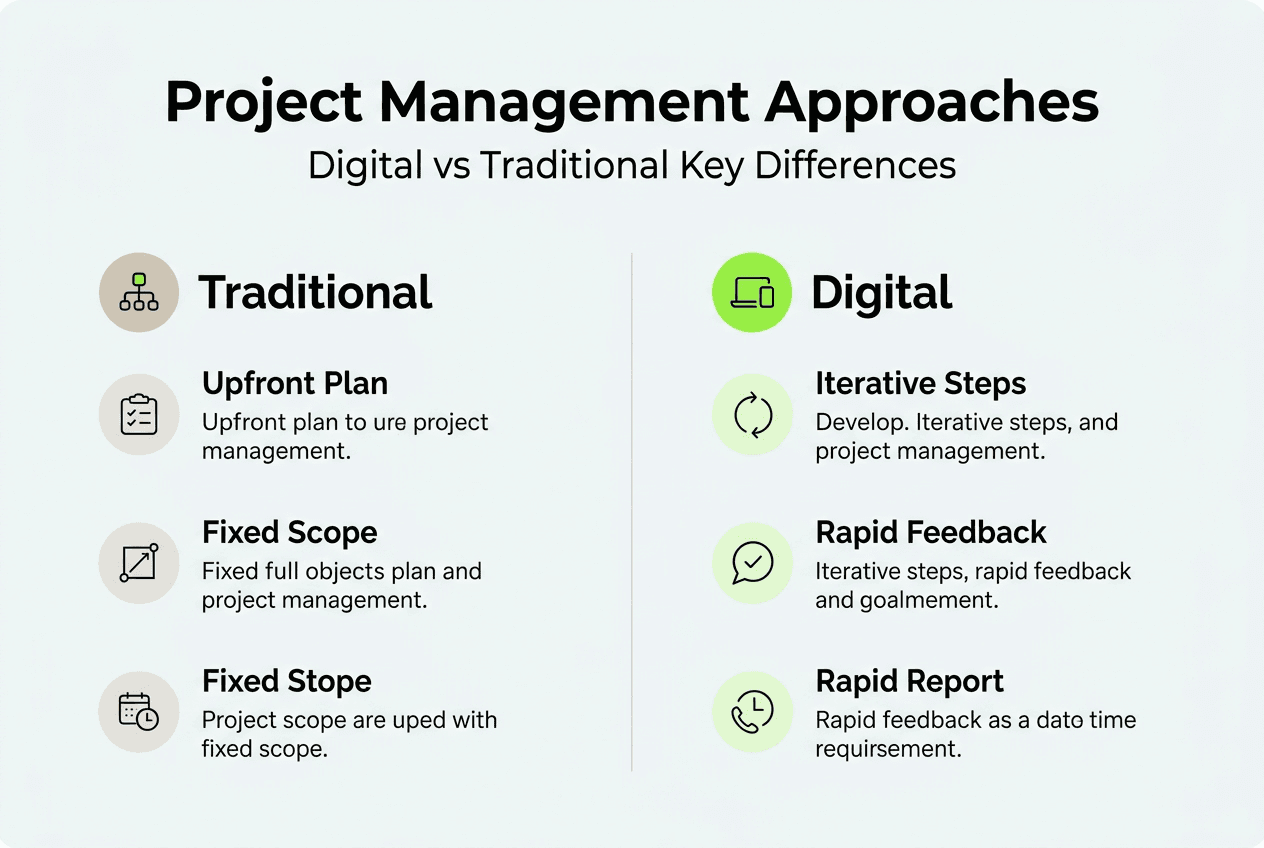
Traditional project management relies on upfront planning and rigid phases whilst digital project management thrives on rapid iterations and flexible roadmaps. Traditional methods assume requirements are knowable in advance and change is costly. Digital approaches embrace uncertainty and treat change as an opportunity to deliver better solutions. This fundamental difference reflects the nature of digital work, where user needs evolve and technology capabilities advance rapidly.
Can I combine digital and traditional project management methods?
Hybrid approaches often work well, especially for larger organisations with established processes. Use traditional methods for predictable, well-understood aspects like infrastructure procurement whilst applying agile techniques to creative and user-facing work. The key is recognising which parts of your project benefit from structure versus flexibility. Many successful teams blend digital and traditional approaches to leverage the strengths of each.
Which approach should I choose for my website project?
Digital project management methods suit most website projects better than traditional waterfall approaches. Websites benefit from iterative refinement based on user feedback, which agile methods facilitate. However, maintain enough structure to ensure accountability and progress tracking. Start with agile frameworks and adapt them to your organisation’s culture and constraints rather than rigidly following any single methodology.