

Why invest in SEO: a guide for Luxembourg SMEs in 2026
March 19, 2026
How AI boosts digital marketing for European SMEs
March 21, 2026
Over 60% of European SMEs now actively use social media platforms to connect with customers, yet many still treat it as an afterthought rather than a strategic marketing channel. This gap between adoption and effective execution leaves enormous potential untapped. In 2026, social media has evolved far beyond simple posting schedules. Marketing managers who understand platform algorithms, regulatory constraints, and audience behaviour can transform their brand visibility and customer engagement. This guide reveals the strategies that separate thriving SME social media programmes from those that merely exist.
Table of Contents
- The Rising Impact Of Social Media For European SMEs
- Creating A Documented Social Media Strategy That Delivers Results
- Navigating Challenges And Regulations To Maintain Effective Social Media Marketing
- Balancing Organic And Paid Social Media For Sustained Brand Growth
- Explore Expert Web Development And Digital Marketing Support
Key takeaways
| Point | Details |
|---|---|
| Platform adoption is widespread | Over 60% of EU enterprises use social media, making it essential for competitive SME marketing |
| Strategy documentation drives results | Clear goals, platform selection, and content prioritisation focused on short-form video improve performance |
| Regulatory compliance is mandatory | GDPR and Digital Services Act restrict targeting and tracking, requiring careful data handling |
| Organic reach faces limitations | Algorithm changes reduce unpaid visibility, necessitating balanced organic and paid approaches |
| Authentic engagement builds loyalty | Real conversations and niche community focus outperform polished, generic content |
The rising impact of social media for European SMEs
Social media has shifted from experimental marketing channel to core business infrastructure for European SMEs. Recent data shows that 60.9% of EU enterprises use at least one social media platform, with 58% adoption amongst small enterprises specifically. This widespread integration reflects fundamental changes in how customers discover, evaluate, and engage with brands.
Platform effectiveness varies significantly across Europe. Nordic countries demonstrate particularly high engagement, with daily social media use exceeding 80% in Denmark, Sweden, and Norway. TikTok has emerged as a powerful discovery engine, whilst established platforms like Facebook and Instagram continue to dominate daily usage patterns. For marketing managers, these statistics reveal opportunity rather than obligation.
Consumer behaviour patterns reinforce social media’s central role. European customers increasingly begin their brand discovery journey through social platforms rather than search engines or direct website visits. This shift means your social presence often provides the first impression of your business. The quality and consistency of that impression directly influences conversion potential.
Social media performance correlates strongly with broader business outcomes for SMEs. Companies that maintain active, strategic social programmes report measurable improvements in brand awareness, customer acquisition costs, and lifetime value metrics. The digital marketing advantages extend beyond immediate sales to encompass brand equity and market positioning.
Three factors explain this correlation:
- Algorithm prioritisation of business accounts that generate genuine engagement
- Consumer preference for researching brands through social proof and peer recommendations
- Cost efficiency compared to traditional advertising channels for reaching targeted audiences
Marketing managers must recognise that social media effectiveness depends on strategic execution rather than simple presence. The gap between active accounts and results-driven programmes separates successful SME marketing from wasted effort.
Creating a documented social media strategy that delivers results
Random posting generates random results. SMEs that achieve measurable social media success begin with documented strategies focused on specific goals, platform audience fit, content prioritising short-form video, and meaningful analytics. This structured approach transforms social media from time sink to revenue driver.
Start by defining clear marketing objectives that align with business priorities. Common SME goals include brand awareness expansion, lead generation, customer retention, and community building. Each objective requires different content strategies, platform choices, and measurement frameworks. Attempting to achieve everything simultaneously dilutes effectiveness and exhausts resources.
Platform selection demands strategic thinking rather than blanket coverage. Analyse where your target audience actually spends time and how they consume content on each platform. B2B service providers often find LinkedIn delivers superior engagement despite smaller follower counts. Consumer brands may prioritise Instagram or TikTok based on demographic alignment. Quality beats quantity.
Content prioritisation should emphasise formats that current algorithms favour. Short-form video dominates engagement metrics across platforms in 2026. SMEs that incorporate authentic, behind-the-scenes video content consistently outperform those relying solely on static images or text posts. This doesn’t require professional production equipment. Smartphone footage that reveals personality and expertise often generates stronger engagement than polished corporate videos.
Follow this five-step framework for strategy development:
- Define three specific, measurable objectives aligned with business goals
- Research platform demographics and content performance patterns for your industry
- Select two to three platforms where target audiences demonstrate active engagement
- Create content calendars emphasising video, user-generated content, and authentic storytelling
- Establish analytics dashboards tracking conversion metrics rather than vanity numbers
Engagement requires active participation beyond publishing content. Responding to comments, initiating conversations, and acknowledging user contributions builds community loyalty that algorithms reward with increased visibility. Marketing managers should allocate time for genuine interaction rather than treating social media as a broadcast channel.

Pro Tip: Track metrics that connect to revenue rather than follower counts. Monitor click-through rates to your website, lead form completions from social traffic, and customer acquisition costs for social-sourced conversions. These indicators reveal actual digital marketing performance rather than superficial popularity.
Analytics interpretation separates strategic programmes from guesswork. Establish baseline metrics, test content variations systematically, and adjust based on performance data. Most platforms provide robust analytics tools that reveal audience demographics, peak engagement times, and content performance patterns. Use these insights to refine your digital marketing strategy continuously.
Navigating challenges and regulations to maintain effective social media marketing
European SMEs face distinct regulatory and practical challenges that shape social media marketing effectiveness. Understanding these constraints allows marketing managers to develop compliant, authentic programmes that build trust whilst navigating platform algorithm changes and legal requirements.
Common strategic mistakes undermine SME social media efforts. Spreading resources across too many platforms, creating over-polished content that lacks authenticity, and hashtag stuffing represent frequent missteps. These approaches waste time whilst failing to generate meaningful engagement. Focus beats fragmentation.
Authenticity has become the primary currency of social media success. Audiences increasingly reject corporate-speak and polished marketing messages in favour of genuine voices and real experiences. SMEs that share behind-the-scenes content, acknowledge challenges, and engage in honest dialogue build stronger connections than those maintaining artificial perfection. Your imperfections often create relatability.
Niche community engagement delivers superior results compared to broad audience targeting. Rather than attempting to reach everyone, successful SMEs identify and serve specific audience segments with tailored content. This focused approach generates higher engagement rates, stronger customer relationships, and better conversion metrics.
Regulatory compliance adds complexity to European social media marketing. GDPR restricts tracking pixels and audience targeting without explicit user consent, fundamentally changing how SMEs can collect and use customer data. The Digital Services Act introduces additional targeting restrictions and transparency requirements that affect advertising capabilities.
Key compliance considerations include:
- Obtaining explicit consent before implementing tracking technologies or retargeting campaigns
- Providing clear privacy policies that explain data collection and usage practices
- Respecting user rights to data access, correction, and deletion across social platforms
- Maintaining documentation of consent and data processing activities for regulatory audits
These regulations constrain certain tactics whilst creating opportunities for brands that prioritise transparency. Customers increasingly value businesses that respect privacy and handle data responsibly. Your compliance approach can become a competitive advantage rather than merely a legal obligation.
Pro Tip: Build first-party data assets through email list growth and website engagement rather than relying solely on platform-provided targeting. This approach reduces regulatory risk whilst creating owned audience channels that platforms cannot restrict or remove.
Platform algorithm changes represent ongoing challenges for organic reach. Social networks continuously adjust how they prioritise content, often reducing visibility for business accounts to encourage paid advertising. Marketing managers must stay informed about algorithm updates and adapt content strategies accordingly. Flexibility beats rigid adherence to outdated tactics.
Balancing creativity with compliance requires viewing regulations as guardrails rather than barriers. The most effective SME social programmes find innovative ways to engage audiences whilst respecting privacy and platform guidelines.
Managing these challenges demands realistic resource allocation and expectations. Social media management requires consistent effort, strategic thinking, and willingness to adapt. SMEs that approach social media as a long-term investment rather than quick win generate sustainable results.
Balancing organic and paid social media for sustained brand growth
The organic versus paid debate misses the fundamental point: effective SME social media programmes require both approaches working in concert. Understanding the strengths and limitations of each allows marketing managers to allocate resources strategically and maximise overall impact.
Organic content builds authentic relationships and brand loyalty but faces significant reach limitations. Platform algorithms increasingly restrict unpaid visibility, particularly for business accounts. Posts typically reach only a small percentage of followers without paid amplification. This reality doesn’t negate organic content’s value but requires realistic expectations about its reach potential.
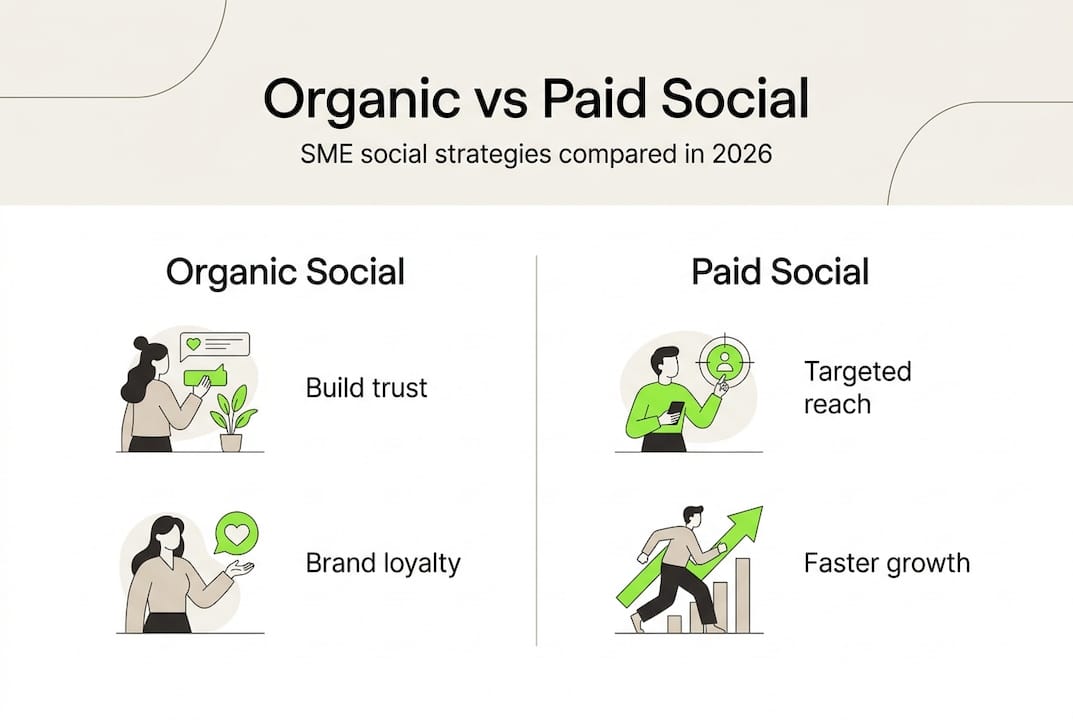
The primary benefits of organic social media include community building, customer service, brand personality development, and content testing. These outcomes create foundation for paid campaigns whilst generating engagement that algorithms reward with modest visibility increases. Think of organic content as relationship maintenance rather than audience expansion.
Paid advertising extends visibility beyond existing followers and enables precise targeting based on demographics, interests, and behaviours. Paid social campaigns improve reach but require budget allocation and optimisation skills. Without strategic management, advertising spend generates impressions without meaningful business outcomes.
B2B marketing through social media typically yields slower return on investment compared to B2C approaches. Complex purchasing decisions, longer sales cycles, and smaller target audiences mean B2B SMEs must maintain patient, consistent programmes rather than expecting immediate conversions. Content that educates and demonstrates expertise builds credibility that eventually converts to business opportunities.
Digital native SMEs benefit from establishing strong communities before and during product launches. Early audience building creates momentum that amplifies launch impact and provides valuable feedback for product development. This approach requires investing in community engagement well before revenue generation begins.
| Approach | Strengths | Limitations | Best Uses |
|---|---|---|---|
| Organic content | Builds loyalty, tests messaging, provides customer service | Limited reach, time intensive, algorithm dependent | Community engagement, brand personality, content validation |
| Paid advertising | Expands reach, enables targeting, delivers measurable results | Requires budget, needs optimisation skills, can feel intrusive | Audience growth, product launches, time-sensitive promotions |
| Hybrid strategy | Combines relationship building with visibility expansion | Demands resources for both approaches, requires coordination | Sustainable growth, balanced customer acquisition, brand development |
Practical resource allocation depends on business stage, objectives, and available budget. Startups might emphasise organic community building whilst established SMEs balance ongoing engagement with targeted paid campaigns. Neither approach succeeds in isolation.
Consider this allocation framework:
- Allocate 60-70% of effort to consistent organic content that serves existing community
- Reserve 30-40% of budget for paid campaigns targeting specific objectives like product launches or seasonal promotions
- Test paid amplification of top-performing organic content to extend reach of proven messages
- Measure both approaches against business outcomes rather than platform-specific metrics
Effective measurement connects social media activity to business results. Track how organic engagement influences customer retention and lifetime value. Monitor paid campaign performance through conversion tracking and customer acquisition costs. This data-driven approach reveals which balance delivers optimal results for your specific situation.
The most successful SME social programmes recognise that increasing organic reach requires excellence in content quality, timing, and engagement. Combine this foundation with strategic paid amplification of messages that resonate. This integrated approach generates sustainable visibility and business growth.
Explore expert web development and digital marketing support
Social media marketing delivers maximum impact when integrated with comprehensive digital presence. Your social channels drive traffic to digital properties that convert interest into business outcomes. This integration requires coordinated strategy across platforms and touchpoints.
Done specialises in web development that enhances brand credibility and supports conversion optimisation. A professional website provides the foundation that social media builds upon. When potential customers click through from social platforms, they encounter digital experiences that reinforce brand quality and facilitate next steps.
Strategic digital marketing workflows align social media activity with lead generation and customer relationship management. This coordination ensures social engagement translates to business growth rather than existing in isolation. Marketing managers benefit from integrated approaches that connect social visibility to revenue outcomes.
European SMEs navigating social media complexity whilst managing core business operations often benefit from expert support. Done’s comprehensive digital marketing strategies help businesses maximise social media effectiveness within broader marketing ecosystems. This integrated support allows you to focus on business growth whilst ensuring digital channels work cohesively.
FAQ
How can SMEs select the best social media platform for their marketing?
Analyse where your specific target audience actively engages rather than following general trends. Research demographic data for each platform and examine how your competitors and industry leaders perform across channels. Start with one or two platforms where audience alignment is strongest, then expand based on results. Quality engagement on fewer platforms outperforms scattered presence across many. Consult strategic digital marketing guidance to align platform selection with broader business objectives.
What are effective ways to increase engagement on social media organically?
Prioritise authentic content that reveals your business personality over polished corporate messaging. Respond promptly to every comment and question to demonstrate that real people manage your accounts. Create content that invites participation through questions, polls, and user-generated content requests. Engage actively with niche communities relevant to your industry rather than broadcasting to general audiences. Consistency in posting schedule and voice builds familiarity that algorithms reward. Effective social media management requires viewing platforms as conversation spaces rather than advertising channels.
How does GDPR affect social media marketing for SMEs in Europe?
GDPR restricts tracking pixels, retargeting campaigns, and audience data collection without explicit user consent. You must obtain clear permission before implementing cookies or tracking technologies that monitor user behaviour across platforms. Targeting capabilities become limited compared to markets without strict privacy regulations. SMEs must implement transparent data practices, provide accessible privacy policies, and respect user rights to data access and deletion. Non-compliance risks significant penalties that threaten business viability. View regulatory compliance challenges as opportunities to build trust through responsible data handling rather than merely legal obligations.
What content formats generate the strongest engagement in 2026?
Short-form video consistently outperforms static images and text across major platforms. Behind-the-scenes footage, quick tips, and authentic storytelling in vertical video format align with current algorithm priorities. User-generated content and customer testimonials build social proof whilst encouraging community participation. Interactive formats like polls, questions, and live video create real-time engagement that platforms reward with increased visibility. Balance trending formats with evergreen content that provides lasting value. Experiment systematically with different approaches whilst tracking performance metrics to identify what resonates with your specific audience.
How should SMEs balance social media marketing with limited resources?
Focus on platforms and content types that deliver measurable business results rather than attempting comprehensive coverage. Batch content creation to improve efficiency and maintain consistent posting schedules without daily time investment. Repurpose strong-performing content across platforms and formats to maximise value from creation effort. Consider whether paid advertising on one platform delivers better results than organic presence across multiple channels. Set realistic expectations about time requirements and measure activities against business outcomes. Strategic resource allocation based on performance data ensures social media contributes to growth rather than consuming resources without return.