

How SEO drives business growth for Luxembourg SMEs in 2026
March 18, 2026
Social media marketing for SMEs: boost visibility in 2026
March 20, 2026
Many Luxembourg business owners question whether SEO delivers genuine returns or simply drains marketing budgets with vague promises. The reality challenges this scepticism. European SMEs report a median ROI of 748% from strategic SEO investments, with some sectors achieving returns exceeding 1200%. For businesses seeking sustainable lead generation without constant advertising spend, SEO represents a proven channel. This guide explores why SEO matters for Luxembourg and European SMEs in 2026, revealing practical investment strategies, realistic timelines, and how to maximise returns whilst avoiding common pitfalls.
Table of Contents
- The Business Case For SEO In Luxembourg And Europe
- Understanding SEO’s Strategic Benefits And Limitations
- Practical Steps For Investing In Effective SEO In 2026
- SEO’s Role In A Comprehensive Digital Marketing Strategy
- How Done LU Supports Your SEO And Digital Marketing Ambitions
Key takeaways
| Point | Details |
|---|---|
| Strong ROI potential | European SMEs achieve median returns of 748% from strategic SEO investments, with top performers exceeding 1200%. |
| Strategic patience required | Initial traction typically appears within 3 to 6 months, with compounding benefits emerging over 6 to 12 months. |
| Combined approach works best | Pairing SEO with paid advertising accelerates lead generation whilst building sustainable organic visibility. |
| Localisation drives success | Multilingual optimisation and technical audits form the foundation for effective Luxembourg market penetration. |
The business case for SEO in Luxembourg and Europe
When evaluating marketing investments, SMEs need concrete evidence of returns. SEO delivers high ROI for SMEs, with benchmarks ranging from 300% to 1200% across European markets, averaging a median of 748%. These figures reflect actual revenue generated per euro invested, not theoretical projections.
Certain sectors demonstrate particularly strong performance. B2B SaaS companies frequently achieve returns above 900% through targeted keyword strategies addressing specific pain points. Local service providers, including legal practices and consulting firms, see conversion rates 3 to 5 times higher from organic search compared to paid channels. Professional services benefit especially well because searchers actively seek solutions, arriving with higher purchase intent.
Real results validate these benchmarks. A Luxembourg fashion retailer, Zoot, achieved €1.5M in sales growth directly attributable to organic traffic improvements. Their strategy focused on product page optimisation, structured data implementation, and multilingual content targeting French, German, and English speakers. Within 18 months, organic traffic increased 340%, demonstrating SEO’s capacity to drive substantial revenue for regional businesses.
“SEO functions as a compounding asset. Unlike paid advertising that stops generating leads when you stop paying, optimised content continues attracting qualified prospects months and years after publication.”
Cost efficiency strengthens the business case further. Whilst initial investments require patience, the cost per acquisition through organic search typically drops 60% to 75% below paid advertising costs over 12 months. For SMEs operating with limited marketing budgets, this efficiency allows reallocation of resources towards product development or customer service improvements. Understanding SEO-driven business growth principles helps businesses capture these advantages systematically.
Luxembourg’s multilingual market presents unique opportunities. Businesses optimising for French, German, and English simultaneously access three distinct audience segments with reduced competition compared to larger European markets. This trilingual approach, combined with Luxembourg’s high GDP per capita and strong digital infrastructure, creates ideal conditions for SEO success.
Understanding SEO’s strategic benefits and limitations
SEO offers remarkable long-term value, yet setting realistic expectations prevents disappointment and poor strategic decisions. SEO typically requires 3 to 6 months to start showing measurable traction, with compounding benefits emerging over 6 to 12 months. This timeline reflects the reality of how search engines evaluate and reward quality content.
Several factors influence this timeframe:
- Domain authority and existing backlink profile significantly accelerate or delay progress
- Competition intensity within your target keywords determines ranking difficulty
- Content quality and technical site health affect how quickly search engines trust your pages
- Consistency of optimisation efforts compounds results over time
SEO proves less suitable in specific scenarios. When businesses need immediate lead flow to meet quarterly targets, paid advertising delivers faster results. Similarly, websites with fundamental technical issues, poor user experience, or thin content struggle to gain traction regardless of keyword optimisation. Addressing these foundation problems must precede serious SEO investment.
Comparing SEO against paid advertising reveals complementary strengths. SEO outperforms PPC in long-term ROI but requires patience during the initial months. Paid campaigns generate immediate visibility and data about audience preferences, whilst organic rankings build sustainable traffic that persists without ongoing spend. Smart businesses recognise these channels work best together rather than as competing alternatives.
Pro Tip: Allocate 70% of your digital marketing budget to SEO for sustainable growth and 30% to paid campaigns for immediate lead generation and market testing. This balance provides short-term results whilst building long-term organic visibility.
The combined approach delivers measurable advantages. Paid campaigns identify high-converting keywords quickly, informing SEO content priorities. Simultaneously, organic visibility reduces dependency on paid advertising, lowering overall customer acquisition costs. Businesses running both channels report 40% higher overall conversion rates compared to single-channel approaches.
Timing considerations matter significantly. New businesses or product launches benefit from starting with paid advertising to generate immediate market feedback whilst simultaneously building SEO foundations. Established businesses with existing traffic can shift budget gradually towards SEO as organic rankings improve. This phased approach manages cash flow effectively whilst building sustainable digital marketing advantages.
Understanding these nuances prevents common mistakes. Expecting instant results leads to premature strategy abandonment. Conversely, investing heavily in SEO when immediate leads are critical creates cash flow problems. Matching investment timing to business needs and realistic timeframes maximises success probability.
Practical steps for investing in effective SEO in 2026
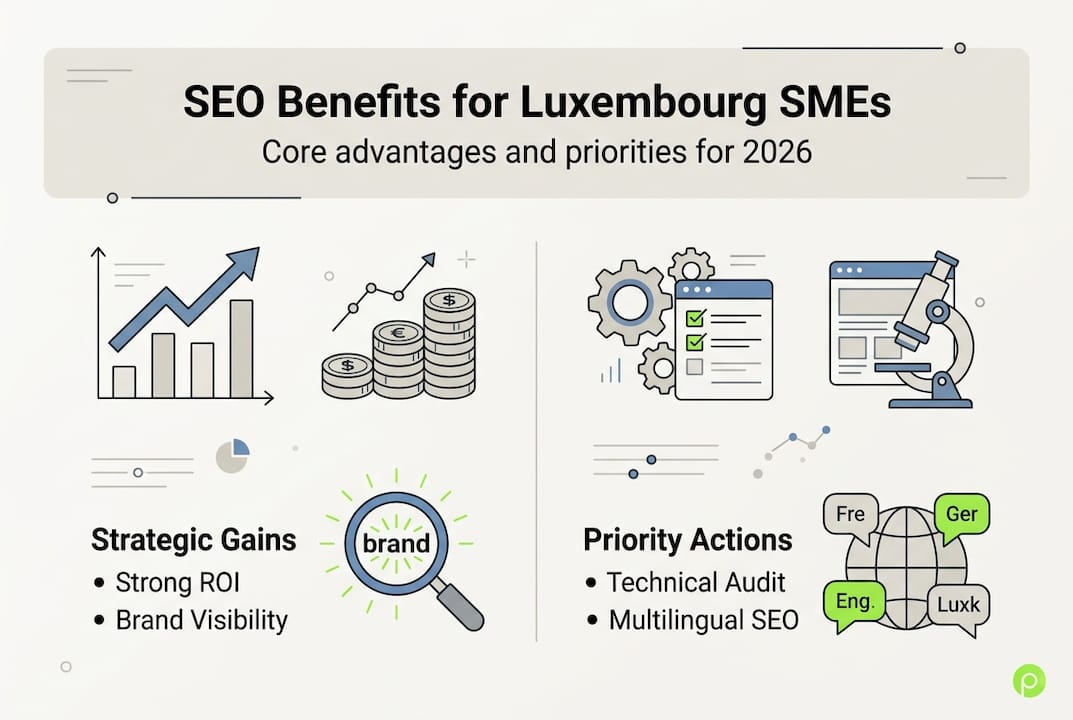
Transforming SEO knowledge into results requires systematic implementation. Financial planning forms the foundation. SMEs should invest 5% to 10% of revenue in SEO, prioritising technical optimisation and local keyword targeting before expanding to broader campaigns. This allocation ensures sufficient resources for meaningful progress without overextending budgets.
Implementation follows a logical sequence:
- Conduct a comprehensive technical audit identifying crawl errors, mobile usability issues, and page speed problems that prevent search engines from properly indexing your content.
- Optimise your Google Business Profile with accurate NAP information, service descriptions, and regular posts to capture local search visibility across Luxembourg’s three primary languages.
- Research multilingual keywords reflecting how French, German, and English speakers search for your services, recognising that direct translations often miss actual search behaviour.
- Refresh existing content to align with current E-E-A-T standards, demonstrating experience, expertise, authority, and trust through author credentials, citations, and detailed explanations.
- Implement structured data markup enabling rich snippets and better visibility in AI-powered answer engines that increasingly shape search behaviour.
- Build a content calendar targeting long-tail keywords with clear commercial intent, focusing on topics where you can provide genuinely superior information compared to competitors.
Technical priorities deserve immediate attention. Page speed directly impacts both rankings and conversion rates, with every second of delay reducing conversions by approximately 7%. Mobile optimisation proves non-negotiable, as mobile searches now represent 63% of total queries in Luxembourg. SSL certificates, clean URL structures, and proper XML sitemaps form the baseline requirements.
| SEO Element | Investment Priority | Expected Impact Timeline |
|---|---|---|
| Technical audit and fixes | High | 1 to 3 months |
| Local keyword optimisation | High | 2 to 4 months |
| Content creation and refresh | Medium | 3 to 6 months |
| Link building and authority | Medium | 6 to 12 months |
| Advanced schema markup | Low | 4 to 8 months |
Pro Tip: Start with a focused audit addressing the top 10 technical issues preventing indexing and crawling. Fixing these foundational problems often delivers 30% to 50% traffic improvements within 60 days, providing early wins that justify continued investment.
AEO strategies gain importance in 2026 as AI-powered search experiences proliferate. Experts recommend focusing on featured snippet optimisation, FAQ schema implementation, and conversational content that directly answers specific questions. This approach positions your content for visibility in ChatGPT, Google’s AI Overviews, and similar platforms reshaping how users find information.
Combating zero-click searches requires strategic thinking. Whilst appearing in featured snippets provides brand visibility, you need strategies ensuring users click through to your site. Including compelling calls to action, offering downloadable resources, and creating content depth that exceeds what snippets can display encourages engagement beyond initial answers.
Multilingual optimisation demands more than translation. Cultural nuances affect search behaviour significantly. German-speaking audiences in Luxembourg often use more formal, technical terminology compared to French speakers who prefer conversational phrases. Creating separate content addressing these preferences, rather than simple translations, improves relevance and rankings. Reviewing your overall digital marketing strategy guide ensures these efforts align with broader business objectives.
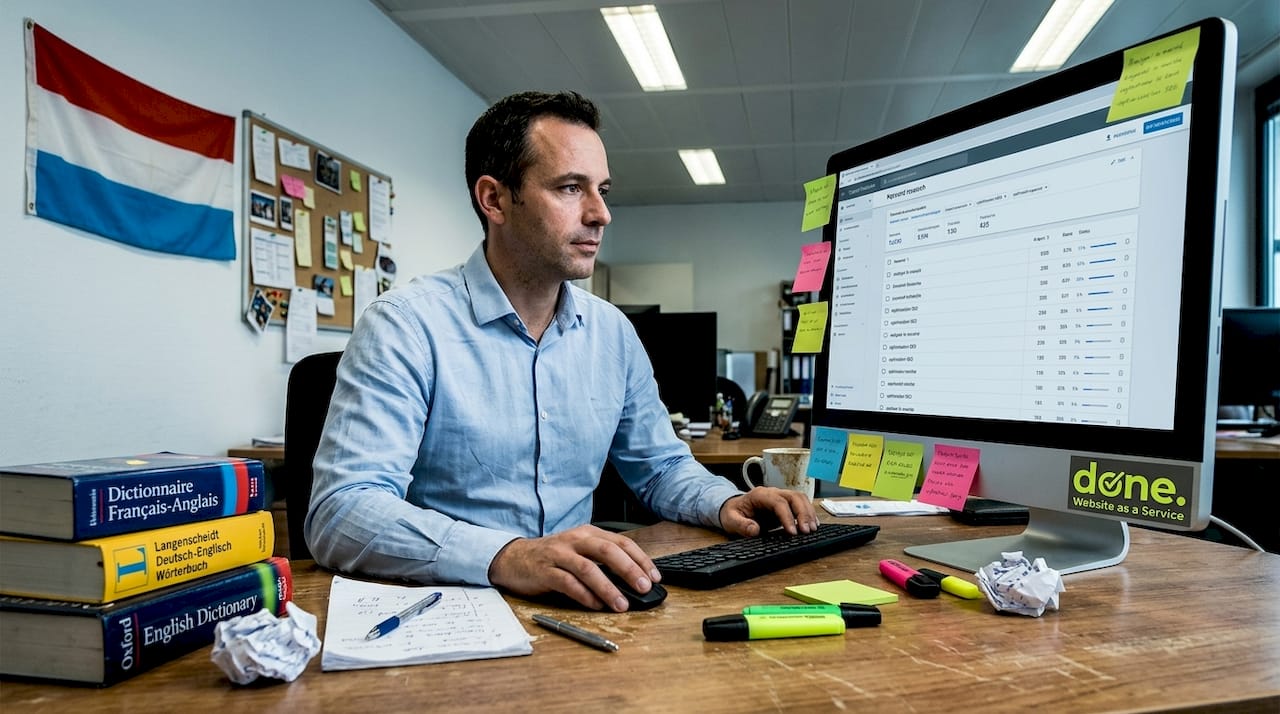
Local SEO deserves particular emphasis for Luxembourg businesses. The country’s small geographic footprint means most SMEs serve primarily local customers. Optimising for “near me” searches, maintaining consistent NAP citations across directories, and earning reviews on Google and local platforms builds the signals search engines use to determine local relevance. Understanding local SEO benefits helps businesses capture this high-intent traffic effectively.
SEO’s role in a comprehensive digital marketing strategy
SEO functions most effectively within an integrated marketing ecosystem rather than as an isolated tactic. Understanding how organic search connects with other channels maximises overall marketing performance. Organic search delivers 53% to 68% of website traffic for most businesses, making it the single largest traffic source and justifying its central role in digital strategies.
This dominance stems from user behaviour patterns. When researching solutions, 71% of B2B buyers begin with generic search queries rather than branded terms or direct site visits. Capturing this early-stage awareness traffic positions your business as a trusted resource before prospects evaluate specific vendors. SEO enables this positioning at scale without per-click costs.
Cost efficiency comparisons reveal SEO’s long-term advantages. Whilst initial investments require patience, the cost per acquisition through organic channels typically settles 60% to 75% below paid advertising after 12 months. This gap widens over time as content continues generating traffic without ongoing spend, whilst paid campaigns require constant budget allocation.
| Marketing Channel | Speed to Results | Cost Per Lead | Sustainability | Best Use Case |
|---|---|---|---|---|
| SEO | 3 to 6 months | Low (long-term) | High | Building lasting visibility |
| PPC | Immediate | Medium to High | Low | Testing and quick wins |
| Social Media | 1 to 3 months | Medium | Medium | Brand building and engagement |
| Email Marketing | Immediate | Low | High | Nurturing existing leads |
Channel integration amplifies results beyond what isolated tactics achieve. Combining SEO with paid advertising accelerates lead generation by providing immediate visibility whilst organic rankings develop. Paid campaigns generate data about high-converting keywords and audience segments, informing SEO content priorities. Simultaneously, strong organic visibility reduces paid advertising dependency, lowering overall acquisition costs.
Social media and SEO create mutually reinforcing effects. Social platforms drive initial traffic to new content, generating engagement signals that search engines interpret as quality indicators. Quality content discovered through search gets shared socially, expanding reach beyond organic rankings alone. This virtuous cycle compounds over time.
Emerging trends shape how SEO integrates with broader marketing:
- Voice search optimisation requires conversational content matching how people speak rather than type
- Video content increasingly appears in search results, demanding multimedia strategies
- AI-generated search experiences prioritise authoritative, comprehensive content over keyword-stuffed pages
- Privacy regulations affect tracking capabilities, making organic traffic more valuable as paid attribution becomes harder
Content marketing and SEO prove inseparable in practice. Every piece of quality content serves dual purposes: educating prospects and attracting organic search traffic. This efficiency makes content marketing one of the highest-ROI activities available to SMEs. Creating genuinely useful resources positions your business as an authority whilst systematically improving search visibility.
Marketing automation enhances SEO effectiveness by nurturing organic traffic into customers. Visitors arriving through search often need multiple touchpoints before purchasing. Capturing email addresses through valuable content offers, then delivering targeted sequences addressing specific concerns, converts organic traffic more effectively. Understanding proper digital marketing workflow ensures these systems work together seamlessly.
Attribution challenges require sophisticated thinking. Organic traffic often appears as the final touchpoint before conversion, yet prospects may have discovered your brand through paid ads or social media initially. Multi-touch attribution models reveal SEO’s true contribution by crediting all channels involved in the customer journey. This perspective prevents undervaluing SEO’s role in overall marketing performance.
How Done LU supports your SEO and digital marketing ambitions
Transforming SEO strategy into measurable results requires expertise across technical optimisation, content creation, and multilingual market understanding. Done LU specialises in helping Luxembourg and European SMEs navigate these complexities, delivering integrated solutions that combine web development excellence with strategic digital marketing.
Our approach begins with comprehensive audits identifying the technical barriers preventing your site from ranking effectively. We then develop tailored strategies addressing Luxembourg’s unique trilingual market, ensuring your content resonates with French, German, and English-speaking audiences authentically. Investing in web development that prioritises both user experience and search engine requirements creates the foundation for sustainable organic growth.
Beyond technical optimisation, we help businesses understand SEO’s role in digital marketing within their specific industry context. Whether you need immediate lead generation through combined SEO and paid campaigns or long-term visibility building, our team designs strategies matching your business objectives and budget realities. Finding the right internet agency in Luxembourg means partnering with specialists who understand local market dynamics whilst applying international best practices.
Frequently asked questions
How long does it take to see results from SEO?
Initial traction typically appears within 3 to 6 months of consistent optimisation efforts, with meaningful traffic increases and lead generation emerging around the 6 to 12 month mark. Technical improvements and low-competition keywords may show faster results, whilst competitive terms require longer timeframes. Patience and consistent effort prove essential for SEO success.
What should SMEs budget for SEO investment?
Most successful SMEs allocate 5% to 10% of total revenue towards SEO activities, balancing technical optimisation, content creation, and ongoing maintenance. Businesses in competitive sectors may need higher investments initially to establish authority. Starting with technical foundations and expanding as results demonstrate value provides a practical approach for budget-conscious organisations.
Why is multilingual optimisation important for European markets?
European audiences search in their native languages using culturally specific terminology and phrasing. Simple translations miss these nuances, resulting in poor rankings and low engagement. Creating separate, culturally adapted content for each target language improves relevance signals, increases rankings, and drives higher conversion rates from organic traffic.
Can combining SEO with paid ads accelerate results?
Absolutely. Paid campaigns generate immediate visibility and valuable data about high-converting keywords whilst SEO builds sustainable long-term rankings. This combination provides short-term lead generation supporting cash flow whilst organic visibility develops. Businesses running both channels report 40% higher overall conversion rates compared to single-channel approaches.
What technical factors most impact SEO performance?
Page speed, mobile optimisation, and crawlability form the critical technical foundation. Search engines cannot rank pages they cannot properly access and index. Sites loading slowly or displaying poorly on mobile devices suffer ranking penalties and higher bounce rates. Addressing these technical elements before investing heavily in content creation ensures your efforts generate maximum returns.