

How to secure AI for your business: a guide for European SMEs
April 30, 2026
Business automation in Luxembourg: Boost efficiency with AI
May 1, 2026
TL;DR:
- Small and medium-sized enterprises are increasingly investing in AI, often surpassing larger firms in budget allocation.
- SMEs adopt AI for cost efficiency, faster operations, better customer service, and competitive innovation.
- Challenges include skills shortages, costs, data quality, and navigating EU regulations, but incremental, focused projects can succeed.
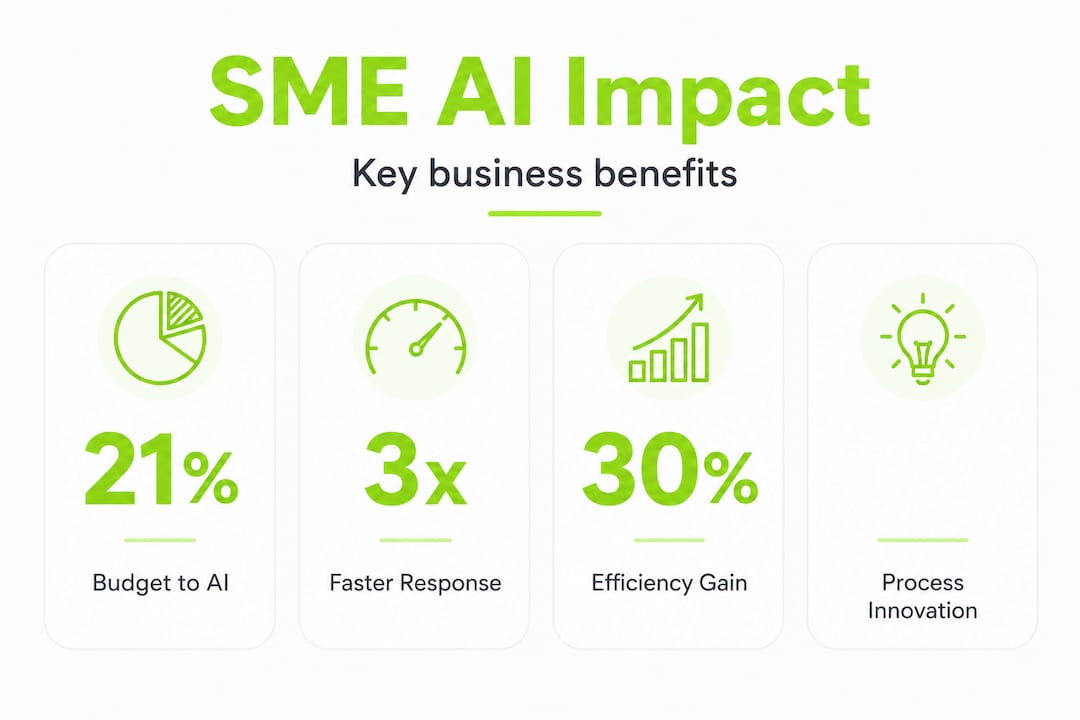
Small and medium-sized enterprises across Luxembourg and Europe are increasingly embracing artificial intelligence, yet many business owners still assume these technologies are reserved for large corporations with vast IT budgets. That assumption is increasingly at odds with reality. Advanced SME AI users plan to allocate 21% of their investment budgets to AI in 2026, surpassing larger firms at 17%. This guide cuts through the noise, explains what AI can realistically do for your business, addresses common obstacles, and gives you a clear, practical starting point.
Table of Contents
- Why SMEs are embracing artificial intelligence
- Understanding the business benefits of AI for SMEs
- Challenges to AI adoption for small businesses
- Practical steps to start using AI in your business
- Why most SME AI journeys fail — and what really works
- Where to get help with AI for your SME
- Frequently asked questions
Key Takeaways
| Point | Details |
|---|---|
| SMEs outpace large firms in AI investment | In 2026, European SMEs are investing more of their budgets in AI than larger competitors. |
| AI delivers real-world SME value | From automating tasks to improving customer experience, AI helps small businesses operate smarter and faster. |
| Challenges are surmountable | Skill gaps, funding, and regulation can be managed with incremental steps and external support. |
| Start small and focus | Choosing a specific process for your first AI pilot maximises the chance of success and ROI. |
Why SMEs are embracing artificial intelligence
Having established the growing investment in AI among smaller businesses, let us look at why SMEs are leading this charge and what concrete benefits they are seeing across Europe.
The idea that AI belongs exclusively to corporate giants is quickly becoming outdated. SMEs in Luxembourg and across the EU are not simply following a trend; they are actively making strategic decisions to invest in AI at a faster rate than their larger counterparts. The reasons are straightforward: smaller organisations tend to have more agility, leaner decision-making structures, and a stronger motivation to find competitive advantages wherever they can.
According to ECB research on AI investment, advanced SME users plan to allocate 21% of their budgets to AI in 2026, compared to just 17% for large enterprises. This tells a compelling story: when SMEs commit to AI, they commit seriously. They are not dabbling; they are reconfiguring how they compete.
Key drivers pushing SMEs towards AI adoption
Several forces are motivating SMEs to prioritise AI right now:
- Cost efficiency: Automating repetitive tasks such as invoicing, data entry, and appointment scheduling reduces operational costs without requiring additional headcount.
- Faster operations: AI tools process large volumes of data in seconds, reducing the time your team spends on manual analysis and reporting.
- Enhanced customer service: Chatbots, virtual assistants, and AI-powered communication tools allow SMEs to offer round-the-clock support without proportionally increasing staff costs.
- New business models: AI opens up opportunities for personalised product recommendations, dynamic pricing strategies, and data-driven service offerings that would have been impractical for smaller firms just five years ago.
- Closing the innovation gap: Smaller businesses can now access capabilities that previously required enterprise-level infrastructure, levelling the playing field considerably.
For a deeper look at how to structure this investment wisely, exploring AI strategies for SMEs is a solid starting point for any owner or manager thinking about their first or next AI initiative.
SME AI investment breakdown by business function
| Business function | Primary AI application | Estimated efficiency gain |
|---|---|---|
| Customer service | Chatbots, automated responses | 30 to 50% reduction in response time |
| Finance and accounting | Invoice processing, fraud detection | 40 to 60% reduction in manual effort |
| Marketing | Content generation, campaign targeting | 25 to 40% improvement in lead quality |
| Operations | Predictive maintenance, scheduling | 20 to 35% reduction in downtime |
| Human resources | CV screening, onboarding automation | 30 to 45% faster hiring cycles |
These figures illustrate that AI is not a single solution but a family of tools that can address very specific pain points across your organisation. The SMEs seeing the strongest returns are those that match the right AI application to the right problem, rather than adopting technology for its own sake.
Understanding the business benefits of AI for SMEs
With a strong rationale behind AI adoption, it is crucial to understand exactly what these technologies can do for your business on a day-to-day operational level.
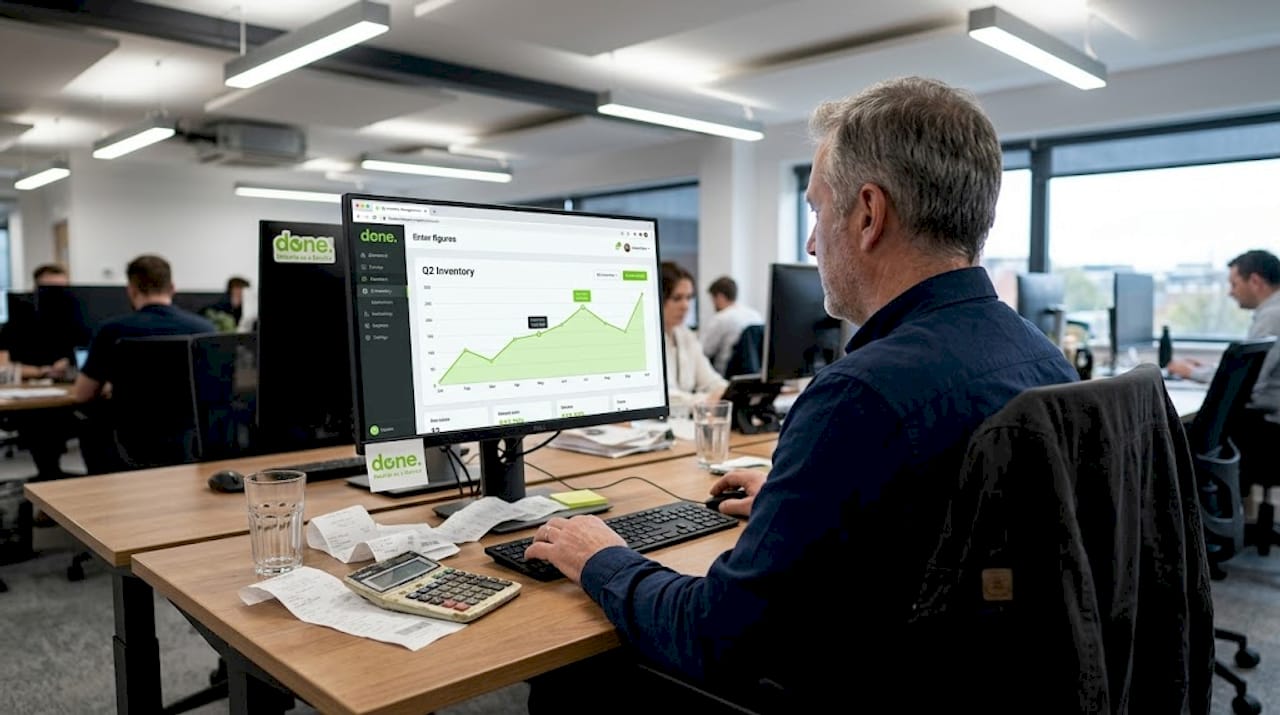
AI delivers value in ways that are both broad and highly practical. At the strategic level, it enables predictive analytics that help you anticipate customer demand, manage stock more efficiently, and identify emerging risks before they become costly problems. At the operational level, it reduces errors, speeds up workflows, and frees your team to focus on higher-value work that genuinely requires human judgement.
Research confirms that AI drives product, process, and organisational innovations in European SMEs, meaning the impact is not limited to one department or function. Businesses that adopt AI thoughtfully tend to see improvements ripple across their entire operation over time.
Manual vs. AI-powered approaches: a practical comparison
| Common SME challenge | Manual approach | AI-powered approach |
|---|---|---|
| Responding to customer enquiries | Staff availability dependent; inconsistent response times | 24/7 automated responses with escalation for complex cases |
| Processing supplier invoices | Manual data entry; high error rate | Automated extraction and matching; near-zero errors |
| Marketing campaign targeting | Segment-based assumptions; broad targeting | Behavioural data analysis; precise audience targeting |
| Financial forecasting | Spreadsheet models; time-intensive | Real-time data modelling; scenario planning in minutes |
| Scheduling and resource planning | Calendar coordination; prone to conflicts | AI scheduling tools; automatic optimisation |
The contrast is stark. AI does not replace the need for skilled people; it removes the drudgery that prevents those people from doing their best work.
Here are the most impactful benefits SMEs report after implementing AI tools:
- Reduced administrative burden: Teams spend less time on repetitive data tasks and more time on client relationships and creative problem-solving.
- Improved decision-making: Real-time dashboards and AI-generated insights give owners and managers a clearer, faster picture of business performance.
- Smarter marketing spend: AI-powered tools analyse which campaigns, channels, and messages generate the best return on investment (ROI), reducing wasted budget.
- Better risk management: From credit risk assessment to cybersecurity threat detection, AI monitors patterns that humans cannot realistically track manually at scale.
- Consistent customer experience: Automated tools ensure every customer interaction follows a defined quality standard, regardless of team size or working hours.
To understand how AI transforms SMEs from the inside out, it helps to look at businesses that have already made this transition, many of which started with just one or two targeted tools before scaling. You can also review top AI tools for SMEs to identify which solutions are best suited to your sector and current needs.
Pro Tip: Do not try to automate everything at once. Start with one process — a customer support chatbot or automated invoice management — measure the results over 60 to 90 days, and use that data to build confidence and internal support before expanding further.
Challenges to AI adoption for small businesses
While the benefits are clear, many SMEs worry about real and legitimate obstacles. Here is how to navigate the most pressing challenges you are likely to encounter.
Adopting AI is not without its difficulties. The technology is evolving rapidly, the regulatory landscape is shifting, and the internal readiness of most small businesses varies considerably. Acknowledging these challenges honestly is the first step to overcoming them.
The four main barriers SMEs face
-
Skills shortages: Many SMEs do not have staff with dedicated AI or data science expertise. Recruiting specialists is expensive, and training existing teams takes time. This is one of the most commonly cited barriers across Europe, and it is entirely understandable given how recently AI literacy has become a mainstream professional skill.
-
Financial constraints: Initial investment in AI tools, integration, and training can feel daunting, especially for businesses already managing tight margins. However, the landscape has shifted. Many AI tools now operate on subscription models with low entry costs, and EU-level support frameworks are increasingly available to offset risk.
-
Data quality and integration: AI systems are only as reliable as the data that feeds them. If your business data is fragmented across multiple platforms, poorly structured, or inconsistently maintained, this needs to be addressed before meaningful AI implementation can occur. Integration with existing processes — your accounting software, customer relationship management system, or e-commerce platform — requires careful planning.
-
Regulatory complexity: The EU AI Act introduces a risk-based regulatory framework that classifies AI applications by potential harm. Higher-risk applications face stricter requirements, while lower-risk tools enjoy a lighter compliance burden. Navigating this framework can feel complex for SMEs without legal or compliance expertise.
“The EU AI Act is risk-based in its approach. It includes regulatory sandboxes and reduced fees for SMEs to ensure smaller businesses can innovate and comply without being overwhelmed by the costs and complexity faced by larger regulated entities.”
This regulatory sandbox model is particularly valuable. It allows SMEs to test AI solutions in a real-world environment under regulatory supervision, providing both protection and the freedom to experiment without the full weight of compliance requirements applying from day one. For a deeper exploration of navigating these complexities, AI consulting for SMEs can provide structured guidance tailored to your sector and situation.
Pro Tip: Rather than attempting full-scale AI transformation immediately, pursue incremental adoption. Identify one or two processes where AI could deliver rapid, measurable results, implement a focused pilot, then use the evidence from that pilot to plan your next step. This approach manages financial risk while building the internal knowledge and confidence your team needs.
Practical steps to start using AI in your business
Understanding the hurdles makes it easier to chart a practical path. Here is how you can take action today, even if you are starting from zero.
The most important thing to recognise is that starting with AI does not require a sophisticated infrastructure or a large team. What it does require is honest self-assessment, a clearly defined problem to solve, and the discipline to measure results before scaling.
A step-by-step roadmap for SME AI adoption
-
Audit your current processes. Begin by mapping out the workflows in your business that consume the most time, produce the most errors, or create the most friction for your customers. These are your highest-priority candidates for AI support. Look specifically for repetitive, rule-based tasks that follow predictable patterns — these are the easiest and quickest wins.
-
Assess your technology and leadership readiness. Research confirms that leadership and technology readiness are among the most critical factors in determining whether AI adoption succeeds or stalls. This is known as the TOE-RBV framework, which examines Technology, Organisation, and Environment alongside your existing Resource-Based Value. In practice, this means asking: does your leadership team understand and support AI adoption? Do you have the data infrastructure and digital tools in place to integrate AI meaningfully?
-
Choose a focused pilot project. Select one process from your audit that is low-risk but offers a clear, measurable benefit. Customer-facing chatbots, automated email responses, invoice processing, or social media content scheduling are all well-proven starting points for SMEs. Keep the scope tight and the success criteria clear.
-
Implement and measure. Roll out your chosen tool with proper staff briefing and a clear plan for tracking results. Measure baseline performance before implementation, then track the same metrics after. Focus on metrics such as time saved, error rate, response speed, and cost per task.
-
Iterate and scale. Once your pilot demonstrates measurable improvement, use that evidence to plan the next implementation. Over time, your business builds both the technical infrastructure and the internal confidence to take on more ambitious AI projects.
Resources to reduce your entry barriers
- Local and European digital initiative programmes offer funding and advisory support for SMEs exploring AI.
- EU regulatory sandboxes provide a supervised environment to test AI applications without full compliance overhead.
- Specialist consultancies with SME-focused AI expertise can significantly shorten your learning curve and reduce costly mistakes.
- Online knowledge bases and training platforms help upskill your existing team without requiring full-time AI hires.
If your goal is to improve your marketing performance specifically, understanding using AI tools for marketing offers a focused look at how AI is reshaping digital campaigns for smaller businesses. Equally, for a broader operational view, exploring AI for productivity and compliance covers how SMEs are integrating AI across departments while staying within regulatory boundaries.
Pro Tip: Document your return on investment (ROI) from the very first pilot. Even modest gains, such as saving 10 hours per week on invoice processing, translate into compelling internal evidence. Stakeholders who see clear numbers are far more likely to support further investment, and this early documentation forms the foundation of your broader AI business case.
Why most SME AI journeys fail — and what really works
Having covered actionable steps, let us zoom out for an honest look at what separates successful SME AI adoption from failure. The pattern we observe is often uncomfortable to hear, but it is consistent.
Most SME AI projects do not fail because the technology is too complex. They fail because of how the project is approached from the very beginning. Specifically, there are two recurring patterns that derail AI adoption before it ever produces meaningful results.
The first is chasing hype before solving real problems. A business owner reads about a breakthrough AI model, attends a webinar, and decides to implement something impressive. But without a clearly defined business problem to solve, even the most advanced tool delivers nothing of value. AI is not a product you buy and deploy; it is a capability you develop in response to a specific need. When the use case is vague or aspirational rather than practical, failure is almost inevitable.
The second pattern is trying to do too much too soon. Ambitious transformation roadmaps that promise to overhaul multiple departments simultaneously tend to collapse under their own weight. They exceed budgets, overwhelm teams, produce inconsistent data quality, and ultimately stall. The businesses that succeed with AI are those that start with one well-chosen use case, prove the value, and then expand deliberately.
The research is clear: AI innovation success relies on leadership and organisational readiness far more than on the sophistication of the technology itself. Leadership that is uncertain, unconvinced, or disengaged creates teams that treat AI tools as optional add-ons rather than strategic assets. The result is low adoption, inconsistent use, and ultimately abandonment.
What actually works? Focused leadership commitment to a single, well-defined problem. A realistic timeline. Clear metrics for success. And the patience to learn before scaling. SMEs that approach AI this way build genuine capability over time. Those that chase transformation for its own sake rarely get beyond the pilot stage.
If you want to understand the approaches that genuinely produce returns, reviewing proven SME AI strategies provides a grounded, evidence-based perspective on what separates successful adoption from expensive dead ends.
Where to get help with AI for your SME
If you are ready to explore or accelerate your use of AI, here is where trusted local support comes in.
Navigating AI adoption alone is possible, but it is far slower and riskier than working with a partner who has done it before. For SMEs in Luxembourg and across Europe, specialist digital and AI consulting support removes the guesswork, shortens the implementation timeline, and ensures your investment is directed where it will have the greatest impact.
At Done.lu, we specialise in helping small and medium-sized businesses across Luxembourg and Europe make practical, sustainable progress with artificial intelligence. From initial audit through to tool implementation, staff training, and ongoing optimisation, our approach is designed around your business needs rather than a fixed technology agenda. Whether you need guidance on the right tools to start with, support navigating GDPR-compliant AI deployment, or a full digital transformation strategy, we are here to help. Explore our AI consulting for SMBs services, browse our recommendations for the best AI tools for SMEs, or connect with our team directly through our digital consulting in Luxembourg service page.
Frequently asked questions
Do SMEs need a dedicated data scientist to use AI?
No, many AI solutions are built specifically for non-technical users and can be deployed effectively with external consultancy support. EU sandboxes and support structures also exist precisely to help SMEs access AI benefits without requiring in-house specialists.
Are there EU or Luxembourg incentives for SMEs to adopt AI?
Yes, the EU AI Act includes reduced fees and regulatory sandboxes specifically designed to help SMEs innovate and achieve compliance without bearing the same regulatory burden as large enterprises.
What is the first step for a small business starting with AI?
Begin by identifying one repetitive or customer-facing process that could benefit from automation, then pilot a focused, low-cost tool in that area. Research confirms that focused use cases and readiness are the most reliable predictors of successful early AI adoption.
What is the biggest challenge SMEs face with AI?
The most consistently reported obstacles are skills shortages, financial constraints, inconsistent data quality, and uncertainty around regulatory requirements, all of which are cited prominently in EU digital strategy guidance on AI adoption for smaller businesses.