

Step by step e-commerce setup: your 2026 guide
June 27, 2026
Why focus on local SEO: a practical guide for SMBs
June 29, 2026
TL;DR:
- Inbound marketing is a revenue system that attracts, engages, and converts leads using targeted content and automation. Success depends on clean data, behavioral triggers, and continuous review, not just content creation. Building one focused workflow and maintaining operational discipline enables long-term growth for SMBs.
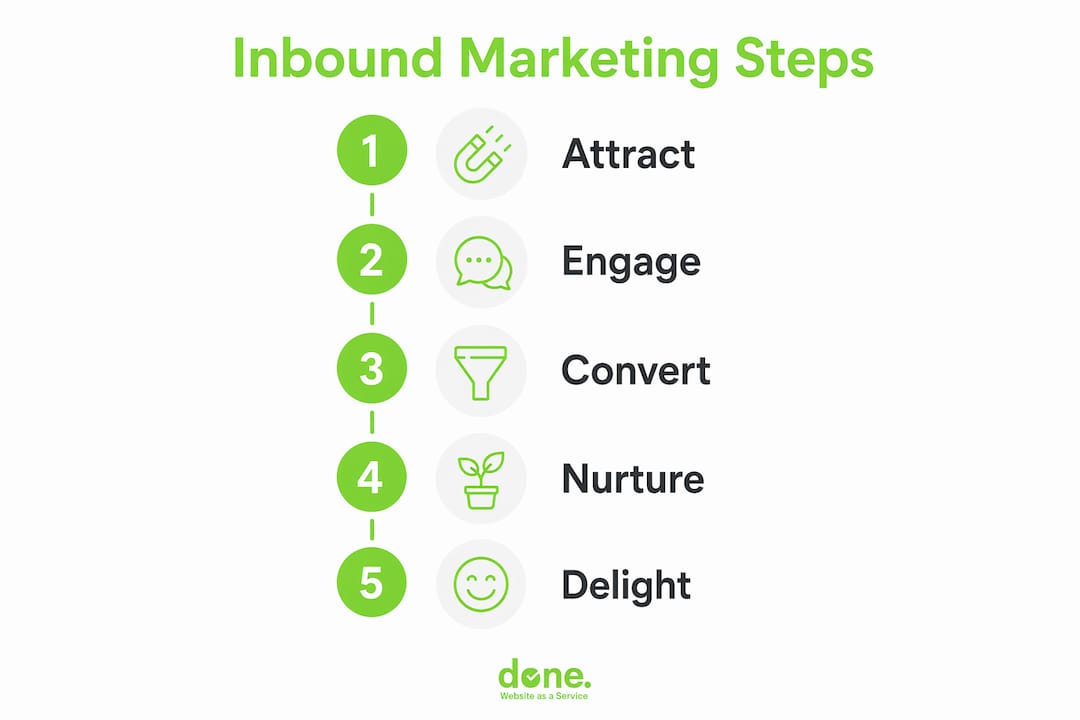
The inbound marketing process is defined as a systematically engineered approach that attracts, engages, and converts leads through targeted content, marketing automation, and continuous measurement. Unlike paid advertising, which stops the moment your budget runs out, inbound compounds value over time. It is more than content marketing. As a full revenue engine, it integrates conversion architecture, lifecycle management, and sales alignment into a single, repeatable system. For small and medium-sized businesses in Luxembourg, getting this system right means generating qualified leads consistently, without scaling your headcount in proportion to your growth.
What tools and data do you need before starting the inbound marketing process?
The most common mistake SMBs make is automating before they are ready. Inbound success demands a clean data foundation, CRM synchronisation, and lifecycle stage mapping before a single workflow goes live. Skipping this step means automating chaos, not fixing it.
The core technology stack
You need three categories of tools working together: a marketing automation platform, a CRM, and a behavioural tracking layer. For SMBs, platforms such as ActiveCampaign, Brevo, or Mailchimp cover the automation and email layer well. Your CRM, whether that is HubSpot CRM, Pipedrive, or Zoho, must sync contact data in real time with your marketing platform. Without that sync, your sequences will fire at the wrong people at the wrong time.

Behavioural tracking is the layer most SMBs ignore. You need to know which pages a contact visits, which content they download, and which emails they open. This data is what powers event-driven triggers, which outperform time-based sequences for conversion. A simple Google Tag Manager setup connected to your automation platform covers the basics without requiring a developer.
Data quality and alignment requirements
Clean contact lists are non-negotiable. Duplicate records, missing lifecycle stages, and mismatched field names between your CRM and marketing platform will break your workflows silently. Audit your data before you build anything. Define your Marketing Qualified Lead (MQL) criteria in writing, agreed upon by both marketing and sales. Clear MQL definitions and documented handoff procedures directly increase lead conversion efficiency.
| Requirement | Why it matters |
|---|---|
| Clean contact lists | Prevents sequences firing at wrong or duplicate contacts |
| CRM and marketing platform sync | Keeps lifecycle stages accurate across both systems |
| Behavioural tracking (e.g. Google Tag Manager) | Enables event-driven triggers based on real actions |
| Agreed MQL definition | Aligns sales and marketing on when to hand off a lead |
| Lifecycle stage mapping | Ensures contacts receive content relevant to their stage |
Pro Tip: Before building any automation, identify the single biggest leak in your current funnel. Fix that one problem first. Automating a broken process at scale only amplifies the damage.
How to design and implement the inbound marketing process step by step
The difficulty in marketing automation is 90% strategic, not technical. You do not need to write code. You need to map your data, define simple triggers, and build sequences that match how your prospects actually behave. The steps below give you a repeatable framework to do exactly that.
The seven-step workflow build
-
Define your workflow goal. Every workflow must solve one specific problem. Examples: re-engage cold leads, nurture new subscribers, or follow up after a product demo request. A vague goal produces a vague workflow.
-
Identify the trigger event. The trigger is what starts the workflow. Behavioural triggers, such as a contact downloading a guide, visiting your pricing page, or submitting a contact form, are far more effective than time-based triggers like “send an email every Tuesday.” Build around actions, not calendars.
-
Segment your audience. Not every contact should enter the same workflow. Segment by industry, company size, lifecycle stage, or previous behaviour. A first-time subscriber needs different messaging than a returning prospect who has already read three case studies. Tailored communication converts better than broadcast messaging.
-
Map your content sequence. Plan the full sequence before you build it. Decide how many touchpoints the workflow contains, what each message says, and what action you want the contact to take at each step. Each message should move the contact one step closer to a decision, not simply fill their inbox.
-
Set frequency and exit rules. Decide how often contacts receive messages and, critically, when they leave the workflow. Exit rules prevent contacts from receiving irrelevant messages after they have already converted. A contact who books a call should exit the nurture sequence immediately.
-
Build event-driven branches. Add conditional logic based on contact behaviour. If a contact clicks a specific link, send them down a different path. If they do not open three consecutive emails, reduce frequency or switch channel. This is where behavioural triggers earn their value.
-
Test before you launch. Send test emails to yourself and colleagues. Check that triggers fire correctly, that exit rules work, and that personalisation fields pull the right data. A broken workflow sent to 2,000 contacts is far harder to recover from than a broken test sent to five.
Timeline expectations
Initial marketing automation value is achievable within 30 days. Full workflow coverage, including reporting and channel integration, typically takes one quarter, around 90 days. That is a realistic benchmark for an SMB starting from scratch. Do not expect results in week one, and do not wait six months before reviewing performance.
Audience segmentation in practice
Segmentation does not need to be complex at the start. A simple three-segment model works well for most SMBs: new subscribers who need education, warm leads who have shown intent, and cold contacts who need re-engagement. Each segment gets a different entry point and a different message tone. As your data matures, you can add more granular segments based on industry or product interest.
Pro Tip: Start with one workflow only. Pick your highest-volume lead source, build a single nurture sequence for it, and measure the result before building anything else. We have seen this approach with clients at Done produce clear ROI within the first month, which then justifies investment in the next workflow.
What common pitfalls should you avoid in inbound marketing workflows?
Even well-designed workflows fail when the underlying habits are wrong. The most expensive mistakes in inbound marketing are not technical errors. They are process failures that compound quietly over weeks until your pipeline dries up.
The five most common mistakes and how to fix them
-
Chasing vanity metrics. Pageviews and email open rates feel good but tell you little about revenue impact. Track metrics that connect to business outcomes: lead-to-customer conversion rate, cost per qualified lead, and revenue attributed to inbound channels. Reframe your reporting around these numbers from day one.
-
Automating everything at once. Building ten workflows simultaneously before any of them have been tested is a guaranteed way to create a maintenance burden you cannot manage. Start with one workflow, prove it works, then scale. Successful implementations solve one specific problem first.
-
Neglecting workflow health reviews. Workflows degrade. Contacts change jobs, email addresses go stale, and offers become outdated. Regular weekly or bi-weekly reviews maintain workflow effectiveness and prevent your system from quietly underperforming. Schedule these reviews as a fixed calendar event, not an occasional task.
-
Poor sales and marketing alignment. If sales does not know what a lead has received before it lands in their inbox, the handoff feels disjointed to the prospect. Document your handoff process. Specify which workflow a lead came from, what content they engaged with, and what the agreed next step is. This single document prevents more lead leakage than any automation feature.
-
Ignoring data quality after launch. Data degrades at roughly 20–25% per year in most B2B databases. Build a quarterly data audit into your operating cadence. Remove duplicates, update lifecycle stages, and re-validate email addresses. Clean data is not a one-time task.
The pattern across all five mistakes is the same. Businesses treat inbound marketing as a project with a finish line rather than a system with an operating cadence. The inbound marketing strategy that compounds over time is the one that gets reviewed, adjusted, and maintained consistently.
How does the inbound marketing process build long-term customer relationships?
Acquisition is only the first chapter. The inbound marketing strategy that generates the strongest return is one that continues working after the sale. Post-purchase engagement is where most SMBs leave money on the table, and where the compounding effect of inbound becomes most visible.
Post-purchase sequences that drive repeat business
Structured post-purchase follow-up sequences increase repeat purchases by 20–40%. That figure reflects what happens when you replace silence after a sale with a deliberate onboarding and nurturing sequence. The sequence does not need to be long. Three to five emails covering product usage tips, a check-in at day 30, and a relevant upsell offer at day 60 is enough to meaningfully improve retention.
Behavioural triggers work just as well post-sale as they do pre-sale. If a customer visits your pricing page again after purchase, that is a signal. If they download a guide on an adjacent topic, that is another signal. Build post-purchase workflows that respond to these actions rather than sending the same generic newsletter to your entire customer base.
The delight stage in practice
The delight stage of inbound marketing, the phase focused on turning customers into advocates, relies on three things:
- Consistent communication. Regular, relevant touchpoints keep your brand present without being intrusive. A monthly email with genuinely useful content outperforms a weekly promotional blast.
- Personalised follow-up. Use the behavioural data you have collected to send messages that reflect what each customer actually cares about. A customer who bought a specific service should receive content relevant to that service, not your full product catalogue.
- Feedback loops. Net Promoter Score surveys, review requests, and direct check-in calls give you data to improve your product and your marketing simultaneously. Customers who feel heard become advocates. Advocates reduce your cost of acquisition for every new customer they refer.
The compounding nature of inbound means that each satisfied customer who refers one new contact reduces the cost of your next acquisition. Over 12–24 months, a well-maintained inbound system produces results that paid advertising cannot replicate at the same cost. Patience and a consistent operating cadence are the two non-negotiable inputs.
For SMBs looking to understand the fundamentals of lead generation before building post-purchase sequences, grounding yourself in how leads move through the funnel makes the delight stage far easier to design.
Key takeaways
The inbound marketing process succeeds when it combines clean data, behavioural triggers, and a consistent operating cadence, not when it simply produces more content.
| Point | Details |
|---|---|
| Data foundation first | Audit contact lists and sync your CRM before building any workflow. |
| Behavioural triggers win | Event-driven sequences convert better than time-based email schedules. |
| Start with one workflow | Prove value on a single workflow before scaling to multiple sequences. |
| Maintain an operating cadence | Weekly or bi-weekly reviews prevent workflows from degrading over time. |
| Post-purchase engagement matters | Structured follow-up sequences increase repeat purchases by 20–40%. |
Why most inbound marketing systems stall before they compound
After working with SMBs across Luxembourg for over a decade, I have seen the same pattern repeat itself. A business invests in a marketing automation platform, builds a handful of email sequences, and then waits. Six months later, the results are underwhelming, and the conclusion is that inbound marketing does not work for their sector.
The real problem is almost never the channel. It is the absence of a system. Inbound marketing is consistently misunderstood as content marketing with some automation bolted on. It is not. It is a revenue engine that requires sales alignment, conversion architecture, and a measurement framework to function. Content is the fuel, but the engine needs all its parts connected.
The businesses I have seen get the best early results share one habit: they pick one specific problem, build one workflow to address it, and measure it obsessively before touching anything else. A re-engagement sequence for cold leads. A post-demo nurture for prospects who went quiet. One workflow, one metric, one month. That discipline produces the confidence and the data to scale.
The other thing I would push back on is the assumption that behavioural triggers are complex to set up. They are not. Knowing that a contact visited your pricing page twice in one week and sending them a relevant case study the next morning is not sophisticated technology. It is common sense, automated. Time-based sequences, by contrast, send the same message regardless of what the contact is actually doing. The difference in conversion rates reflects that gap.
Finally, the businesses that sustain inbound results are the ones that treat it like a product, not a campaign. They have a review cadence. They update their workflows when offers change. They document their handoff process so sales knows exactly what a lead has seen before picking up the phone. That operational discipline is what separates a system that compounds from one that quietly stalls.
— Thomas
How Done supports SMBs with inbound marketing and automation
Building an inbound marketing system from scratch takes time, and the sequencing matters. Done works with SMBs in Luxembourg to design and implement marketing automation workflows that are grounded in clean data, aligned with sales, and built to compound over time.

From defining your MQL criteria to building behavioural trigger sequences and setting up your reporting framework, Done handles the full implementation. The focus is always on one specific problem first, then scaling what works. If you are ready to move from ad-hoc email sends to a structured inbound marketing system, Done provides the expertise and the hands-on support to get there without the guesswork that slows most SMBs down.
FAQ
What is the inbound marketing process?
The inbound marketing process is a system that attracts, engages, and converts leads through content, behavioural automation, and lifecycle management. It differs from outbound marketing by pulling prospects toward your business rather than interrupting them.
How long does it take to see results from inbound marketing?
Initial value from a marketing automation workflow is achievable within 30 days. Full workflow coverage with reporting and channel integration typically takes around 90 days for an SMB starting from scratch.
What is the difference between inbound marketing and content marketing?
Content marketing is one component of the inbound marketing process. Inbound marketing also includes conversion architecture, marketing automation, CRM integration, sales alignment, and measurement, making it a complete revenue system rather than a publishing strategy.
What triggers should I use in my inbound marketing workflows?
Behavioural triggers, such as a contact visiting your pricing page, downloading a guide, or submitting a form, outperform time-based triggers. They respond to real intent signals rather than sending messages on a fixed schedule regardless of contact behaviour.
How do I measure inbound marketing success?
Track lead-to-customer conversion rate, cost per qualified lead, and revenue attributed to inbound channels. Avoid relying on pageviews or email open rates alone, as these do not connect directly to business outcomes.