

Web Design’s Impact on Business Growth Outcomes
February 27, 2026
Top 5 the-loupe.com Alternatives 2026
March 1, 2026
Luxembourg SMEs often feel overwhelmed by digital marketing, believing it requires massive budgets and complex technical expertise. The truth is simpler. Allocating just 5 to 10% of your revenue strategically can drive measurable growth and lead generation. This guide walks you through seven actionable steps to build a digital marketing strategy that works for your business, from setting objectives to tracking results.
Table of Contents
- Prerequisites: What You Need Before Starting Your Digital Marketing Strategy
- Step 1: Set Clear Objectives and KPIs
- Step 2: Define Your Audience and Value Proposition
- Step 3: Choose Targeted Digital Channels
- Step 4: Budget Planning for Results
- Step 5: Leverage AI and Marketing Automation
- Step 6: Content Creation and Repurposing
- Step 7: Track Performance and Expect Timelines
- Common Mistakes and Troubleshooting
- Expected Results and Success Metrics
- Boost Your Digital Marketing with Done Web Agency Luxembourg
Key Takeaways
| Point | Details |
|---|---|
| Set SMART objectives | SMART goals improve campaign effectiveness by 30%. |
| Understand your audience | Targeted audience understanding drives 40% higher engagement rates. |
| Allocate budget wisely | Invest 5 to 10% of annual revenue for sustainable digital marketing growth. |
| Leverage AI tools | AI-powered automation boosts marketing efficiency by 20 to 30%. |
| Optimize local presence | Google Business Profile optimization increases local engagement by 50%. |
Prerequisites: What You Need Before Starting Your Digital Marketing Strategy
Before launching campaigns, you need foundational elements in place. Start with a basic grasp of the digital marketing funnel: awareness, consideration, and conversion stages that guide customers from discovery to purchase.
Access to analytics tools is non-negotiable. Google Analytics tracks website behavior. Social media platforms offer native insights showing post performance and audience demographics. These tools transform guesswork into data-driven decisions.
Define your business goals clearly. Are you looking to generate 50 new leads monthly? Increase online sales by 25%? Your objectives shape every tactical choice. Create buyer personas detailing customer demographics, pain points, and preferred channels. Luxembourg’s multilingual market demands understanding whether your audience prefers French, German, English, or Luxembourgish content.
Budget planning matters from day one. Digital marketing budgets for SMEs typically range from 5 to 10% of revenue to achieve meaningful lead generation without overspending. This investment covers paid advertising, content creation, tools, and potentially agency support.
Essential Prerequisites Checklist:
- Analytics access (Google Analytics, social media insights)
- Defined target audience personas with language preferences
- Clear business objectives tied to revenue or lead targets
- Budget allocation between 5 to 10% of annual revenue
- Basic understanding of customer journey stages
| Resource | Purpose | Cost Range |
|---|---|---|
| Google Analytics | Website traffic tracking | Free |
| Social media insights | Engagement metrics | Free (native tools) |
| Email marketing platform | Campaign automation | €20 to €200/month |
| CRM system | Lead management | €30 to €300/month |
Pro Tip: Start with your website creation checklist to ensure your digital foundation supports marketing efforts. A poorly optimized website wastes every dollar spent driving traffic to it. Review your digital marketing workflow to understand how campaigns connect.
Step 1: Set Clear Objectives and KPIs
Vague goals produce vague results. SMART objectives provide the framework: Specific, Measurable, Achievable, Relevant, and Time-bound. Instead of “increase website traffic,” aim for “grow organic traffic by 25% within six months.”
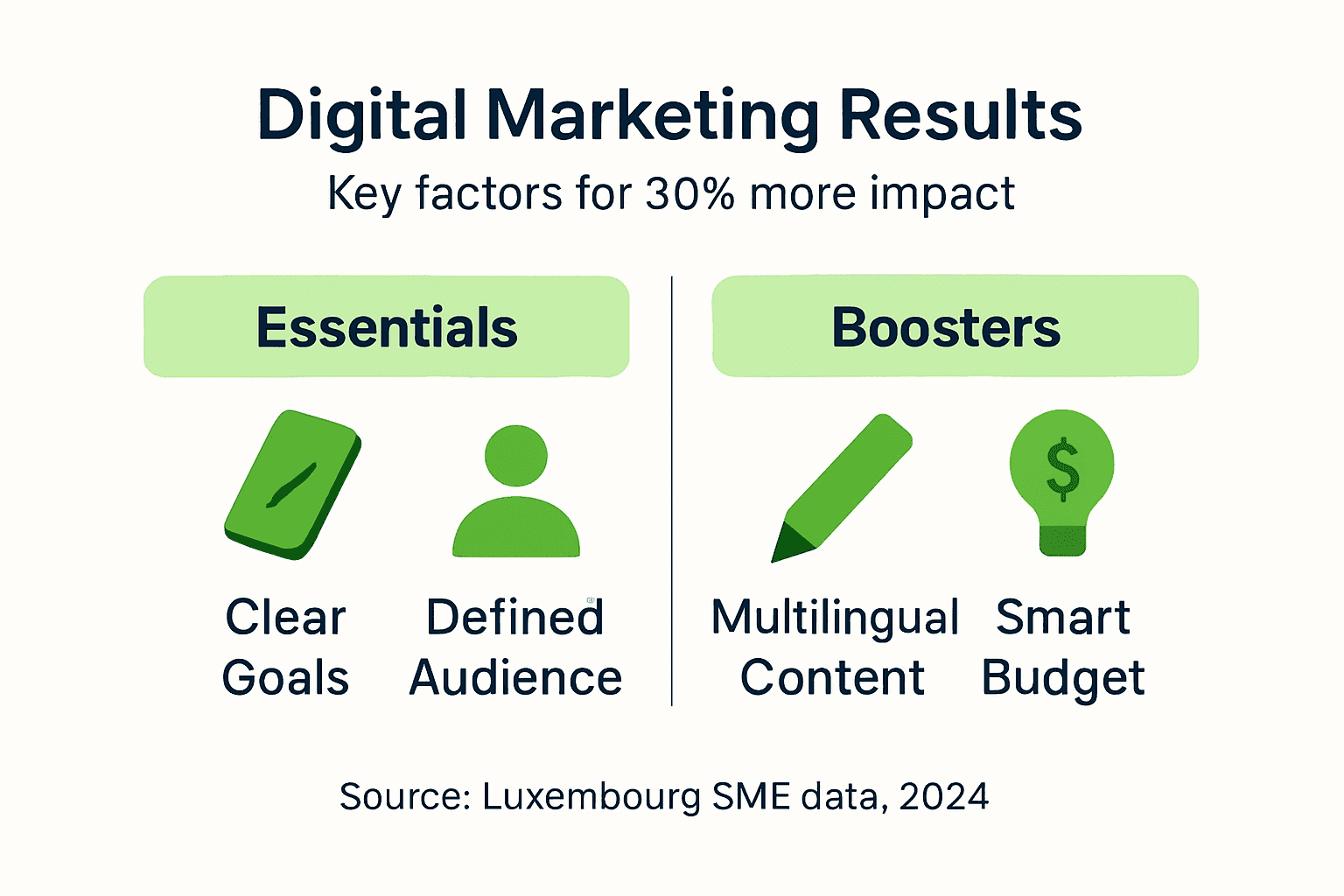
SMEs using SMART objectives see 30% improvement in campaign effectiveness. This happens because clear targets enable precise resource allocation and performance tracking. You know exactly what success looks like and can adjust tactics when falling short.
Key performance indicators translate objectives into measurable metrics. For lead generation, track cost per lead, conversion rate from visitor to contact, and lead quality scores. For brand awareness, monitor website traffic, social media reach, and engagement rates. Align these KPIs with your sales cycle length and customer acquisition patterns.
SMART Objective Framework:
- Specific: Define exactly what you want to achieve
- Measurable: Attach numbers to track progress
- Achievable: Set realistic targets given resources
- Relevant: Connect to broader business goals
- Time-bound: Establish clear deadlines
“Without clear KPIs, digital marketing becomes an expense rather than an investment. Measurable objectives transform campaigns into profit centers.”
Luxembourg’s business environment adds complexity. B2B sales cycles often stretch three to nine months. Factor this timeline into expectations. If your typical customer takes 120 days from first contact to purchase, demanding ROI in 30 days sets you up for disappointment.
Pro Tip: Link your objectives to your lead generation success workflow to ensure alignment across marketing and sales. When finding the right internet agency, verify they understand your SMART goals before starting any project.
Step 2: Define Your Audience and Value Proposition
Knowing who you serve transforms generic marketing into magnetic communication. Build detailed buyer personas covering demographics, job roles, pain points, preferred content formats, and language preferences. Luxembourg’s multilingual reality means a persona might prefer LinkedIn content in English but email communication in French.
Targeted audience understanding drives 40% higher engagement rates. This improvement stems from relevant messaging that speaks directly to customer needs. When a financial services firm targets CFOs with content about regulatory compliance challenges specific to Luxembourg, response rates soar compared to generic finance advice.

Identify the core problems your product or service solves. Your value proposition must answer: why should customers choose you over competitors? Be specific. “We help Luxembourg SMEs reduce tax compliance time by 50% through automated reporting” beats “We provide excellent accounting services.”
Cultural nuances matter in Luxembourg’s market. French-speaking audiences often prefer detailed, formal communication. German speakers value precision and technical depth. English content works for international professionals but adjust tone based on whether you’re reaching American expats or British executives.
Buyer Persona Elements:
- Demographics (age, location, job title, company size)
- Language preferences for different channels
- Primary pain points and challenges
- Information sources and trusted channels
- Decision-making process and timeline
- Budget authority and approval requirements
| Audience Segment | Primary Language | Preferred Channel | Content Type |
|---|---|---|---|
| Local SME owners | French/Luxembourgish | Facebook, Email | Case studies |
| Corporate executives | English/French | Whitepapers | |
| Technical buyers | German/English | Industry forums | Technical guides |
| Retail customers | French/German | Product videos |
Understand where your audience spends time online. Research social networks in Luxembourg usage patterns. LinkedIn dominates B2B, while Facebook and Instagram capture consumer attention. This knowledge prevents wasting resources on platforms your customers ignore.
Step 3: Choose Targeted Digital Channels
Channel selection determines where you invest time and budget. Start with Google Business Profile optimization for local visibility. Optimizing Google Business Profiles leads to 50% higher engagement for SMEs in Luxembourg. Complete your profile fully: accurate hours, services, photos, and regular posts.
Social media platform choice depends on your audience personas. LinkedIn excels for B2B services, professional consulting, and corporate solutions. Facebook reaches broad consumer audiences and local community engagement works well here. Instagram suits visual brands: restaurants, retail, design services. Review social networks in Luxembourg data before committing resources.
Multilingual content is not optional in Luxembourg. Create variations for French, German, and English audiences at minimum. This doesn’t mean translating everything. Prioritize based on audience size and value. Your primary market might receive full content libraries while secondary languages get core materials only.
Pay-per-click advertising offers controlled spending and immediate visibility. Google Ads targets search intent while social media ads build awareness. Start with small budgets, test different audiences and messages, then scale what works. The advantage over SEO is speed: PPC delivers traffic immediately while organic rankings take months.
| Channel | Best For | Timeline | Investment Level |
|---|---|---|---|
| SEO | Long-term organic traffic | 4 to 9 months | Medium (ongoing) |
| PPC | Immediate visibility | Instant | High (ad spend) |
| Social Media | Brand awareness, engagement | 2 to 6 months | Low to Medium |
| Nurturing existing leads | Immediate | Low | |
| Content Marketing | Authority building | 3 to 12 months | Medium |
Channel Selection Priorities:
- Google Business Profile (essential for local businesses)
- One primary social platform matching audience demographics
- SEO for sustainable long-term traffic growth
- Email marketing for lead nurturing
- Selective PPC for specific campaign objectives
Balance is crucial. Over-reliance on paid advertising creates vulnerability when budgets tighten. Building organic channels through local SEO creates sustainable traffic sources. When choosing digital channels in Luxembourg, consider both immediate needs and long-term strategy.
Step 4: Budget Planning for Results
Realistic budget allocation prevents both overspending and underinvestment. The typical digital marketing budget for SMEs is 5 to 10% of annual revenue. A company with €500,000 annual revenue should allocate €25,000 to €50,000 yearly for digital marketing.
Distribute this budget across three core areas. Paid advertising typically consumes 40 to 50%, covering Google Ads, social media promotion, and retargeting campaigns. Content creation and tools take 30 to 40%, including copywriting, design, video production, and software subscriptions. Reserve 10 to 20% for testing new channels and strategies.
Front-load investment in foundational assets. A well-designed website, professional brand materials, and core content pieces serve you for years. Ongoing expenses then focus on promotion, fresh content, and optimization rather than starting from scratch each quarter.
Consider AI tools to stretch budget effectiveness. Automation platforms handle email sequences, social media scheduling, and basic customer service. This technology investment reduces the need for additional staff while maintaining consistent execution. Small teams achieve enterprise-level output through smart tool selection.
Budget Allocation Framework:
- Paid advertising: 40 to 50% (PPC, social ads, retargeting)
- Content and creative: 25 to 35% (writing, design, video)
- Tools and technology: 15 to 20% (automation, analytics, CRM)
- Testing and innovation: 5 to 10% (new channels, experiments)
Track spending against results religiously. Calculate cost per lead for each channel monthly. If LinkedIn generates leads at €45 each while Facebook costs €120 per lead, shift budget accordingly. This data-driven approach maximizes return on every euro invested.
Review your digital marketing budgeting in Luxembourg context and align spending with budgeting for lead generation best practices to ensure realistic expectations and sustainable growth.
Step 5: Leverage AI and Marketing Automation
Small teams face a constant challenge: executing comprehensive strategies with limited resources. AI-powered tools boost marketing efficiency by 20 to 30%, enabling lean operations to compete with larger competitors.
Content ideation becomes faster with AI assistance. Tools analyze trending topics, suggest headlines, and draft initial content outlines. You still need human expertise for final quality and brand voice, but AI eliminates the blank page problem. Writers produce more content in less time.
Email personalization scales through machine learning. Systems segment audiences based on behavior, send messages at optimal times for each recipient, and adjust subject lines for higher open rates. What once required manual segmentation and scheduling now happens automatically across thousands of contacts.
Chatbots handle routine website inquiries 24/7. Visitors get instant responses to common questions about pricing, services, or availability. Complex queries route to human staff. This immediate engagement prevents lead loss during off-hours while freeing your team for high-value conversations.
Predictive analytics identify which leads are most likely to convert. AI scores prospects based on engagement patterns, demographic fit, and historical conversion data. Sales teams prioritize follow-up with hot prospects rather than chasing dead ends. Conversion rates improve through smarter resource allocation.
AI Applications for SME Marketing:
- Content generation and optimization for blog posts and social media
- Email sequence automation with behavioral triggers
- Chatbot customer service for common inquiries
- Predictive lead scoring to prioritize sales efforts
- Ad campaign optimization across platforms
- Social media scheduling and performance analysis
Pro Tip: Start with one AI tool, master it completely, then expand. Common starting points include email automation platforms or social media schedulers. Platforms like AI marketing solutions offer integrated approaches. When selecting marketing automation tools, ensure they integrate with your existing systems.
Step 6: Content Creation and Repurposing
Content fuels every digital marketing channel. Blog posts drive SEO. Social media updates maintain visibility. Email newsletters nurture leads. Video content engages audiences across platforms. The challenge is producing enough quality material consistently without breaking the bank.
Repurposing content can save SMEs up to 40% in production costs while keeping engagement high. A single piece of core content spawns multiple assets. Transform a comprehensive blog post into an infographic, six social media posts, an email newsletter section, and a video script. Same insights, different formats.
Answer customer questions directly. Track the inquiries your sales team receives repeatedly. Each common question becomes a content piece. “How long does X take?” becomes a blog post, social video, and FAQ entry. This approach ensures relevance because you’re addressing real customer concerns.
User-generated content and testimonials provide authentic proof. Encourage satisfied customers to share experiences. Feature their stories across your channels. This content costs nothing to produce yet carries more credibility than self-promotion. Video testimonials are particularly powerful for B2B services.
Maintain a content calendar planning three months ahead. Consistent publishing builds audience expectations and search engine favor. Weekly blog posts, daily social updates, and monthly newsletters create predictable touchpoints. Batch content creation in dedicated sessions for efficiency.
Content Repurposing Strategy:
- Core blog post (1,500 to 2,000 words)
- Pull quote graphics for social media (4 to 6 images)
- Short video summarizing key points (60 to 90 seconds)
- Email newsletter section with link to full article
- LinkedIn article with different angle on same topic
- Podcast episode discussing the subject in depth
Pro Tip: Build a swipe file of successful content from your industry. Note what resonates with audiences, then adapt the approach (never copy) for your brand. Apply content repurposing techniques to maximize every piece you create.
Step 7: Track Performance and Expect Timelines
Data separates successful campaigns from expensive experiments. Regular KPI tracking and optimization drive continuous improvement and ROI. Establish a review cadence: weekly for paid campaigns, monthly for overall performance, quarterly for strategic adjustments.
Monitor click-through rates showing how compelling your messaging is. Track conversion rates revealing how well your offer and landing pages perform. Calculate cost per lead across channels to identify your most efficient sources. Watch customer acquisition cost to ensure profitability remains healthy.
Set realistic timeline expectations. Digital marketing is not instant gratification. Results typically appear within three to six months of consistent effort. SEO takes longest, often requiring six to nine months for competitive keywords. Paid advertising delivers faster but requires ongoing investment.
Use insights to optimize continuously. Low email open rates signal subject line problems or list quality issues. High bounce rates on landing pages indicate messaging misalignment or poor user experience. Each metric tells a story pointing toward improvement opportunities.
Essential Metrics to Track:
- Website traffic (total visitors, traffic sources)
- Conversion rate (visitors to leads, leads to customers)
- Cost per lead by channel
- Customer acquisition cost
- Email open and click rates
- Social media engagement (likes, shares, comments)
- Return on ad spend for paid campaigns
Implement attribution tracking to understand the customer journey. Many buyers touch multiple channels before converting. First-touch attribution credits the initial discovery point. Last-touch credits the final interaction. Multi-touch models recognize all contributing factors. Choose a model matching your sales cycle complexity.
Review tracking digital marketing performance best practices regularly to ensure your measurement approach remains current and comprehensive.
Common Mistakes and Troubleshooting
Even well-planned strategies stumble on common pitfalls. Awareness prevents expensive lessons. Mobile optimization neglect tops the list. Over 60% of web traffic comes from mobile devices. Sites that load slowly or display poorly on phones lose visitors instantly. Test your website on multiple devices regularly.
Inconsistent content publishing kills momentum. Audiences expect regular updates. Posting daily for two weeks then going silent for a month trains people to ignore you. Sustainability beats intensity. Better to publish weekly forever than daily for a month then quit.
Ignoring analytics data wastes the investment in tracking tools. Numbers reveal what works and what fails. If a channel consistently generates low-quality leads at high cost, kill it and redirect budget. Emotional attachment to a platform or tactic shouldn’t override performance data.
Over-reliance on paid advertising creates fragile marketing systems. When budget cuts come or competition drives up costs, traffic disappears overnight. Balance paid channels with organic growth through SEO, content marketing, and community building. Diversification provides stability.
Common Mistake Fixes:
- Mobile issues: Use responsive design, compress images, minimize pop-ups
- Inconsistent publishing: Create content calendar, batch produce, schedule in advance
- Ignoring data: Set weekly review routine, tie metrics to decisions, celebrate data wins
- Paid ad dependence: Allocate 30% minimum to organic channel development
- Neglecting local SEO: Claim directory listings, encourage reviews, maintain NAP consistency
“The biggest mistake SMEs make is stopping right before results appear. Digital marketing compounds over time. Consistency beats perfection.”
Poor targeting wastes budget. Showing ads to everyone because you want maximum reach sounds logical but fails economically. Narrow targeting to ideal customers costs more per impression but converts better, lowering overall acquisition costs. Understand common SME marketing mistakes to avoid repeating them.
Expected Results and Success Metrics
Realistic expectations prevent premature abandonment of effective strategies. Following this guide consistently, Luxembourg SMEs can expect specific improvements within defined timeframes.
Website traffic should grow 20 to 30% within six months of implementing SEO and content marketing. This assumes regular quality content publication, technical optimization, and basic link building. Competitive industries may see slower growth while niche markets move faster.
Lead conversions typically increase 15 to 25% as you optimize landing pages, improve targeting, and refine messaging. Early wins come from fixing obvious problems like broken forms or unclear calls to action. Continuous testing drives incremental improvements over time.
Click-through rates on ads and emails improve 10 to 20% through A/B testing. Small changes in headlines, images, or button colors compound into significant performance gains. Social media engagement grows as you understand what resonates with your specific audience.
Marketing cost reductions of 30 to 40% are achievable through automation and content repurposing. Initial setup requires investment but ongoing execution becomes more efficient. AI tools and systematized processes let small teams punch above their weight.
| Metric | 3-Month Target | 6-Month Target | 12-Month Target |
|---|---|---|---|
| Website Traffic | +10 to 15% | +20 to 30% | +50 to 75% |
| Lead Generation | +10% | +15 to 25% | +40 to 60% |
| Conversion Rate | +5% | +10 to 15% | +20 to 30% |
| Cost per Lead | -10% | -20 to 25% | -30 to 40% |
| Social Engagement | +15% | +30% | +50 to 100% |
Success Indicator Benchmarks:
- Website bounce rate below 50%
- Email open rates above 20%
- Social media engagement rate above 2%
- Landing page conversion rate above 3%
- Customer acquisition cost recovering within 12 months
Remember that results vary by industry, competition level, budget, and execution quality. Use these benchmarks as guides, not guarantees. Track your own performance trends rather than comparing to others in different circumstances.
Boost Your Digital Marketing with Done Web Agency Luxembourg
Implementing a comprehensive digital marketing strategy takes expertise, time, and coordinated execution across multiple channels. Done has helped over 150 Luxembourg businesses transform their online presence and generate consistent leads through data-driven strategies.
Our team handles everything from strategic planning to daily execution, letting you focus on running your business. Whether you need a complete digital marketing workflow overhaul or specific channel expertise, we tailor solutions to your goals and budget. Explore how web development for business growth creates the foundation for successful campaigns. Stay ahead of competition by understanding latest digital marketing trends shaping Luxembourg’s market.
Frequently Asked Questions
What Are the Best Digital Channels for Luxembourg SMEs?
Google Business Profile optimization is essential for local visibility, delivering 50% higher engagement. LinkedIn dominates B2B marketing while Facebook reaches broader consumer audiences. Email marketing provides the highest ROI for nurturing existing relationships. Start with these core channels before expanding to Instagram, YouTube, or niche platforms based on your specific audience research.
How Much Should SMEs Budget for Digital Marketing?
Allocate 5 to 10% of your annual revenue to digital marketing for sustainable growth without overspending. A company earning €500,000 yearly should invest €25,000 to €50,000. New businesses or those playing catch-up may need higher percentages temporarily, while established brands with strong organic presence can operate at the lower end.
When Can SMEs Expect to See Results from Their Digital Marketing?
Most SMEs see measurable improvements within three to six months of consistent execution. Paid advertising delivers immediate traffic but requires ongoing investment. SEO and content marketing take longer, typically six to nine months, but provide sustainable returns. The key is maintaining consistent effort rather than expecting overnight transformation.
How Can SMEs Measure the Success of Their Digital Marketing Strategy?
Track website traffic growth, conversion rates from visitor to lead, cost per lead by channel, and customer acquisition cost. Use Google Analytics for website metrics and native platform analytics for social media performance. Regular monitoring allows quick adjustments when campaigns underperform. Tie metrics directly to revenue to demonstrate clear ROI to stakeholders.
What Role Does AI Play in SME Digital Marketing?
AI increases marketing efficiency by 20 to 30% through automation of content creation, email personalization, and campaign optimization. Small teams achieve enterprise-level output without proportional resource increases. Chatbots provide 24/7 customer service while predictive analytics identify the highest-value leads for sales follow-up. Start with one AI tool, master it, then expand gradually.