

Responsive Web Design: Boosting User Engagement Online
February 21, 2026
Role of SEO in Digital Marketing Success
February 23, 2026
Facing a digital market where competitors update their brands regularly, many e-commerce businesses in Luxembourg wonder if web rebranding will actually help or just cause confusion. With so much at stake, understanding the real risks and rewards of web rebranding is crucial. This guide cuts through common myths and highlights proven strategies, giving you clarity on when rebranding makes sense and how to make every decision align with your business goals.
Table of Contents
- Defining Web Rebranding And Common Myths
- Major Types Of Web Rebranding Initiatives
- The Web Rebranding Process Explained
- Risks, Costs, And Common Mistakes To Avoid
- How Web Rebranding Drives Business Growth
Key Takeaways
| Point | Details |
|---|---|
| Purpose of Web Rebranding | Web rebranding involves updating your digital identity, which differs from a simple website redesign. It requires a clear strategy to reshape customer perception and market positioning. |
| Common Myths | Many believe rebranding guarantees growth or that it is just a visual update. However, without a solid strategy and understanding of customer needs, these assumptions can lead to confusion and wasted resources. |
| Rebranding Types | There are five core types of rebranding, each driven by different triggers like market adaptation or crisis management. Identifying the right type is crucial for effective resource allocation. |
| Growth Potential | A well-executed rebrand can enhance market differentiation, improve customer perception, and open access to new market segments, ultimately driving business growth over time. |
Defining Web Rebranding and Common Myths
Web rebranding means updating your digital identity—your logo, website design, color scheme, messaging, or entire brand positioning online. For small to medium-sized e-commerce businesses in Luxembourg, this often involves refreshing how customers perceive you across your website, social media, and digital touchpoints.
It’s different from a simple website redesign. A redesign changes how your site looks and functions. Rebranding changes who you are in the market.
What Web Rebranding Actually Includes
Web rebranding typically covers:
- Visual identity updates (logo, typography, color palette)
- Website design and user experience overhaul
- Brand messaging and tone of voice adjustments
- Strategic repositioning in your market niche
- Digital marketing alignment with new brand direction
- Customer perception and loyalty rebuilding
Some companies rebrand because of ownership changes, market expansion, or to shed negative associations. Twitter’s rebranding to X demonstrates both the potential risks and strategic motivations behind major brand updates.
Five Common Rebranding Myths
Myth 1: Rebranding guarantees growth and rejuvenation.
Reality: A new logo won’t fix underlying business problems. Without clear strategy, rebranding wastes money and confuses customers.
Myth 2: Your existing customers will automatically embrace the new brand.
Reality: Rebranding can disorient customers who’ve built subconscious habits around your original brand. You may alienate loyal buyers instead of winning new ones.
Myth 3: Rebranding is just a visual facelift.
Reality: Successful rebranding requires internal alignment—your team must understand and live the new brand values. Without this, the external changes feel hollow.
Myth 4: The bigger the change, the better the results.
Reality: Dramatic shifts often backfire. Customers need to recognize you through the transition. Incremental updates often work better than radical overhauls.
Myth 5: Rebranding is a one-time event.
Reality: Your brand needs continuous refinement based on market feedback and performance metrics. Rebranding is an ongoing process, not a finish line.
When Rebranding Actually Makes Sense
Consider rebranding when:
- Your current brand no longer reflects your business direction
- Competitors are clearly stealing your market position
- Customer research shows perception misalignment with your actual value
- You’re expanding into new market segments
- Your brand carries outdated or negative associations
- Your website and digital presence feel disconnected from customer expectations
Successful rebrands align with clear strategic goals and involve buy-in from stakeholders. You need to understand why you’re rebranding before you change anything.
Rebranding without strategy is expensive redecorating. Strategy without action is just theory.
Pro tip: Before committing to a rebrand, audit how customers currently perceive your business using surveys and analytics. Compare this to your ideal brand position. The gap between perception and reality shows you exactly what needs to change—and what doesn’t.
Major Types of Web Rebranding Initiatives
Web rebranding doesn’t follow a one-size-fits-all approach. Different situations call for different strategies. Understanding which type of rebranding your e-commerce business needs helps you plan more effectively and allocate resources where they matter most.
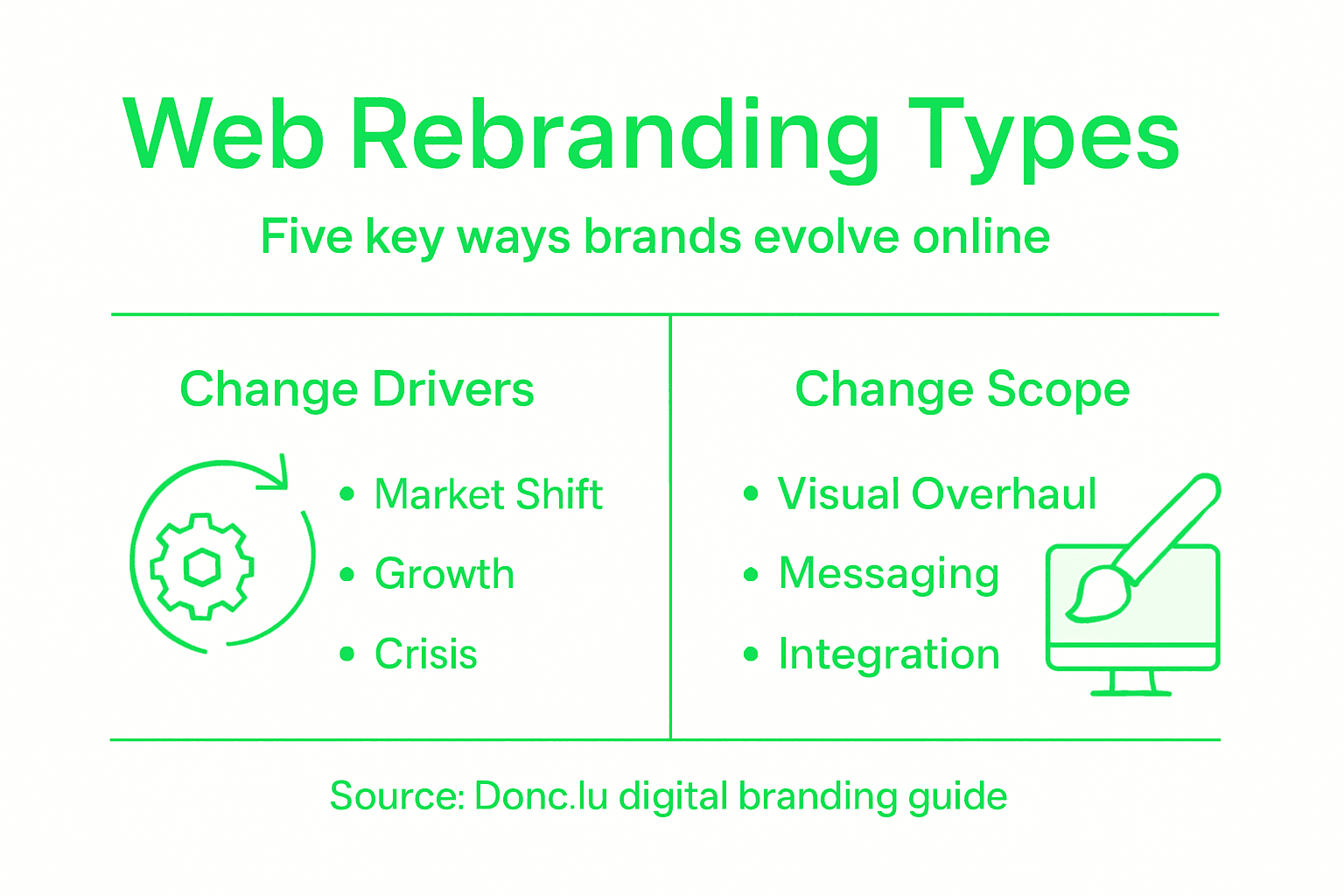
Rebranding initiatives generally fall into distinct categories based on what triggers them and how extensively they reshape your brand.
Five Core Types of Web Rebranding
1. Market Adaptation Rebranding
Your market changes faster than you can predict. Consumer preferences shift, new competitors emerge, technology evolves. Market adaptation rebranding keeps you relevant without abandoning your core identity.
For Luxembourg e-commerce businesses, this might mean updating your website design to match current user expectations or adjusting your messaging to reflect how customers now talk about your product category.
2. Strategic Growth and Diversification
When you’re expanding into new market segments or product lines, your original brand may no longer capture the full scope of what you offer. This type involves refreshing your brand to communicate broader value.
Example: A company selling only furniture expands into home decor. The rebrand signals this expansion to existing and new customers.
3. Crisis Management and Reputation Repair
Sometimes negative associations attach to your brand. Data breaches, poor customer service, or quality issues can damage reputation. Crisis rebranding distances you from these problems and signals change.
This requires careful execution—customers need to see genuine improvements, not just a cosmetic fix.
4. Mergers and Acquisitions Integration
When companies merge or acquire competitors, consolidating brand identities becomes essential. You might unify fragmented brand portfolios or create an entirely new identity that represents both organizations.
Logo redesigns, brand vision overhauls, and comprehensive identity revamps often accompany these transitions to strengthen brand equity.
5. Market Repositioning
Your brand position in customers’ minds may not match where you want to be. Repositioning rebranding realigns how people perceive you, shifting from one market niche to another.
A budget retailer rebranding as a premium provider needs completely different visual identity, messaging, and digital experience.
Here’s how the five main web rebranding types differ in purpose and business outcome:
| Rebranding Type | Main Trigger | Typical Change Scope | Expected Business Impact |
|---|---|---|---|
| Market Adaptation | Shifting market trends | Visual and message tweaks | Maintains customer relevance |
| Strategic Growth/Diversification | Entering new segments | Brand and message refresh | Attracts new audiences |
| Crisis Management/Repair | Negative brand issue | Significant brand overhaul | Restores trust, rebuilds loyalty |
| Mergers & Acquisitions Integration | Business consolidation | Full identity integration | Unifies teams, expands portfolio |
| Market Repositioning | Targeting a new niche | Total identity transformation | Changes market perception |
How These Types Differ in Scope
Each rebranding type varies dramatically in what changes:
- Minor updates: Logo refresh, color palette adjustment, website font changes
- Moderate changes: New website design, updated messaging, revised value propositions
- Comprehensive overhauls: Complete brand identity redesign, new company name, messaging system rebuild, digital presence transformation
Your situation determines scope. A market adaptation rebranding might need only website updates. A merger rebranding might require everything to change.
Your rebranding type determines your timeline, budget, and risk level. Choose poorly, and you waste resources on unnecessary changes.
Pro tip: Identify which type of rebranding your business actually needs before making any changes. This clarity prevents scope creep and ensures your efforts align with real business drivers rather than assuming a rebrand solves problems it cannot fix.
The Web Rebranding Process Explained
Rebranding isn’t something you decide on Monday and launch on Friday. It’s a structured process that requires planning, execution, and follow-through. Understanding each phase helps you avoid costly mistakes and keeps your team aligned throughout the transition.

The Five-Phase Rebranding Framework
Phase 1: Strategic Planning and Goal Setting
The web rebranding process involves strategic planning and identifying rebranding goals aligned with market and company changes. Before touching anything visual, you need absolute clarity on why you’re rebranding.
Ask yourself:
- What problem are we solving with this rebrand?
- How will success look and feel?
- What market or customer perception do we want to change?
- What timeline and budget makes sense?
Don’t skip this phase. Teams that rush into design without answering these questions waste months redoing work.
Phase 2: Market Research and Stakeholder Alignment
Your team needs to agree on direction before anything changes. This means internal alignment with leadership, sales, customer service, and development teams.
External research matters too. Survey your customers about current perceptions. Analyze competitor positioning. Identify market gaps your rebrand can fill.
Phase 3: Visual and Communication Redesign
Now you redesign the elements people actually see: logo, website design, color palette, typography, messaging, and tone. This is where creativity meets strategy.
Your website is typically the centerpiece. Growth Driven Design principles can guide how you approach this redesign—testing and refining based on user behavior rather than assumptions.
Phase 4: Launch and Rollout
You don’t flip a switch and hope. A successful launch requires coordination across multiple channels:
- Website migration and testing
- Social media updates and messaging
- Email announcements to existing customers
- Press releases and media outreach
- Sales team training on new positioning
- Customer support preparation for questions
Phase 5: Customer Engagement and Brand Solidification
The rebrand doesn’t end at launch. You maintain momentum through consistent communication, customer feedback collection, and continuous refinement based on real-world performance.
This phase determines whether the rebrand sticks or fades.
A rebrand launch is the beginning, not the end. The weeks and months after launch determine whether customers accept or reject the new identity.
Pro tip: Create a detailed rebranding project timeline with clear milestones, assigned owners, and dependencies between phases. Share this timeline with your entire team so everyone knows what’s happening and when. Misalignment during execution is one of the largest reasons rebrands underperform.
Risks, Costs, and Common Mistakes to Avoid
Rebranding is expensive and risky. Without understanding what can go wrong, you’re essentially gambling with your business reputation and marketing budget. The good news? Most failures are preventable with proper planning.
The Real Costs of Rebranding
Design and Development
Your website redesign alone typically costs between 5,000 and 50,000 euros depending on complexity. This covers design work, development, testing, and deployment.
Add logo design, brand guidelines creation, and marketing collateral updates on top of that.
Marketing and Communication
People don’t automatically notice your rebrand. You need to actively tell them about it through email campaigns, social media announcements, advertising, and press outreach.
Budget another 3,000 to 20,000 euros for a proper launch campaign.
Below is a look at typical rebranding costs and what each cost category covers:
| Cost Category | Typical Investment Range | What It Includes |
|---|---|---|
| Design & Development | €5,000–€50,000 | Website, logo, brand assets |
| Marketing Campaigns | €3,000–€20,000 | Launch emails, PR, social promotion |
| Operational Adjustments | Variable | Staff training, support updates |
| Total Expected Outlay | €8,000–€70,000+ | Full rebrand with launch activities |
Operational Adjustments
Rebranding carries significant risks including alienating loyal customers and losing brand equity if not executed properly. Beyond the obvious costs, you’re paying for internal training, customer support preparation, systems updates, and potential productivity loss during transition.
Five Critical Mistakes to Avoid
1. Rushing the Process
Pressure to launch quickly leads to poorly tested websites, incomplete messaging, and team confusion. Rebranding needs 3-6 months minimum for proper execution.
2. Ignoring Customer Feedback
Your customers know your brand better than you do. Test your rebrand concepts with real customers before finalizing anything. Their resistance signals problems you need to solve.
3. Failing to Communicate Effectively
Customers deserve to understand why you’re changing. Silence breeds suspicion. Communicate the “why” behind your rebrand consistently across all channels.
4. Abandoning Successful Brand Elements
If your logo is recognized and trusted, modifying it carefully beats replacing it entirely. Respect what’s working while updating what isn’t.
5. Treating Launch as the End
Rebrands fail when companies assume the work ends at launch. The real work—solidifying the new identity—happens afterward through consistent messaging and customer engagement.
Protecting Against These Risks
Your defense strategy includes:
- Comprehensive planning with clear goals
- Customer research and testing throughout
- Transparent internal and external communication
- Phased rollout with contingency plans
- Post-launch monitoring and rapid adjustments
The difference between successful and failed rebrands isn’t luck. It’s whether companies treated rebranding as a strategic project requiring months of work or a quick cosmetic update.
Pro tip: Before executing your rebrand, run a 2-4 week soft launch with a test audience—perhaps your email list or local market. Monitor their feedback, website behavior, and social response. Use this real data to refine before full launch. This costs less than fixing problems after public rollout.
How Web Rebranding Drives Business Growth
Rebranding isn’t just about looking fresh. When done strategically, it directly impacts your bottom line. For small to medium-sized e-commerce businesses, a successful rebrand can unlock growth that felt impossible under the old identity.
The Growth Mechanisms Behind Rebranding
Enhanced Market Differentiation
Your competitors probably look and sound similar to you. A rebrand repositions you as distinct, giving customers a clear reason to choose you over alternatives.
When you stand out visually and strategically, you attract customers actively seeking what you offer instead of settling for convenience.
Improved Customer Perception
Corporate rebranding can positively influence customer perception, leading to increased brand equity and loyalty. Customers form opinions about your business within seconds of visiting your website.
A modern, professional rebrand signals that you’re serious, trustworthy, and invested in their experience.
Access to New Market Segments
Your old brand might have positioned you in a narrow corner of the market. Rebranding opens doors to customer segments that previously overlooked you.
A luxury furniture maker rebranding to emphasize sustainability suddenly appeals to environmentally conscious buyers who ignored the old brand.
Increased Customer Conversion
Professional web design elements significantly influence conversion rates, and rebranding typically includes website redesign. Better design combined with clearer messaging means more visitors become customers.
How Rebranding Accelerates Growth
The connection between rebranding and growth happens through:
- Renewed customer interest and media attention around your launch
- Improved trust signals that reduce purchase friction
- Better alignment between your positioning and customer expectations
- Team motivation and internal clarity about company direction
- Enhanced ability to justify premium pricing
- Expanded product or service opportunities under new brand umbrella
Real Growth Happens Over Time
Rebranding serves as a strategic imperative to remain relevant and adapt to market changes. You won’t see 300 percent revenue jumps overnight. Growth compounds as customers gradually recognize and choose the new brand.
Most companies report noticeable growth within 6-12 months post-rebrand, with momentum continuing for years.
The Growth Acceleration Formula
Successful rebranding produces growth when three elements align:
- Authentic positioning that genuinely reflects what you offer
- Professional execution across all customer touchpoints
- Consistent communication that reinforces the new identity
Skip any element, and growth stalls. Include all three, and compound growth becomes possible.
Rebranding doesn’t create growth from nothing. It removes barriers that prevented growth under the old brand and creates new opportunities you couldn’t access before.
Pro tip: Set specific growth metrics before rebranding—customer acquisition cost, conversion rate, average order value, customer lifetime value. Measure these quarterly for 12 months post-rebrand to track actual impact. This data proves ROI and guides future marketing investments.
Elevate Your Brand With Strategic Web Rebranding Supported by Experts
Rebranding your website is more than a fresh look. It involves overcoming challenges like aligning your digital identity with evolving market needs and rebuilding customer trust without confusion. Key struggles include maintaining consistency, avoiding rushed launches, and making sure your brand’s new direction truly resonates with your audience. At Done.lu, we understand that successful web rebranding requires clarity, strategic planning, and seamless execution across all digital touchpoints.
Take the next step toward a growth-focused rebrand by partnering with Done.lu. Our team specializes in comprehensive web design, branding refreshes, and digital marketing strategies shaped by Growth Driven Design principles. You can rely on us to deliver a fully responsive, user-centric website that strengthens your market position while accelerating customer conversion. Don’t leave your rebrand to chance. Explore how Done.lu’s expertise can help your business thrive by visiting our website and learn more about how we transform brands for digital success. Ready for a rebrand that really drives growth? Contact us today to start your journey.
Frequently Asked Questions
What is web rebranding?
Web rebranding involves updating your digital identity, including aspects such as your logo, website design, color scheme, and overall brand messaging, to refresh how customers perceive your brand online.
How does web rebranding differ from a simple website redesign?
A website redesign focuses on improving the visual and functional elements of your site, while web rebranding fundamentally changes your brand’s identity and market positioning.
When should a business consider rebranding?
A business should consider rebranding when its current brand no longer reflects its direction, when competitors are gaining market share, or when there’s a perception misalignment between customers and the brand’s value.
What are the risks associated with web rebranding?
Risks of web rebranding include alienating existing customers, failing to communicate effectively about the changes, and rushing the process, which can lead to confusion and wasted resources.