

7 Steps to an Effective Website Creation Checklist
February 18, 2026
Why Invest in Web Development for Business Growth
February 20, 2026
Many marketing managers in Luxembourg have faced confusion about what truly drives online success and lead generation. Misconceptions like SEO being just keyword stuffing or expecting quick results often lead to missed opportunities. By embracing a systematic and ongoing approach to website optimization, businesses can attract more qualified visitors and convert them into loyal customers. This article clarifies key myths and highlights practical strategies, helping you maximize your digital investment and improve your site’s visibility.
Table of Contents
- Defining Website Optimization And Key Myths
- Types Of Website Optimization Strategies
- How Optimization Improves Visibility And Leads
- Risks, Costs, And Common Pitfalls
Key Takeaways
| Point | Details |
|---|---|
| Continuous Process | Website optimization is an ongoing effort requiring regular analysis and adaptation to enhance performance and visibility. |
| Holistic Approach | A successful strategy balances technical, content, and user experience elements to engage audiences effectively. |
| Misconceptions | Common myths, such as immediate results and keyword stuffing, can hinder effective optimization efforts and results. |
| Risk Management | Implement a risk management plan to address potential challenges and maintain a competitive edge in digital performance. |
Defining Website Optimization and Key Myths
Website optimization represents a comprehensive strategy designed to enhance a website’s performance, visibility, and ability to generate leads through strategic digital improvements. At its core, website optimization involves systematically improving various technical and content-based elements to attract more qualified traffic and convert visitors more effectively.
Effective website optimization goes far beyond simple keyword insertion. Strategic SEO practices require a multifaceted approach that considers multiple critical factors:
- Technical website performance
- Content relevance and quality
- User experience design
- Mobile responsiveness
- Page loading speed
- Structured metadata
Contrary to popular misconceptions, website optimization is not a one-time task but an ongoing process of continuous improvement. Many businesses mistakenly believe that implementing SEO strategies will produce immediate results, when in reality, sustainable online visibility requires consistent effort and strategic refinement.
Website optimization demands patience, strategic planning, and a holistic approach to digital performance.
The most prevalent myths surrounding website optimization often prevent businesses from achieving their digital marketing goals. These misconceptions include:
- SEO is just about keyword stuffing
- Results happen overnight
- Only technical elements matter
- One-size-fits-all optimization strategies work
Understanding that website optimization is a nuanced, comprehensive strategy helps businesses develop more effective digital marketing approaches.
Pro tip: Develop a systematic approach to website optimization by regularly analyzing performance metrics and adapting your strategy based on real user data and search engine algorithm updates.
Types of Website Optimization Strategies
Website optimization encompasses multiple strategic approaches designed to enhance digital performance, visibility, and user engagement. Website optimization strategies require a comprehensive methodology targeting technical, content, and user experience elements.
The primary types of website optimization strategies include:
-
Technical SEO Optimization
- Improving website structure
- Enhancing page loading speeds
- Ensuring mobile responsiveness
- Implementing structured data markup
-
Content Optimization
- Keyword research and strategic placement
- Creating high-quality, relevant content
- Developing compelling meta descriptions
- Optimizing header tags and internal linking
-
User Experience (UX) Optimization
- Designing intuitive navigation
- Reducing page bounce rates
- Improving site accessibility
- Creating clear call-to-action elements
Strategic website optimization requires a holistic approach that balances technical performance with user-centric design.
Each optimization strategy plays a critical role in improving overall website performance. Technical SEO ensures search engines can effectively crawl and index website content, while content optimization helps attract and engage target audiences. User experience optimization focuses on creating seamless, intuitive interactions that convert visitors into potential leads.
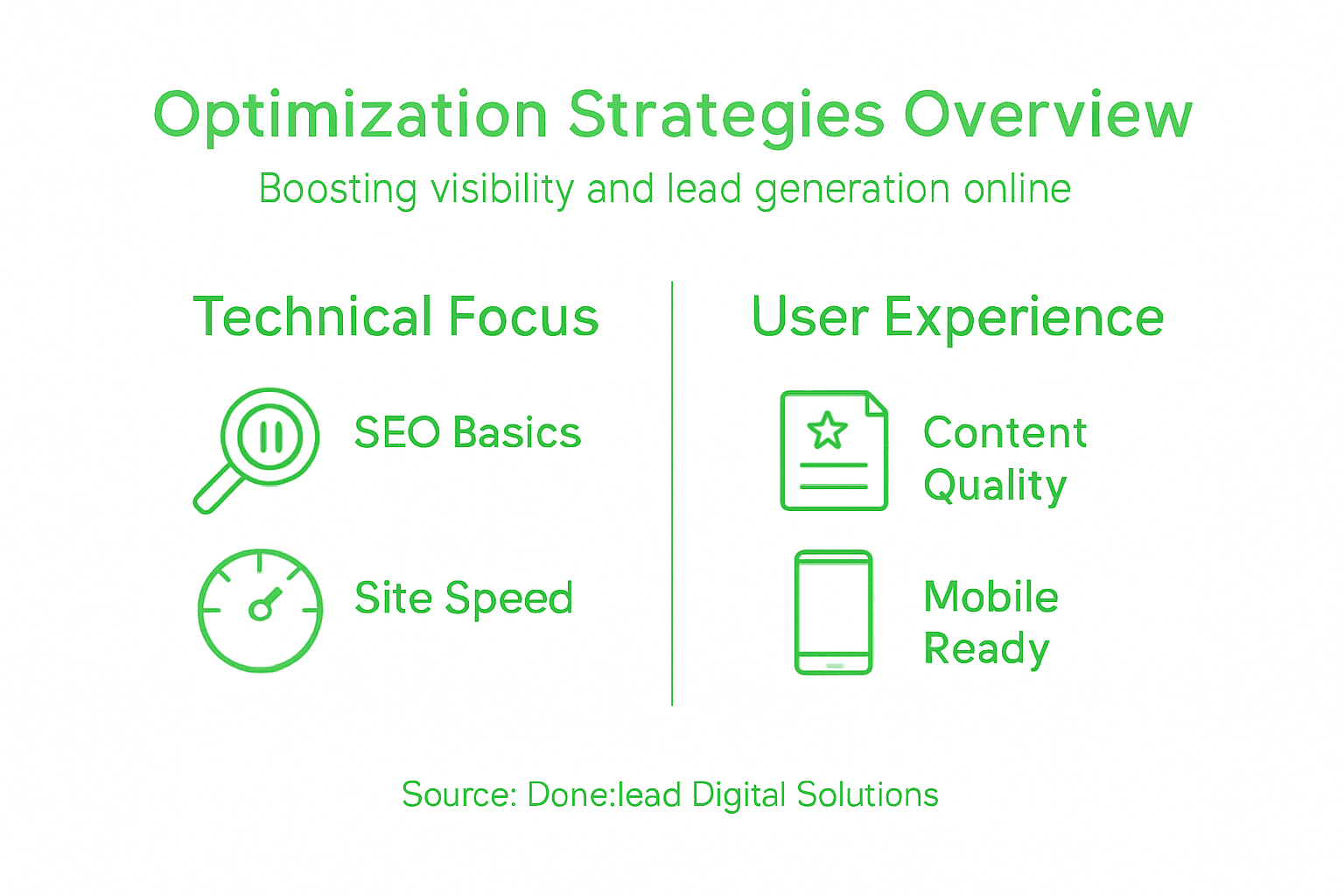
Businesses must recognize that website optimization is not a one-time task but an ongoing process of continuous improvement and adaptation to changing digital landscapes.
Here’s a summary of how each website optimization strategy benefits your business:
| Strategy Area | Main Focus | Business Benefit |
|---|---|---|
| Technical SEO | Site structure and speed | Search engines index effectively |
| Content Optimization | Relevant, quality writing | Attracts and engages audiences |
| User Experience | Navigation and accessibility | Increases conversion rates |
Pro tip: Implement a quarterly review of your website optimization strategies, analyzing performance metrics and user feedback to identify areas for incremental improvements.
How Optimization Improves Visibility and Leads
Website optimization serves as a powerful mechanism for dramatically enhancing online visibility and generating high-quality leads. Search engine optimization techniques enable businesses to strategically position their digital content where potential customers can easily discover and engage with their offerings.
The key mechanisms through which optimization improves visibility and leads include:
-
Improved Search Engine Rankings
- Higher placement in search results
- Increased organic traffic
- Enhanced credibility with potential customers
- Greater exposure to target audiences
-
Enhanced User Experience
- Faster website loading times
- More intuitive navigation
- Mobile-friendly design
- Clear, compelling content presentation
-
Targeted Content Strategy
- Keyword optimization
- Relevant content creation
- Addressing specific user needs
- Creating conversion-focused messaging
Effective website optimization transforms digital presence from invisible to irresistible, turning casual browsers into committed leads.
Optimization directly impacts lead generation by making websites more discoverable, user-friendly, and conversion-oriented. When businesses implement strategic SEO techniques, they create digital experiences that not only attract potential customers but also guide them seamlessly through the purchasing journey.

The most successful optimization strategies recognize that visibility is not just about being seen, but about being seen by the right audience at the right time with the most relevant information.
Pro tip: Conduct monthly analytics reviews to identify which optimization strategies are generating the most qualified leads and adjust your approach accordingly.
Risks, Costs, and Common Pitfalls
Website optimization, while essential for digital success, comes with potential risks and challenges that businesses must carefully navigate. Website optimization projects can incur significant costs and expose organizations to several critical pitfalls that could undermine their digital strategy.
Key risks and potential challenges include:
-
Technical Implementation Risks
- Incorrect configuration of SEO elements
- Compatibility issues across devices
- Potential site performance degradation
- Unintended negative impacts on existing site structure
-
Financial Considerations
- Ongoing maintenance expenses
- Required continuous technological updates
- Potential investment in specialized tools
- Resource allocation for monitoring and optimization
-
Performance and Measurement Challenges
- Difficulty tracking true optimization effectiveness
- Complex data interpretation
- Potential misalignment of metrics
- Risk of drawing incorrect conclusions
Successful website optimization requires a balanced approach that carefully weighs potential risks against expected benefits.
Businesses must recognize that optimization is not a one-time event but a continuous process requiring consistent investment, strategic thinking, and adaptive approaches. Failing to maintain a comprehensive and dynamic optimization strategy can lead to diminishing returns and reduced digital competitiveness.
Understanding and anticipating these potential challenges allows organizations to develop more robust, resilient digital strategies that minimize risks while maximizing potential performance improvements.
Compare common pitfalls in website optimization and recommended preventive actions:
| Pitfall | Potential Impact | Preventive Action |
|---|---|---|
| Poor technical implementation | Lower rankings, site errors | Conduct regular technical audits |
| Insufficient investment | Slower results, limited reach | Allocate ongoing optimization budget |
| Misaligned measurement | Ineffective strategy changes | Use clear, relevant performance metrics |
Pro tip: Create a comprehensive risk management plan that includes regular performance audits, contingency strategies, and flexible budget allocations for website optimization efforts.
Unlock Your Website’s True Potential with Expert Optimization Solutions
Struggling to boost your website’s visibility and convert visitors into quality leads can be frustrating. This article highlights the real challenges businesses face such as ongoing SEO efforts, technical performance issues, and creating user-friendly designs that truly engage. At Done.lu, we understand these pain points and offer comprehensive digital solutions tailored to help small and medium-sized enterprises across Luxembourg and Europe break through these barriers. Our growth-driven design methodology ensures your website stays fully optimized technically and content-wise while delivering a seamless user experience that drives real business results.

Ready to transform your online presence and attract the right audience with strategic website optimization? Visit Done.lu today to explore how we combine expertise in web development, digital marketing, and SEO to build fully responsive, lead-generating websites. Discover the advantage of partnering with a digital agency that prioritizes continuous improvement and measurable growth. Start optimizing smarter now and see the difference in your visibility and leads.
Frequently Asked Questions
What is website optimization?
Website optimization is a strategy aimed at enhancing a website’s performance, visibility, and lead generation through improvements in technical elements, content quality, and user experience.
How does website optimization improve visibility and generate leads?
Website optimization improves visibility by enhancing search engine rankings, resulting in higher organic traffic. It also creates a better user experience, making it easier for potential customers to navigate and engage with your content, thus generating more leads.
What are the key components of effective website optimization?
The key components of effective website optimization include technical SEO, content optimization, and user experience optimization, all of which work together to improve website performance and engagement.
How often should I review my website optimization strategies?
It is recommended to conduct a quarterly review of your website optimization strategies, analyzing performance metrics and user feedback to identify areas for improvement.