

6 Essential Steps for a Website Design Checklist
February 25, 2026
Web Design’s Impact on Business Growth Outcomes
February 27, 2026
Every detail on your website, from your color palette to your navigation menu, shapes how customers view your Luxembourg-based business. For small to medium-sized e-commerce companies, effective web design is not just about appearances—it is the foundation of brand perception and customer trust. When visual identity elements like typography and imagery are thoughtfully aligned, your brand stands out and feels authentic. Explore how strategic web design builds a consistent and recognizable brand identity that turns visitors into loyal customers.
Table of Contents
- Core Concepts Of Web Design In Branding
- What Makes Web Design Essential To Branding
- The Connection Between Design And User Experience
- How Design Builds Brand Consistency
- Design As A Trust-Building Tool
- Key Elements Defining Visual Brand Identity
- The Core Components Of Visual Identity
- Why Color Matters More Than You Think
- Typography As A Brand Voice
- Imagery And Visual Style
- Putting It All Together
- How User Experience Shapes Brand Perception
- The Connection Between UX And Brand Trust
- How Journey Mapping Reveals Brand Perception
- Speed, Reliability, And Brand Perception
- Mobile Experience Defines Modern Brand Perception
- Translating UX Into Business Results
- Brand Messaging Integration And Consistency
- Why Consistent Messaging Matters
- The Core Elements Of Integrated Messaging
- Coordinating Across Multiple Channels
- Creating A Brand Messaging Framework
- Auditing Consistency Across Channels
- Common Web Design Pitfalls In Branding
- Brand Dilution Through Inconsistent Design
- Poor Mobile Responsiveness Destroys Brand Trust
- Cluttered Layouts That Confuse Customers
- Slow Loading Times Signal Low Quality
- Accessibility Failures That Exclude Customers
- Misalignment With Target Audience Expectations
Key Takeaways
| Point | Details |
|---|---|
| Design Influences Brand Trust | A cohesive design strategy enhances customer trust through consistent visual identity and user experience. |
| Mobile Optimization is Crucial | A responsive website design reflects modern customer needs and significantly affects brand perception. |
| Consistency Enhances Recognition | Uniform design elements across all platforms create a reliable brand image, preventing customer confusion. |
| User Experience Impacts Sales | Smooth navigation and quick load times lead to increased customer satisfaction and higher conversion rates. |
Core Concepts of Web Design in Branding
Your website is your brand’s first handshake with potential customers. Every color, font, and button placement sends a message about who you are.
Web design in branding goes far beyond aesthetics. It’s the strategic fusion of visual elements, user experience, and brand values working together to create a cohesive identity online. For e-commerce businesses in Luxembourg, this means your website must reflect your brand promise while guiding visitors toward action.
What Makes Web Design Essential to Branding
Branding shapes how customers perceive your business. Consumer behavior research on branding models demonstrates that consistent visual identity directly influences trust and purchasing decisions. Your website is where most of these first impressions happen.
Design elements work together to communicate your brand’s personality:
- Color schemes establish emotional connections and instant recognition
- Typography conveys professionalism, friendliness, or innovation
- Layout and spacing reflect how organized and trustworthy your business is
- Navigation structure shows whether you value your customer’s time
- Visual hierarchy guides visitors toward your most important messages
Each component reinforces your brand message. When they’re misaligned, customers notice the inconsistency immediately.
Here’s a summary of how core web design elements shape brand perception:
| Web Design Element | Brand Effect | Example of Positive Impact |
|---|---|---|
| Color palette | Drives emotional connection | Instantly recognizable brand colors |
| Typography | Sets personality tone | Modern fonts for tech brands |
| Imagery style | Reinforces professionalism | Consistently edited product photos |
| Layout logic | Suggests organization | Clear, intuitive navigation menus |
| Mobile responsiveness | Signals customer-centricity | Fast page loads on all devices |
The Connection Between Design and User Experience
Design principles that prioritize user experience create stronger brand perception. People don’t separate design from functionality—they experience them as one unified impression. A beautifully designed website that’s confusing to navigate undermines trust.
For SME e-commerce owners, responsive design ensures your brand looks intentional across devices. When your site adapts seamlessly from desktop to mobile, customers feel your business is modern and customer-focused.
How Design Builds Brand Consistency
Consistent design across your website signals that you’ve invested in your brand. Small businesses that maintain identical visual standards on every page project professionalism and stability.
Consistency includes:
- Using the same color palette throughout
- Repeating your logo and visual patterns consistently
- Matching button styles and interactive elements
- Maintaining uniform spacing and margins
- Keeping typography choices aligned with brand guidelines
When customers see this consistency, their confidence grows. They perceive your business as established and reliable.
Inconsistent design is the fastest way to erode trust. Every page must feel like it belongs to the same brand.
Design as a Trust-Building Tool
Trust is the foundation of online sales. Your website’s design communicates whether customers should feel secure entering payment information or contacting your team. Professional design instantly signals legitimacy.

Elements that build trust through design include professional imagery, clear contact information prominently displayed, testimonials with consistent formatting, and security indicators like SSL badges positioned visibly. These aren’t just nice-to-have features—they’re trust signals your visitors actively seek.
For Luxembourg-based businesses competing regionally, having a locally-responsive, professionally designed site distinguishes you from competitors using generic templates.
Pro tip: Audit your current website against your brand guidelines. If colors, fonts, or layouts vary between pages, customers notice the disconnect before they notice your products.
Key Elements Defining Visual Brand Identity
Visual brand identity is how your business looks and feels. It’s the combination of colors, fonts, imagery, and design that customers instantly recognize as yours.
For e-commerce businesses in Luxembourg, a strong visual identity separates you from competitors and creates immediate recognition. When customers see your logo or color scheme, they should think of your brand before anything else.
The Core Components of Visual Identity
Visual elements that define brand logos include typography, color schemes, and imagery working together as a unified system. Each element serves a specific purpose in communicating your brand’s values and personality.
The main pillars of visual identity are:
- Logo design serves as your brand’s primary symbol and recognition anchor
- Color palette triggers emotional responses and creates instant recall
- Typography establishes tone and communicates your brand’s personality
- Imagery style defines how your brand appears across photos and graphics
- Layout patterns create consistency in how information is presented
These elements work together, not in isolation. When one feels disconnected, the entire identity weakens.
Why Color Matters More Than You Think
Color is the fastest way customers identify your brand. Studies show people make initial judgments within seconds, and color plays a major role in that snap decision. For SMEs, this means your color palette must match your industry and target audience.
Choosing the right colors involves understanding color psychology and your audience’s expectations. A luxury e-commerce site uses different colors than a budget retailer. Your palette should reinforce what your brand promises.
Typography as a Brand Voice
Fonts communicate more than words. They convey whether your brand is modern, traditional, playful, or serious. The typefaces you choose on your website, emails, and marketing materials all contribute to visual consistency.
Consider these typography decisions:
- Headline fonts set the tone for your entire site
- Body fonts must be readable on mobile devices
- Accent fonts can highlight special elements or calls-to-action
- Font pairing creates visual hierarchy and balance
Mixing too many fonts confuses customers. Stick to 2-3 typefaces maximum across all channels.
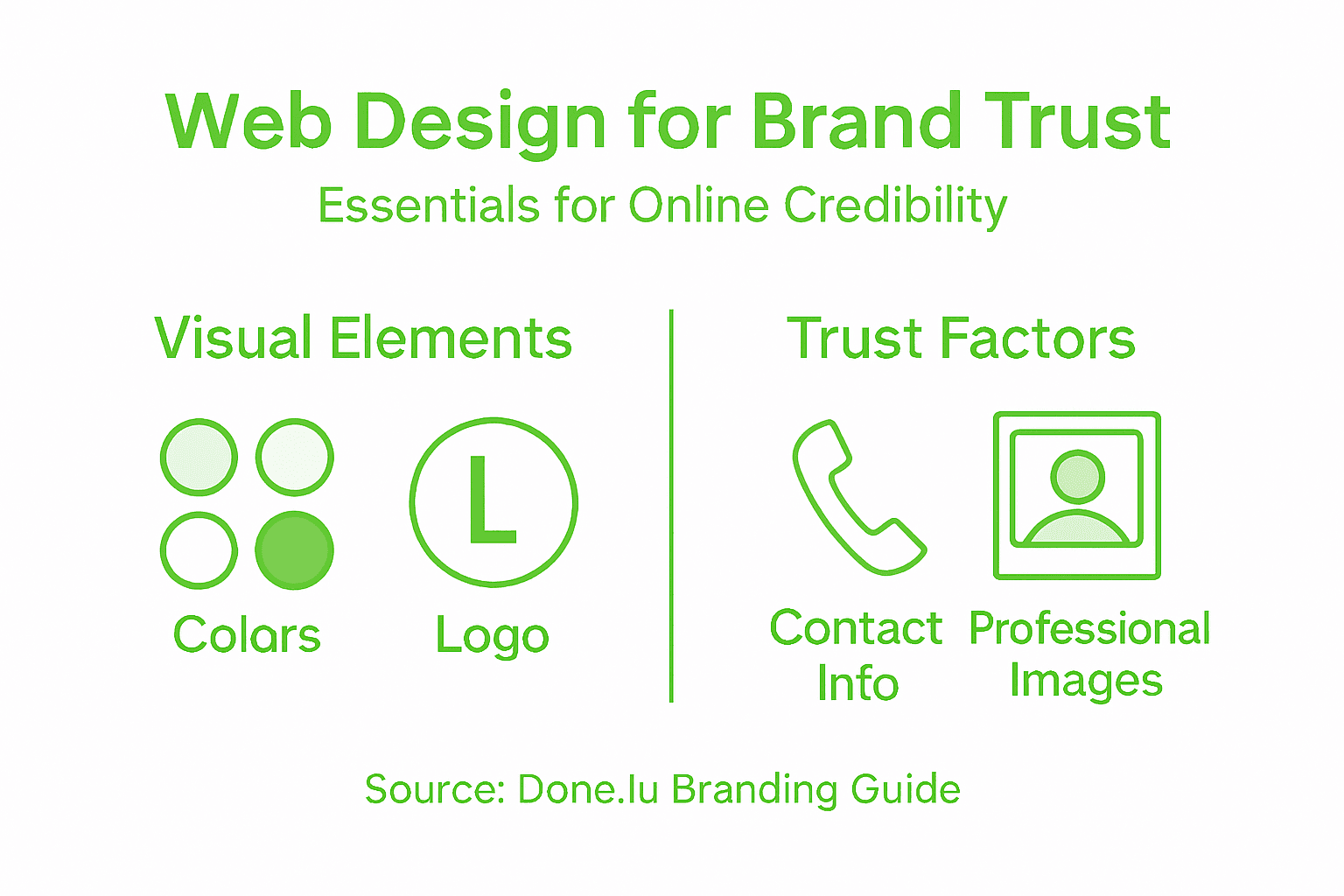
Imagery and Visual Style
Visual identity elements that build brand recognition include consistent photography, illustration, and graphic styles. Your imagery should feel cohesive whether customers see it on your website, social media, or email campaigns.
Do you use photographs or illustrations? Bright images or muted tones? Minimalist layouts or detailed compositions? These choices define how people perceive your brand’s personality and professionalism.
Inconsistent imagery sends a signal that your brand lacks direction. Customers connect with brands that look intentional.
Putting It All Together
Visual identity isn’t about picking pretty colors and fonts. It’s about creating a system where every element reinforces your brand message. When your logo, colors, typography, and imagery all align, customers feel your brand’s authenticity.
Documenting these decisions in a brand guideline document keeps your team accountable and ensures consistency across all channels—website, web design elements that drive conversions, social media, and print materials.
Pro tip: Create a simple one-page visual reference showing your logo, primary colors (with hex codes), two approved fonts, and three sample images that represent your brand style. Share it with anyone who creates content for your business.
How User Experience Shapes Brand Perception
User experience is not a design feature. It’s the foundation of how customers feel about your brand from the moment they arrive on your website.
Every click, scroll, and interaction sends a message. When your site is slow, confusing, or difficult to navigate, customers form negative opinions about your brand before they even see your products. Conversely, a smooth, intuitive experience builds trust and loyalty.
The Connection Between UX and Brand Trust
Effective user experience design influences brand perception by fostering trust and satisfaction. Poor UX creates friction that customers blame on your brand, not the website. If users can’t find what they want, they assume your business is disorganized.
Trust develops through consistent, predictable interactions. When your website works the way customers expect it to, they feel your brand is reliable. This matters especially for e-commerce, where customers need confidence before entering payment information.
How Journey Mapping Reveals Brand Perception
Customers don’t experience your brand as a single moment. They experience a journey from discovery through purchase and beyond. Each touchpoint shapes their overall perception.
User mapping and brand perception reveals how customers actually navigate your site and what emotions they feel. Mapping these journeys helps you identify where customers get frustrated, confused, or delighted.
Key moments in the customer journey include:
- First arrival sets expectations about professionalism and credibility
- Product discovery determines whether customers can find what they need
- Information clarity builds confidence in your offerings
- Checkout process creates trust or abandonment
- Post-purchase experience influences whether they return
Missing or broken moments in this journey damage brand perception immediately.
Speed, Reliability, and Brand Perception
Page load speed influences brand perception more than most business owners realize. Slow websites frustrate customers and signal that your brand doesn’t invest in quality. Fast, responsive sites communicate that you respect your customers’ time.
Reliability matters equally. If your website crashes during peak sales periods, customers question whether your entire operation is trustworthy. Consistent uptime communicates operational excellence.
Your website’s performance is a direct reflection of your brand’s values. Customers connect slow sites with slow service.
Mobile Experience Defines Modern Brand Perception
Most of your customers browse on phones. If your website isn’t optimized for mobile, you’ve already communicated that your brand doesn’t understand modern customer needs. Mobile optimization is no longer optional—it defines whether customers perceive your brand as current or outdated.
Mobile UX includes readable text without zooming, touchable buttons sized appropriately, and fast-loading pages. Customers judge your brand’s competence based on these technical details.
Translating UX Into Business Results
Good UX doesn’t just feel better. It drives measurable business outcomes. When customers navigate easily, they spend more time on your site, browse more products, and complete purchases more often.
The UX improvements that matter most:
- Reducing friction in checkout processes
- Improving search functionality so customers find products faster
- Displaying customer reviews and trust signals prominently
- Making contact information immediately accessible
- Ensuring forms require minimal effort
User experience impacts SEO and search visibility, meaning better UX helps more people discover your brand online.
Pro tip: Test your website on an actual mobile phone while using cellular data, not WiFi. This reveals frustrations real customers experience and uncovers gaps between how your site performs in ideal conditions versus real-world use.
Brand Messaging Integration and Consistency
Consistency is how brands build recognition and trust. When your message shifts between your website, emails, social media, and advertising, customers become confused about who you actually are.
Integrated brand messaging means every customer touchpoint reinforces the same core message. This unified approach transforms scattered marketing efforts into a cohesive strategy that customers can recognize and remember.
Why Consistent Messaging Matters
Brand consistency in digital environments fosters trust and enhances how customers perceive your business. When your messaging is fragmented, customers question whether your brand knows what it stands for. Unified messaging signals clarity and stability.
For e-commerce businesses competing in Luxembourg’s digital marketplace, consistency directly impacts whether customers choose you or competitors. A customer who sees aligned messaging across your website, Instagram, emails, and customer service interactions feels more confident in your brand.
The Core Elements of Integrated Messaging
Integrated messaging isn’t just about saying the same words everywhere. It’s about coordinating your brand voice, visual identity, value proposition, and tone across all channels.
Key components of integrated messaging include:
- Brand voice remains recognizable whether written or spoken
- Value proposition stays consistent across all marketing materials
- Visual elements match your established design system
- Tone and personality feel the same on your website, social media, and customer emails
- Core messaging reinforces your brand promise consistently
When these elements align, customers experience your brand as intentional and professional.
Coordinating Across Multiple Channels
Your customers see your brand across dozens of touchpoints. Website, Instagram, TikTok, email newsletters, customer service replies, packaging, and advertising all communicate your brand message simultaneously.
Integrated marketing communications maintains coherent brand messaging across platforms by unifying brand voice and visual identity. This coordination requires planning and oversight to ensure every channel reinforces your core message.
Channels that must align include:
- Your website as the primary brand hub
- Email marketing and customer communications
- Social media presence and engagement
- Advertising campaigns and promotions
- Customer service interactions and support
- Physical touchpoints like packaging or local signage
Missing consistency in even one channel creates doubt.
Creating a Brand Messaging Framework
Consistency requires documentation. A brand messaging framework ensures everyone creating content for your business knows what to say and how to say it.
Your framework should include your brand’s core message, key value propositions, tone guidelines, and visual standards. When your team understands these guidelines, consistency happens naturally across channels.
Without clear guidelines, different team members create different messages, and customers receive conflicting signals about who your brand is.
Inconsistent messaging wastes your marketing budget because customers remember confusion, not your brand.
Auditing Consistency Across Channels
Most businesses think they’re consistent until they audit actual customer experiences. Visit your website, follow your social media, read your emails, and call customer service as if you were a stranger.
Do the messages align? Does your tone feel consistent? Do the visuals match? If you notice contradictions, your customers notice them too.
Regularly auditing your brand presence reveals gaps before they damage trust. This is especially important for growing Luxembourg businesses that manage multiple team members or contractors creating content.
Pro tip: Screenshot your website, social media feed, last five emails, and one advertisement. Place them side-by-side and ask: “Would a stranger know these all belong to the same brand?” If the answer is no, your messaging needs alignment.
Common Web Design Pitfalls in Branding
Most web design failures don’t happen because of bad intentions. They happen because businesses overlook how design choices directly impact brand perception and customer trust.
Understanding common pitfalls helps you avoid expensive mistakes that damage your brand before customers ever see your products. Small fixes today prevent major reputation problems later.
Brand Dilution Through Inconsistent Design
Common branding pitfalls in web design include brand dilution, inconsistent messaging, and failure to align with target audiences. When your website design doesn’t match your brand identity, customers receive conflicting signals about who you are.
Brand dilution happens gradually. One page uses your primary colors, another doesn’t. One section feels modern, another feels outdated. Customers notice these inconsistencies and question your brand’s credibility.
Poor Mobile Responsiveness Destroys Brand Trust
Most Luxembourg e-commerce customers browse on phones. A website that looks broken on mobile immediately damages your brand’s reputation. Poor mobile responsiveness signals that you don’t understand modern customer needs.
Web design challenges including poor mobile responsiveness impact branding effectiveness by eroding user-friendly experiences. When customers can’t navigate your site on their phones, they leave and choose competitors with better mobile designs.
Mobile pitfalls include:
- Text too small to read without zooming
- Buttons too small to tap accurately
- Images that don’t scale properly
- Slow loading times on cellular connections
- Unresponsive layouts that break on different screen sizes
These aren’t minor inconveniences. They’re brand-damaging failures.
Compare common web design pitfalls and their business consequences below:
| Pitfall | Customer Reaction | Long-Term Impact |
|---|---|---|
| Inconsistent visuals | Perceive brand as unprofessional | Lost credibility and trust |
| Poor mobile design | Frustration, early exit | Lower conversion rate |
| Cluttered layout | Confusion, overwhelm | High bounce rates |
| Slow loading time | Annoyance, abandonment | Lost sales opportunities |
| Accessibility issues | Exclusion of users | Damaged reputation, legal risk |
Cluttered Layouts That Confuse Customers
Too many elements competing for attention overwhelms visitors. When your homepage tries to showcase everything simultaneously, customers don’t know where to look or what matters most.
Cluttered design communicates that your brand is disorganized. Visitors can’t find products, trust signals, or contact information. They assume you’re unprofessional and leave.
Slow Loading Times Signal Low Quality
Page speed directly impacts brand perception. Slow websites frustrate customers and suggest that your entire business operates slowly. Speed matters for both user experience and search rankings.
Loading delays happen from oversized images, unoptimized code, or poor hosting. Each second of delay increases bounce rates and damages how customers perceive your brand’s quality.
Customers judge your brand in seconds. Poor design decisions made years ago still damage your reputation today.
Accessibility Failures That Exclude Customers
Websites that aren’t accessible to people with disabilities exclude customers and communicate that your brand doesn’t value inclusion. Inaccessible sites also rank lower in search results.
Accessibility pitfalls include missing alt text on images, poor color contrast, and keyboard navigation that doesn’t work. These issues indicate your brand doesn’t think about all customers.
Misalignment With Target Audience Expectations
A luxury brand website designed like a budget retailer confuses customers. A playful brand using formal design language contradicts your messaging. When design doesn’t match your audience’s expectations, trust erodes.
Your design should reflect your brand promise. Recognizing signals that your website needs redesign helps you catch misalignment before it damages customer relationships.
Pro tip: Ask five customers unfamiliar with your brand to describe what they think your business does based solely on your website design. If their answers differ from your actual brand positioning, your design is misaligned with your message.
Elevate Your Brand Trust with Expert Web Design Solutions
Building trust online starts with the seamless integration of your brand’s visual identity and user experience. This article highlights the critical role that consistent design, mobile responsiveness, and clear brand messaging play in shaping customer perception and fostering confidence. If your website struggles with slow load times, inconsistent visuals, or confusing navigation, these issues can silently erode your brand reputation and repel potential customers.
At Done.lu, we specialize in creating tailored, fully responsive websites that reflect your brand’s personality while delivering smooth user experiences essential for trust and conversion. Backed by growth-driven design methodologies, our team ensures your colors, typography, and layouts work harmoniously to build a professional and reliable online presence. With over 150 completed projects, our expertise in web design and digital marketing solutions empowers Luxembourg businesses to turn their websites into powerful brand ambassadors.
Don’t let inconsistent design or poor UX undermine your brand. Partner with Done.lu today to craft a website that builds trust and drives sales. Visit Done.lu now to start your digital transformation and secure your brand’s future in the competitive online market.
Frequently Asked Questions
What is the role of web design in branding?
Web design plays a crucial role in branding by creating visual elements that communicate your brand’s identity, values, and personality. Effective web design aligns with branding strategies to build trust and recognition among customers.
How does web design impact customer trust?
Web design impacts customer trust by establishing professionalism and credibility. A well-designed website with consistent visual elements, clear navigation, and a responsive layout signals to customers that your brand is reliable and customer-focused.
What are the key elements of effective web design for branding?
Key elements of effective web design for branding include color schemes, typography, imagery style, layout logic, and mobile responsiveness. Each element should work together to create a cohesive brand identity and enhance customer experience.
Why is consistency important in web design?
Consistency in web design is important because it reinforces brand identity and builds customer confidence. A consistent design across different pages and touchpoints ensures that customers perceive your brand as professional and trustworthy.