
Why Social Media Management Matters for E-Commerce
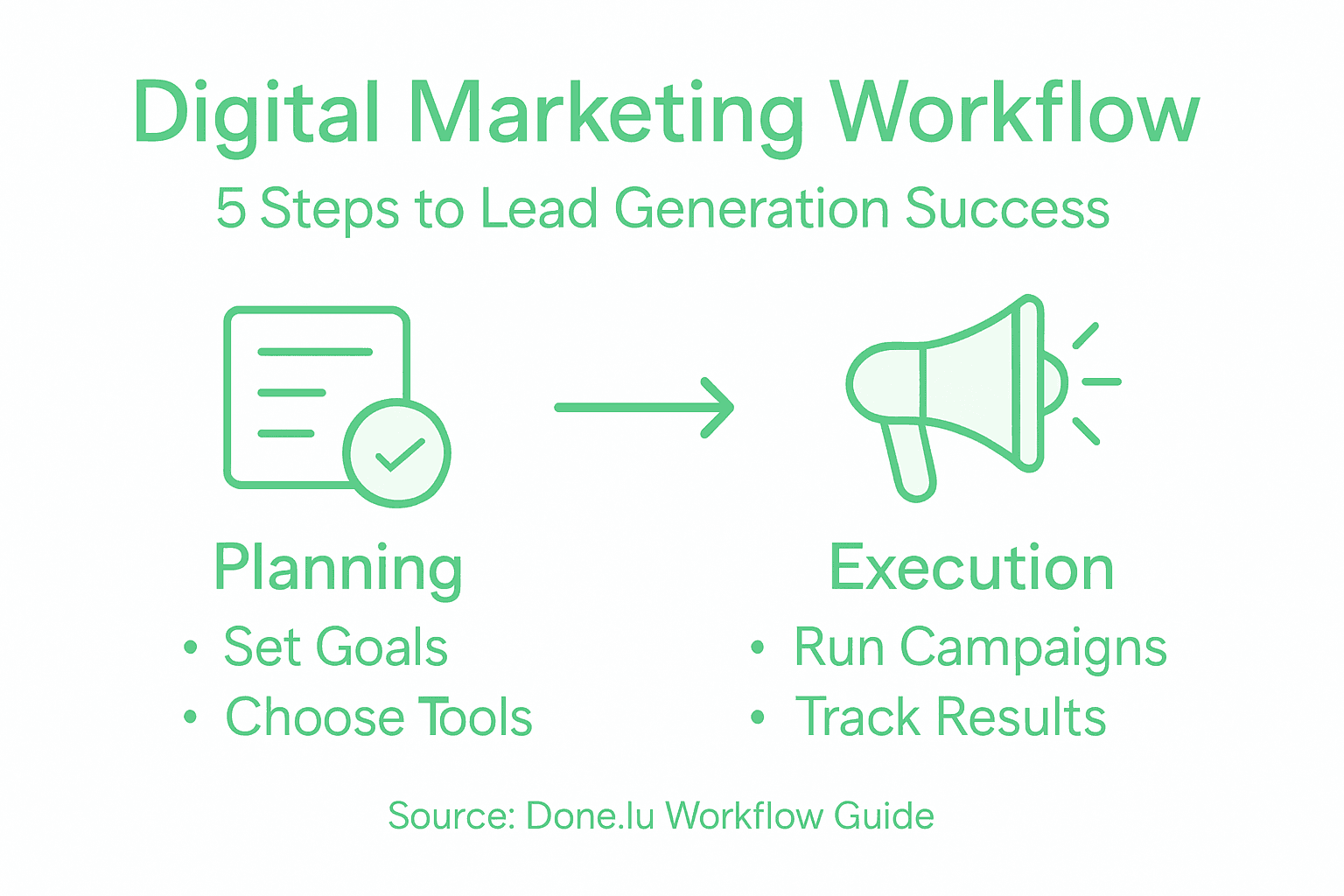
February 6, 2026Master Digital Marketing Workflow for Lead Generation Success

Setting digital marketing goals often feels like trying to steer without a map, especially in competitive markets like Luxembourg. Clear objectives serve as your guide, helping each campaign decision deliver results that matter for business growth. By defining SMART objectives and aligning them with real customer needs, you transform scattered tactics into a focused strategy that directly supports lead generation and stronger engagement for your e-commerce brand.
Table of Contents
- Step 1: Define Digital Marketing Goals And Objectives
- Step 2: Set Up Essential Tools And Platforms
- Step 3: Develop Campaign Strategies And Workflows
- Step 4: Execute Campaigns Across Digital Channels
- Step 5: Measure Performance And Optimize Results
Quick Summary
| Key Insight | Explanation |
|---|---|
| 1. Define Clear Objectives | Establish specific, measurable goals to guide your digital marketing efforts effectively. |
| 2. Utilize Essential Tools | Set up platforms like Google Analytics and CRM software to enhance tracking and engagement. |
| 3. Create Integrated Campaigns | Develop detailed workflows connecting your marketing strategies with target audience engagement. |
| 4. Execute with Synchronized Efforts | Launch campaigns across channels, ensuring consistent messaging tailored to each platform. |
| 5. Measure and Optimize Regularly | Analyze key metrics to refine strategies based on real-world data for continuous improvement. |
Step 1: Define digital marketing goals and objectives
Successful digital marketing starts with crystal clear goals that transform your business vision into actionable strategies. By precisely defining your objectives, you’ll create a roadmap that guides every digital marketing effort and maximizes your potential for growth.
To establish meaningful digital marketing goals, you’ll want to follow a strategic approach that aligns with your business needs. Digital marketing strategies require thoughtful planning that considers your specific business context. Here are the key steps to defining effective goals:
- Identify primary business outcomes like increasing leads, boosting brand awareness, or expanding market reach
- Analyze your current digital presence to understand baseline performance
- Create specific, measurable objectives that connect directly to business growth
- Develop detailed buyer personas to ensure goals resonate with target customers
When crafting your goals, focus on developing SMART objectives: Specific, Measurable, Achievable, Relevant, and Time-bound. For instance, instead of a vague goal like “increase website traffic,” aim for something concrete such as “increase organic website traffic by 25% within the next quarter.”
Your digital marketing goals should serve as a strategic compass, guiding every decision and campaign you create.
By establishing clear, quantifiable objectives, you’ll transform digital marketing platforms from scattered tactics into a cohesive, powerful strategy that drives real business results.
Pro tip: Regularly review and adjust your digital marketing goals every 90 days to ensure they remain aligned with your evolving business needs and market conditions.
Step 2: Set up essential tools and platforms
Building an effective digital marketing infrastructure requires carefully selecting and implementing the right technological tools that will power your marketing efforts. Your goal is to create a comprehensive digital ecosystem that allows seamless tracking, engagement, and measurement of your marketing performance.
Digital marketing platforms are critical for transforming your marketing strategy from disconnected tactics to a unified approach. Here are the essential tools you’ll want to set up:
- Google Analytics for website performance tracking
- Google Ads for paid advertising management
- CRM software for customer relationship management
- Email marketing platforms for targeted communication
- Social media management tools for coordinating online presence
When setting up these platforms, focus on strategic platform selection that aligns with your specific business goals. Not every tool works for every business, so social media marketing platforms should be chosen based on where your target audience is most active.
The right digital tools can transform scattered marketing efforts into a powerful, data-driven strategy.
Each platform requires careful configuration to maximize its potential. Take time to explore settings, integrate platforms, and ensure they communicate effectively to provide comprehensive insights into your marketing performance.

Here’s how key digital marketing tools compare in terms of purpose and business impact:
| Tool or Platform | Primary Purpose | Typical Business Impact |
|---|---|---|
| Google Analytics | Monitor website performance | Data-driven decision making |
| CRM Software | Manage customer relationships | Improved retention and loyalty |
| Social Media Management | Coordinate online presence | Stronger brand awareness |
| Email Marketing | Deliver targeted communication | Higher conversion rates |
| Google Ads | Run paid advertising | Rapid lead generation |
Pro tip: Create a spreadsheet to track login credentials, setup dates, and key configuration details for each marketing platform to maintain organized access and smooth management.
Step 3: Develop campaign strategies and workflows
Crafting a powerful digital marketing campaign requires a strategic approach that transforms your business goals into actionable, results-driven workflows. Your mission is to design a comprehensive strategy that seamlessly connects your marketing objectives with targeted audience engagement.
Digital marketing campaign strategies are the blueprint for your marketing success. To develop an effective workflow, you’ll need to focus on several critical components:
- Define clear campaign objectives with specific, measurable outcomes
- Create detailed buyer personas to understand your target audience
- Select appropriate marketing channels for maximum reach
- Design compelling content aligned with audience needs
- Develop a realistic timeline for campaign execution
- Establish performance tracking mechanisms
When building your strategy, pay close attention to workflow integration. Marketing strategy development requires a systematic approach that connects each element of your campaign into a cohesive, adaptable plan.
A well-designed marketing workflow acts like a precision instrument, turning strategic vision into measurable results.
Successful campaigns require continuous refinement. Plan regular review points to assess performance, adjust strategies, and optimize your approach based on real-world data and audience responses.
Pro tip: Create a centralized project management dashboard that allows real-time tracking of campaign metrics, content progress, and team collaboration to maintain strategic alignment.
Step 4: Execute campaigns across digital channels
Launching your digital marketing campaign requires a strategic, synchronized approach that maximizes your reach across multiple platforms. Your goal is to create a cohesive experience that connects with your audience through diverse digital touchpoints.
Digital marketing campaigns demand precise execution across various channels. To ensure success, you’ll need to focus on several key strategies:
- Customize content for each specific platform
- Schedule posts with optimal timing
- Manage paid advertisements strategically
- Monitor audience engagement in real-time
- Adapt messaging to platform-specific nuances
- Track cross-channel performance consistently
When executing your campaign, channel integration becomes critical. Marketing across digital platforms requires a dynamic approach that allows seamless interaction between different marketing channels.
Successful campaign execution is like conducting an orchestra – each channel must play its part perfectly while harmonizing with the others.
Remember that modern digital marketing is about creating a synchronized experience. Your messaging should feel consistent yet appropriately tailored across social media, email, search engines, and websites. Leverage analytics tools to make real-time adjustments and optimize your campaign’s performance.
Pro tip: Create a centralized content calendar that tracks posting schedules, content variations, and performance metrics across all digital channels to maintain strategic alignment and consistency.
Step 5: Measure performance and optimize results
Transforming raw marketing data into actionable insights is the ultimate key to driving continuous improvement in your digital marketing strategy. Your objective is to understand exactly how your campaigns are performing and make precise, data-driven adjustments that maximize your marketing effectiveness.
Marketing performance indicators are critical for understanding your campaign’s impact. To effectively measure and optimize your results, you’ll need to focus on several essential metrics:
- Track conversion rates across different channels
- Monitor engagement metrics like clicks and interactions
- Analyze customer acquisition costs
- Evaluate return on investment (ROI)
- Compare performance against initial objectives
- Identify potential optimization opportunities
Successful measurement requires a systematic approach. Marketing analytics tools provide the insights needed to make informed decisions about your campaign strategies.
Data is the compass that guides your marketing strategy from good to extraordinary.
Remember that optimization is an ongoing process. Regularly review your analytics, conduct A/B testing, and be prepared to make swift, strategic adjustments. The most successful marketers view their campaigns as living, breathing entities that constantly evolve based on real-world performance.
This summary highlights how common marketing performance metrics inform optimization decisions:
| Metric Name | What It Reveals | Typical Optimization Action |
|---|---|---|
| Conversion Rate | Effectiveness of campaigns | Enhance messaging or design |
| Engagement Rate | Audience interaction level | Adjust content or posting times |
| ROI | Profitability of strategy | Reallocate marketing budget |
| Acquisition Cost | Cost per new customer | Refine targeting or ad spend |
Pro tip: Create a monthly performance dashboard that consolidates key metrics from all channels, allowing you to quickly visualize trends and make data-driven optimization decisions.
Unlock Lead Generation Success with Expert Digital Marketing Support
Struggling to turn your digital marketing goals into measurable results can feel overwhelming. This article highlights the crucial need to define clear objectives, integrate powerful tools, and execute precise workflows for lead generation success. If crafting SMART objectives, managing multi-channel campaigns, and constantly optimizing performance resonate with your business challenges, you are not alone.
At Done.lu, we specialize in transforming complex digital marketing workflows into seamless, lead-generating engines. Our expertise in growth-driven design, SEO, SEM, and targeted social media management ensures your efforts drive real business growth with clarity and confidence. From setting up essential platforms to delivering synchronized campaigns, we help you conquer every step of your marketing journey.
Ready to transform your digital marketing strategy into a powerful lead generation machine Visit Done.lu today to discover how our tailored web development and marketing solutions can help you define precise goals, optimize your tools, and execute campaigns that convert. Take control now and start maximizing your marketing impact.
Frequently Asked Questions
How can I define clear digital marketing goals for lead generation?
To define clear digital marketing goals, focus on identifying specific outcomes like increasing leads or enhancing brand awareness. Create SMART objectives—for example, aim to increase leads by 30% within the next quarter.
What essential tools do I need to set up for my digital marketing workflow?
You will need tools like Google Analytics for performance tracking, customer relationship management (CRM) software for managing customer interactions, and email marketing platforms for targeted campaigns. Set up these tools to create a comprehensive digital ecosystem that improves your marketing efficiency.
How can I create effective campaign strategies for lead generation?
To create effective campaign strategies, define clear objectives, understand your audience through detailed buyer personas, and select marketing channels that maximize your reach. Develop compelling content that meets audience needs and set a timeline for execution.
What steps should I take to measure the performance of my digital marketing campaigns?
To measure performance, track key metrics such as conversion rates, engagement, and customer acquisition costs. Analyze this data regularly to identify trends and optimize your strategies based on these insights.
How often should I adjust my digital marketing goals and strategies?
You should review and adjust your digital marketing goals and strategies every 90 days to ensure alignment with your business needs and market conditions. Regular assessments will help you adapt to changes and optimize performance effectively.
What is the role of content customization in executing digital marketing campaigns?
Customizing content for each digital platform enhances audience engagement and improves the effectiveness of your campaigns. Tailor your messaging to fit each platform, ensuring a consistent yet relevant experience that resonates with your target audience.
