
Master Digital Marketing Workflow for Lead Generation Success
February 6, 2026Why Social Media Management Matters for E-Commerce

Many e-commerce marketing managers know the struggle of turning online interactions into real customer relationships across different platforms. Digital audiences in Luxembourg demand more than quick posts or generic ads. With the right social media management strategies, your business can move beyond routine updates and start building genuine connections that drive brand loyalty and sales. This guide outlines practical steps to help you create engaging content, manage risks, and measure success while adapting to the unique demands of each platform.
Table of Contents
- Defining Social Media Management Today
- Major Platforms and Management Approaches
- Core Benefits for E-Commerce Businesses
- Essential Skills and Technology Requirements
- Common Pitfalls and Risk Factors
- Comparing Diy Vs. Agency Solutions
Key Takeaways
| Point | Details |
|---|---|
| Evolving Discipline | Social media management has transformed into a complex field necessitating both strategic thinking and technical skills. It now encompasses audience engagement, performance analytics, and compliance, requiring a comprehensive approach. |
| Platform-Specific Strategies | Each major social media platform demands tailored management techniques to effectively engage distinct audiences and maximize marketing impact. Professionals must adapt content and communication styles accordingly. |
| E-Commerce Enhancement | For e-commerce businesses, social media management offers significant advantages, including improved brand visibility, direct customer interaction, and cost-efficient marketing. Leveraging data analytics can enhance customer experiences. |
| DIY vs. Agency | When choosing between DIY solutions and agency services, businesses should weigh their internal expertise and resources against the advanced capabilities offered by professional agencies for optimized management. |
Defining Social Media Management Today
Social media management has transformed from a simple communication strategy into a sophisticated, multifaceted discipline that requires strategic thinking and technical expertise. It represents a critical bridge between organizations and their digital audiences, enabling businesses to craft meaningful online interactions.
At its core, social media management involves creating comprehensive communication strategies that extend far beyond posting content. The discipline now encompasses several key dimensions:
- Strategic content planning
- Audience engagement and relationship building
- Performance measurement and analytics
- Crisis communication management
- Brand voice development
- Compliance with digital communication regulations
Modern social media management recognizes that every digital interaction represents a potential touchpoint for brand perception. Professionals in this field must balance creativity with analytical rigor, understanding both the art of communication and the science of digital metrics.
Integrating academic theory with practical application has become crucial for successful social media strategies. Organizations now require sophisticated approaches that go beyond traditional marketing, focusing on building genuine connections and maintaining transparent, ethical communication channels.
Pro tip: Develop a comprehensive social media management workflow that includes content calendars, audience persona mapping, and consistent brand voice guidelines to streamline your digital communication efforts.
Major Platforms and Management Approaches
Social media platforms represent complex digital ecosystems, each with unique communication dynamics and audience engagement strategies. Understanding these nuanced differences is crucial for developing targeted management approaches that maximize digital marketing effectiveness.
Computer-mediated communication channels require specialized strategies tailored to their specific characteristics. The most prominent social media platforms demand distinct management techniques:
- Instagram: Visual storytelling and aesthetic content
- TikTok: Short-form video engagement and trending challenges
- Facebook: Community building and targeted demographic advertising
- Twitter: Real-time information sharing and rapid response communication
- LinkedIn: Professional networking and industry thought leadership
- YouTube: Long-form video content and educational material
Each platform operates with unique algorithms and audience expectations, necessitating a flexible and adaptive management approach. Successful social media managers must become platform chameleons, seamlessly adjusting content, tone, and communication style to match each digital environment.

Management strategies for business accounts involve more than just posting content. Professionals must understand platform-specific nuances, including optimal posting times, engagement metrics, and content formatting requirements that drive user interaction.
Here’s a concise look at how major social media platforms differ in their management focus and business impact:
| Platform | Management Focus | Unique Business Impact |
|---|---|---|
| Visual branding & stories | Drives product discovery and sales | |
| TikTok | Viral short-form content | Expands reach through trends |
| Community & targeted ads | Strengthens loyalty, local targeting | |
| Real-time updates & engagement | Boosts brand responsiveness | |
| Networking & thought leadership | Builds B2B credibility and partnerships | |
| YouTube | Long-form, educational content | Increases authority and customer trust |
Effective social media management is about creating meaningful connections, not just accumulating followers.
Pro tip: Develop a cross-platform content strategy that maintains consistent brand messaging while adapting to each platform’s unique communication style and audience expectations.
Core Benefits for E-Commerce Businesses
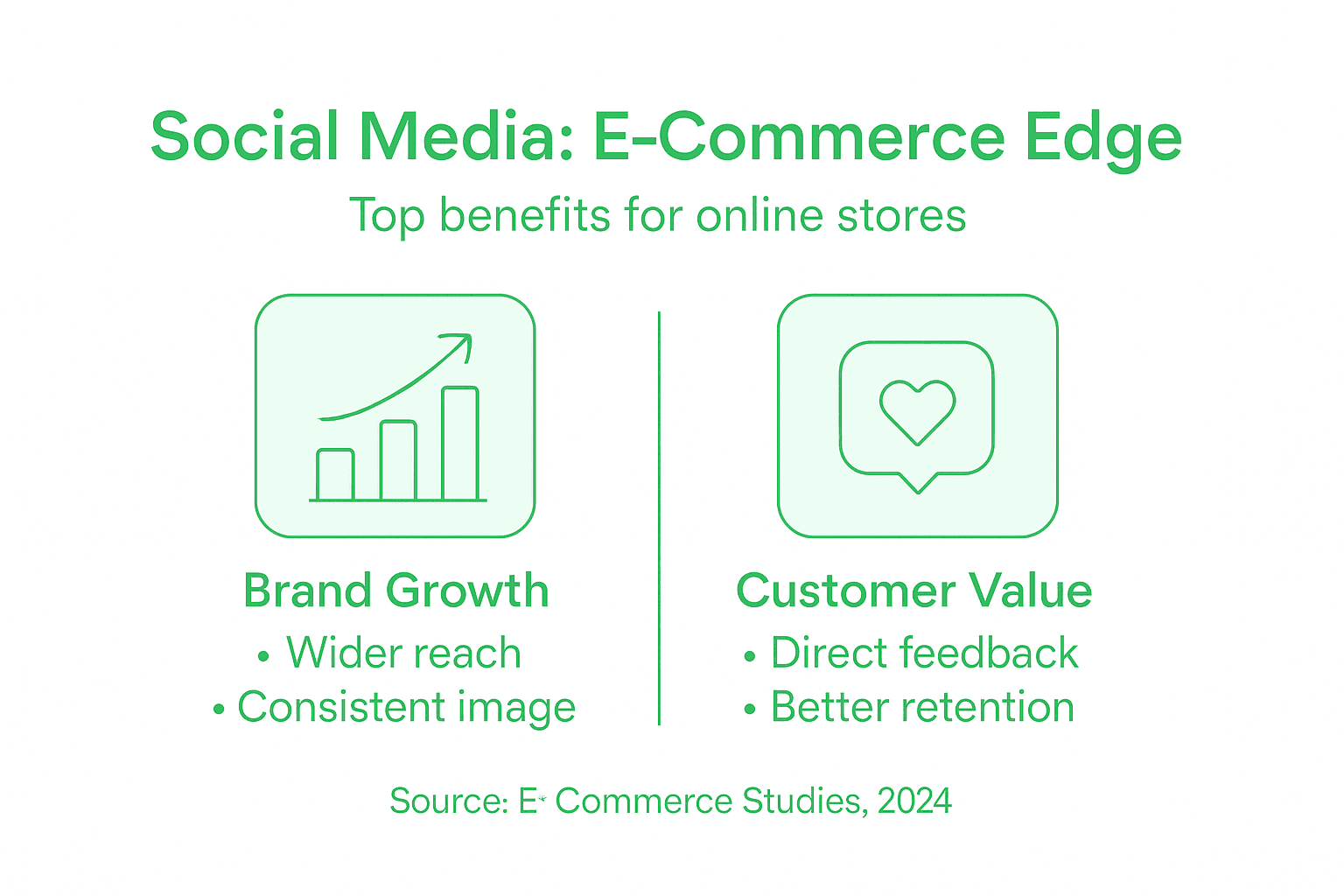
Social media management has become an essential strategic tool for e-commerce businesses seeking to expand their digital footprint and drive meaningful customer engagement. By leveraging sophisticated digital communication techniques, online retailers can transform their marketing approaches and create more dynamic, responsive business models.
Strategic marketing approaches deliver multiple critical advantages for e-commerce operations:
- Enhanced brand visibility and recognition
- Direct customer communication channels
- Real-time customer support and feedback mechanisms
- Targeted advertising capabilities
- Cost-effective marketing strategies
- Global audience reach
- Instant performance measurement and analytics
The power of social media management extends far beyond simple content posting. Sophisticated e-commerce platforms can use these tools to create personalized customer experiences, adapting marketing strategies in real-time based on audience interactions and emerging digital trends.
Performance analysis and customer engagement represent game-changing opportunities for online businesses. By understanding detailed metrics and audience behaviors, e-commerce companies can develop more intelligent, responsive marketing strategies that drive conversion rates and foster long-term customer loyalty.
Social media management transforms digital marketing from a broadcast model to a dynamic, interactive conversation.
Pro tip: Implement a comprehensive social media management dashboard that integrates multiple platform analytics to gain holistic insights into your e-commerce marketing performance.
Essential Skills and Technology Requirements
Social media management has evolved into a sophisticated discipline requiring a complex blend of creative and technical expertise. Professionals in this field must navigate an increasingly dynamic digital landscape that demands versatility, strategic thinking, and technological proficiency.
Key professional skills for social media management encompass a comprehensive range of competencies:
- Strategic communication planning
- Advanced content creation techniques
- Data analytics and performance interpretation
- Digital audience segmentation
- Crisis management and rapid response protocols
- Cross-platform communication strategies
- Visual design and multimedia production
Technological proficiency stands as a critical differentiator in modern social media management. Professionals must master an array of digital tools and platforms that enable sophisticated content scheduling, audience tracking, and performance measurement. These technologies transform raw data into actionable insights that drive strategic decision-making.
Content management and analytics platforms represent the backbone of effective digital communication strategies. Successful social media managers leverage advanced software solutions that integrate scheduling, tracking, reporting, and engagement measurement into seamless workflows.
Technical skills combined with creative thinking create the most powerful social media management approach.
Pro tip: Invest in continuous learning through online certifications and platform-specific training to stay ahead of emerging social media technologies and management techniques.
Common Pitfalls and Risk Factors
Social media management presents complex challenges that can significantly impact an organization’s digital reputation and operational effectiveness. Navigating these potential risks requires strategic awareness, proactive planning, and sophisticated communication approaches.
Social media management risks encompass multiple critical areas of concern:
- Inadequate audience engagement strategies
- Inconsistent brand messaging
- Poorly managed content moderation
- Security and privacy vulnerabilities
- Compliance and legal regulation challenges
- Insufficient crisis communication protocols
- Reactive instead of proactive communication approaches
- Lack of comprehensive performance monitoring
Reputation management represents the most significant potential risk in digital communication landscapes. A single mishandled interaction or inappropriate response can rapidly escalate into a comprehensive brand crisis, potentially undermining years of carefully constructed digital trust and audience relationships.
Understanding the nuanced landscape of digital communication requires developing robust risk mitigation strategies that anticipate potential challenges before they emerge. Organizations must implement comprehensive monitoring systems, develop clear communication guidelines, and train teams to respond with precision and empathy in high-stakes digital environments.
Prevention and preparation are more powerful than reactive crisis management.
Pro tip: Develop a comprehensive social media risk management protocol that includes real-time monitoring, clear escalation procedures, and predefined communication templates for potential crisis scenarios.
Comparing DIY vs. Agency Solutions
Social media management represents a critical strategic decision for e-commerce businesses, with two primary approaches offering distinct advantages and challenges. Understanding the nuanced differences between do-it-yourself (DIY) strategies and professional agency solutions can significantly impact a company’s digital marketing effectiveness.
Strategic social media management approaches reveal complex trade-offs between in-house and outsourced solutions:
- DIY Approach:
- Lower initial financial investment
- Direct brand control
- Immediate internal communication
- Flexible response times
- Limited professional expertise
- Agency Approach:
- Comprehensive strategic insights
- Professional-grade technological resources
- Scalable campaign management
- Advanced performance analytics
- Specialized industry knowledge
Small to medium-sized e-commerce businesses face particularly nuanced challenges when selecting their social media management strategy. The decision hinges on multiple factors including budget constraints, internal expertise, time availability, and specific marketing objectives.
Professional agencies bring sophisticated technological capabilities and strategic insights that most internal teams cannot independently replicate. Their experience across multiple industries enables them to develop more refined, data-driven communication strategies that can dramatically improve digital marketing performance.
Comparing DIY and Agency social media management approaches helps businesses choose the right fit:
| Approach | Expertise Level | Resource Commitment | Scalability Potential |
|---|---|---|---|
| DIY | Basic to intermediate | High internal effort | Limited by team size |
| Agency | Advanced, specialized | Outsourced investment | Easily scaled for growth |
The right social media management approach depends on your specific business goals, not a one-size-fits-all solution.
Pro tip: Conduct a comprehensive internal audit of your social media capabilities before deciding between DIY and agency solutions, evaluating your team’s skills, available resources, and strategic marketing objectives.
Elevate Your E-Commerce Success with Expert Social Media Management
Mastering social media management is essential for e-commerce businesses striving to build meaningful customer connections and maximize digital marketing returns. As the article highlights, challenges like strategic content planning, consistent brand messaging, and real-time audience engagement can overwhelm teams lacking specialized skills. Without a comprehensive workflow, you risk missed opportunities and ineffective campaigns.
At Done.lu, a leading digital agency based in Luxembourg, we specialize in crafting tailored social media management strategies integrated with web development and inbound marketing to address these exact pain points. Our approach focuses on combining creative storytelling with data-driven insights to enhance your online presence, foster authentic engagement, and increase conversions. By leveraging our growth-driven design methodology and advanced digital marketing tools, your e-commerce business will transform social channels into powerful sales engines.
Discover how to navigate social media complexities and unlock growth with Done.lu’s expert solutions. Visit Done.lu to explore our full range of services including social media management, web development, and digital marketing designed for small and medium-sized enterprises. Take control of your e-commerce future today by partnering with a team that understands your challenges and delivers measurable results.
Frequently Asked Questions
What are the key benefits of social media management for e-commerce businesses?
Social media management enhances brand visibility, facilitates direct communication with customers, and allows for real-time feedback. It also provides targeted advertising capabilities and helps reach a global audience cost-effectively.
How can social media management improve customer engagement for online retailers?
Social media management enables businesses to create meaningful interactions through strategic content planning, audience engagement, and timely customer support. This fosters a sense of community and loyalty among customers.
What skills are essential for effective social media management in e-commerce?
Key skills include strategic communication planning, advanced content creation techniques, data analytics, and crisis management. Mastery of digital tools for scheduling, tracking, and performance measurement is also crucial.
Why is a professional agency often better than a DIY approach for social media management?
Agencies offer specialized expertise, advanced technological resources, and scalable campaign management. They are better equipped to develop data-driven strategies and manage performance analytics, which can lead to improved digital marketing results.
