

Digital Marketing Trends 2026: What Marketers Must Know
February 12, 2026
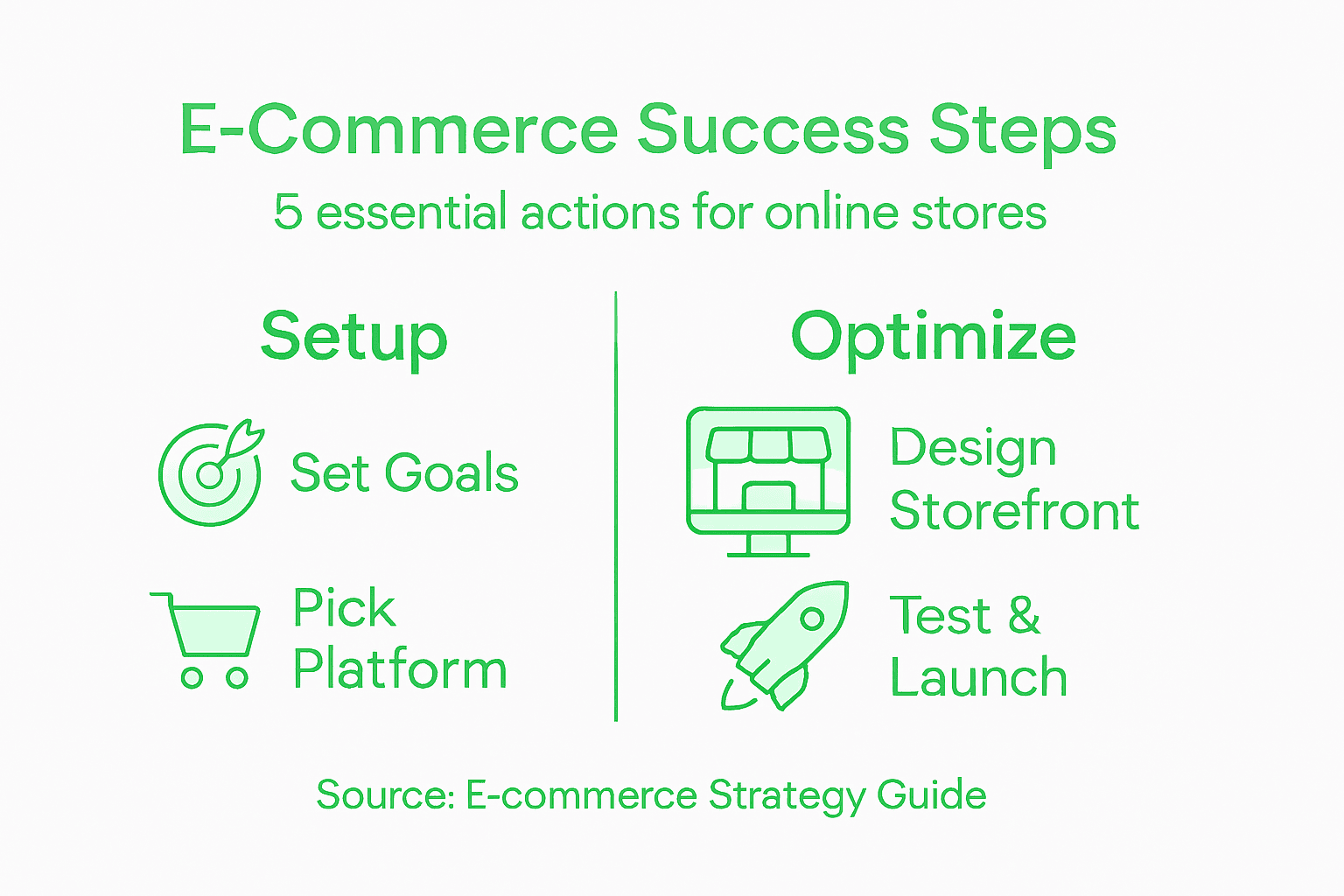
Choosing the right e-commerce platform can feel like a pivotal first step for many business owners in Luxembourg eager to expand online. With more companies worldwide now relying on digital platforms for primary sales, your decision at the start shapes everything from customer experience to growth potential. This practical guide walks you through strong business goal setting, effective platform comparison, and key steps to ensure your online store is primed for success.
Table of Contents
- Step 1: Define Business Goals And Select E-Commerce Platform
- Step 2: Design Engaging Storefront And Structure Product Catalog
- Step 3: Configure Payment, Shipping, And Security Settings
- Step 4: Integrate Essential Marketing And Analytics Tools
- Step 5: Test Functionality And Launch Your Online Store
Quick Summary
| Key Insight | Explanation |
|---|---|
| 1. Assess Your Business Needs | Evaluate your business scale, product types, sales volume, and budget before selecting an e-commerce platform. |
| 2. Focus on User Experience Design | Ensure your storefront is visually appealing and easy to navigate, guiding customers seamlessly from browsing to purchase. |
| 3. Configure Payments and Security Thoroughly | Set up reliable payment processing and robust security measures to build customer trust and ensure transaction safety. |
| 4. Integrate Analytics and Marketing Tools | Use data-driven tools to analyze customer behavior and optimize marketing strategies for better conversions and growth. |
| 5. Conduct Thorough Testing Before Launch | Test all functionalities extensively, including payment systems and mobile compatibility, to ensure a reliable shopping experience. |
Step 1: Define business goals and select e-commerce platform
Launching an e-commerce website requires strategic planning and careful platform selection that aligns with your unique business objectives. Your choice of digital sales infrastructure can significantly impact future growth, customer experience, and operational efficiency.
Begin by conducting a thorough assessment of your business model and sales aspirations. Comprehensive platform comparison research suggests evaluating several critical dimensions before making a final decision:
- Business Scale: Determine whether you need a platform for small boutique sales or enterprise-level operations
- Product Types: Assess the complexity of products you’ll sell (digital, physical, services)
- Sales Volume: Estimate expected transaction numbers and peak traffic periods
- Budget Constraints: Calculate initial setup and ongoing platform maintenance costs
Recommended steps for platform selection include:
- List your specific business requirements
- Research top e-commerce platforms matching your needs
- Compare features, pricing, and scalability
- Request platform demos or free trials
- Consult with digital strategy professionals
Select an e-commerce platform that not only meets current needs but provides flexibility for future business expansion.
Based on global e-commerce transaction insights, businesses increasingly rely on platforms offering seamless integration, robust security, and multichannel sales capabilities. Popular options like Shopify, WooCommerce, and Magento cater to different business sizes and complexity levels.
Here’s a concise comparison of popular e-commerce platforms and their suitability for various business needs:
| Platform | Best For | Scalability | Customization Level |
|---|---|---|---|
| Shopify | New and growing brands | High | Moderate |
| WooCommerce | Small to medium stores | Moderate | High (WordPress-based) |
| Magento | Enterprise businesses | Very High | Extensive |
| BigCommerce | Multi-channel sellers | High | Moderate |
Pro tip: Schedule platform consultations with multiple providers and request detailed migration support documentation before making your final selection.
Step 2: Design engaging storefront and structure product catalog
Creating a compelling e-commerce website requires strategic design that transforms casual browsers into committed customers. Your storefront is more than a digital showcase – it’s your brand’s virtual showroom where visual appeal and functional navigation work together to drive sales.
Comprehensive website design guidelines recommend focusing on several key elements that enhance user experience:
- Visual Hierarchy: Create clear pathways that guide customers’ attention
- Brand Consistency: Maintain uniform colors, fonts, and imagery across pages
- Mobile Responsiveness: Ensure seamless experience on smartphones and tablets
- Intuitive Navigation: Design simple, logical menu structures
Key steps for structuring your product catalog include:
- Create logical product categories
- Develop clear, descriptive category titles
- Implement robust filtering options
- Use high-quality product images
- Write comprehensive product descriptions
An organized catalog transforms browsing into an effortless, enjoyable shopping experience.
According to global e-commerce strategy insights, successful digital storefronts prioritize customer-centric design. This means creating visual layouts that are not just aesthetically pleasing but also functionally intuitive, with smooth transitions between product discovery and purchase.

Pro tip: Conduct user testing with potential customers to validate your storefront design and identify potential navigation challenges before full launch.
Step 3: Configure payment, shipping, and security settings
Building a robust e-commerce infrastructure requires careful configuration of payment processing, shipping logistics, and advanced security protocols. These critical systems form the backbone of your online business, directly impacting customer trust and operational efficiency.
Global e-commerce infrastructure strategies recommend implementing comprehensive systems that address multiple critical dimensions:
- Payment Gateway: Support multiple currencies and payment methods
- Shipping Options: Provide transparent and flexible delivery choices
- Security Protocols: Implement multilayered data protection mechanisms
- Compliance Standards: Meet international transaction regulations
Key configuration steps include:
- Select secure, reputable payment processors
- Integrate multiple payment method options
- Configure shipping rate calculations
- Establish clear return and refund policies
- Implement SSL encryption
Comprehensive security configuration transforms potential customer hesitation into confident purchasing behavior.
According to international e-commerce policy analysis, successful online businesses prioritize transparent transaction processes that reassure customers about financial safety and operational reliability. This involves creating seamless integrations between payment gateways, shipping systems, and robust cybersecurity frameworks.
Pro tip: Test all payment and shipping configurations using multiple devices and simulate various transaction scenarios before going live.
Step 4: Integrate essential marketing and analytics tools
Transforming your e-commerce website from a simple online storefront into a data-driven marketing powerhouse requires strategic integration of powerful analytics and marketing tools. These digital solutions will help you understand customer behavior, optimize marketing campaigns, and drive sustainable business growth.
E-commerce growth strategy insights recommend focusing on several critical marketing and analytics dimensions:
- Web Analytics: Track visitor behavior and conversion rates
- Email Marketing: Build automated customer communication sequences
- Social Media Integration: Connect platform performance metrics
- Customer Segmentation: Create targeted marketing campaigns
Key implementation steps include:
- Select comprehensive analytics platforms
- Configure conversion tracking
- Set up email marketing automation
- Connect social media channels
- Establish key performance indicators
Smart tool integration transforms raw data into actionable business intelligence.
Global e-commerce strategy resources emphasize that successful digital businesses leverage data-driven insights to continuously refine marketing approaches. This means creating a dynamic ecosystem where customer interactions generate meaningful metrics that directly inform strategic decisions.
The following table summarizes essential marketing and analytics tools and their main benefits for e-commerce growth:
| Tool Type | Core Function | Business Value |
|---|---|---|
| Web Analytics | Tracks user behavior | Informs site improvements |
| Email Marketing | Automates customer outreach | Boosts engagement and conversions |
| Social Integration | Connects store to social | Expands reach via networks |
| Customer Segmentation | Organizes customers | Enables targeted campaigns |
Pro tip: Start with 2-3 core tools and expand gradually, ensuring each integration provides clear, measurable value to your specific business model.
Step 5: Test functionality and launch your online store
Launching your e-commerce website represents the culmination of strategic planning, design, and technical configuration. This critical phase transforms your digital vision into a fully operational online business ready to engage customers and generate revenue.
Comprehensive website launch strategies recommend a systematic testing approach that covers multiple critical dimensions:
- Functionality Testing: Verify all site features work perfectly
- Payment Processing: Validate transaction completeness and security
- Mobile Responsiveness: Confirm seamless performance across devices
- User Experience: Simulate real customer interactions
Detailed testing and launch steps include:
- Conduct comprehensive functional testing
- Perform payment gateway simulations
- Test website load speeds
- Review mobile and desktop compatibility
- Execute final security checks
Rigorous testing transforms potential technical vulnerabilities into a robust, reliable online shopping experience.
Global e-commerce launch strategies emphasize the importance of continuous monitoring and iterative improvements. Successful online stores view launch as the beginning of an ongoing optimization journey, constantly adapting to user feedback and emerging digital trends.
Pro tip: Create a staged launch with a small, trusted group of beta testers who can provide honest, detailed feedback before full public release.
Elevate Your E-Commerce Journey with Expert Support from Done.lu
Building a successful e-commerce website involves navigating complex challenges such as choosing the right platform, designing an engaging storefront, securing payment and shipping, and integrating powerful marketing tools. These critical steps require not only strategic planning but also the hands-on expertise to turn your digital vision into reality. If you want to overcome these hurdles with confidence and create a customer-centric online store that drives growth, Done.lu offers tailored solutions designed to meet your unique business goals.
Discover how our Luxembourg-based agency specializes in crafting fully responsive e-commerce websites combined with data-driven marketing strategies that boost visibility and conversions. Don’t let technical complexity or design uncertainty hold you back. Visit us now at Done.lu to explore how our comprehensive web development and digital marketing services can empower your business. Take the first step toward your successful online store with personalized guidance and transparent project management from proven experts.
Frequently Asked Questions
What are the key steps to build an e-commerce website for business success?
Building an e-commerce website involves several key steps: define your business goals, select the right e-commerce platform, design an engaging storefront, configure payment and shipping settings, integrate marketing tools, and thoroughly test functionality before launch. Start by creating a checklist of these steps to ensure nothing is overlooked.
How do I choose the best e-commerce platform for my business?
To choose the best e-commerce platform, assess your business scale, product types, expected sales volume, and budget constraints. List your specific requirements and compare features of various platforms to find the one that aligns with your goals.
What design elements should I focus on for my e-commerce storefront?
Focus on creating a strong visual hierarchy, maintaining brand consistency, ensuring mobile responsiveness, and establishing intuitive navigation. Start by sketching a layout that emphasizes these elements to enhance user experience and encourage sales.
How can I effectively manage payment and shipping configurations?
Effectively managing payment and shipping configurations involves selecting secure payment processors, offering multiple payment methods, and establishing clear shipping options. Begin by researching payment gateways and shipping services that best meet your customers’ needs, ensuring transparency and flexibility.
What essential marketing tools should I integrate into my e-commerce site?
Integrate essential marketing tools like web analytics for tracking visitor behavior, email marketing for automating customer communication, and social media integration for expanding reach. Start with basic analytics and email automation tools, then evaluate additional options as your needs grow.
What should I test before launching my e-commerce website?
Before launching, test functionality to ensure all site features work correctly, validate all payment processing systems, and confirm mobile responsiveness. Create a checklist for testing each aspect, and aim to resolve any issues before allowing public access.