

7 Essential Web Design Elements for Higher Conversion Rates
February 12, 2026
Expanding online sales in Luxembourg can feel like navigating a maze for luxury retailers. Digital transformation brings both opportunities and tough decisions as customer expectations shift rapidly. This guide highlights the most effective e-commerce development strategies, breaking down the essentials of platform architecture, security, and tailored digital experiences. Gain insights into luxury brand e-commerce solutions and learn how to future-proof your business while upholding exclusive brand values in a competitive digital marketplace.
Table of Contents
- E-commerce Development Explained For Retailers
- Types Of E-commerce Solutions For Luxury Brands
- Core Features For Effective Online Stores
- Legal, Security, And Compliance Essentials
- Costs, Risks, And Common Mistakes
- Strategies For Sustainable Digital Growth
Key Takeaways
| Point | Details |
|---|---|
| E-commerce Development | Retailers must build sophisticated online platforms to expand their reach and enhance customer engagement. |
| Luxury Brand Strategies | Luxury brands should balance exclusivity with accessibility through diverse digital solutions while maintaining brand integrity. |
| Core Features of Online Stores | Successful online stores require responsive design, advanced search, personalization, and robust security to enhance user experience. |
| Legal and Security Compliance | Understanding data protection regulations and implementing cybersecurity measures is crucial for building trust and maintaining consumer rights. |
E-commerce development explained for retailers
E-commerce development represents a comprehensive digital strategy for retailers seeking to expand their sales channels and reach global markets. At its core, e-commerce development transforms traditional retail operations by creating sophisticated online platforms that enable seamless digital transactions. Retailers can leverage advanced website architectures to connect with customers across multiple digital touchpoints.
The process of e-commerce development involves several critical components that retailers must strategically integrate:
- Platform Selection: Choosing the right technological infrastructure
- User Experience Design: Creating intuitive, engaging digital storefronts
- Payment Integration: Implementing secure transaction systems
- Inventory Management: Developing real-time tracking capabilities
- Mobile Responsiveness: Ensuring seamless performance across devices
Successful e-commerce development requires understanding different architectural approaches. Headless e-commerce architectures provide retailers unprecedented flexibility, allowing independent management of frontend and backend systems. This approach enables more customized shopping experiences and faster technological adaptations.
Operational Considerations play a crucial role in effective e-commerce development. Retailers must carefully evaluate:
- Technical infrastructure requirements
- Security protocols
- Customer data management
- Scalability potential
- Integration with existing business systems
Effective e-commerce development transforms digital retail from a transactional platform into a comprehensive customer engagement ecosystem.
Pro tip: Start with a minimum viable product (MVP) approach, focusing on core functionalities before expanding your e-commerce platform’s complexity.
Types of e-commerce solutions for luxury brands
Luxury brands are increasingly embracing digital strategies that balance exclusivity with online accessibility. Diverse e-commerce solutions have emerged to help high-end retailers maintain their brand integrity while expanding digital reach. The digital landscape offers multiple approaches for luxury brands to connect with sophisticated consumers.
Key e-commerce solutions for luxury brands include:
- Owned Digital Shops: Proprietary online stores providing complete brand control
- Luxury Marketplaces: Curated platforms specializing in high-end merchandise
- Hybrid Omnichannel Strategies: Seamlessly integrating online and offline experiences
- Multi-Brand Luxury Platforms: Collaborative digital spaces featuring exclusive collections
- Cross-Border Digital Channels: Enabling international brand expansion
Technological Infrastructure plays a critical role in luxury e-commerce development. Brands must carefully design digital experiences that reflect their unique positioning, ensuring that online platforms maintain the same level of sophistication and exclusivity found in physical boutiques.

Here’s a quick comparison of e-commerce solutions for luxury brands:
| Solution Type | Brand Control | Audience Reach | Experience Level |
|---|---|---|---|
| Owned Digital Shop | Full customization | Direct to consumer | Highly exclusive |
| Luxury Marketplace | Moderate oversight | Large, curated base | Premium but shared |
| Hybrid Omnichannel | Balanced integration | Wide, loyal shoppers | Seamless digital-physical |
| Multi-Brand Platform | Shared visibility | Broad, niche clients | Collaborative exclusivity |
| Cross-Border Channel | Strategic adaptation | Global access | Diverse, multilingual |
Strategic considerations for luxury e-commerce solutions involve:
- Preserving brand exclusivity
- Delivering personalized customer experiences
- Implementing advanced security protocols
- Maintaining premium visual aesthetics
- Providing white-glove digital customer service
Luxury e-commerce is not just about selling products, but about creating immersive digital brand experiences that resonate with discerning consumers.
Pro tip: Invest in high-quality visual content and interactive digital features that communicate your brand’s unique narrative and craftsmanship.
Core features for effective online stores
Creating a successful online store requires a strategic approach to digital design and functionality. Effective online stores integrate multiple core features that transform simple websites into powerful sales platforms. The digital marketplace demands sophisticated technological solutions that enhance user experience and drive conversions.
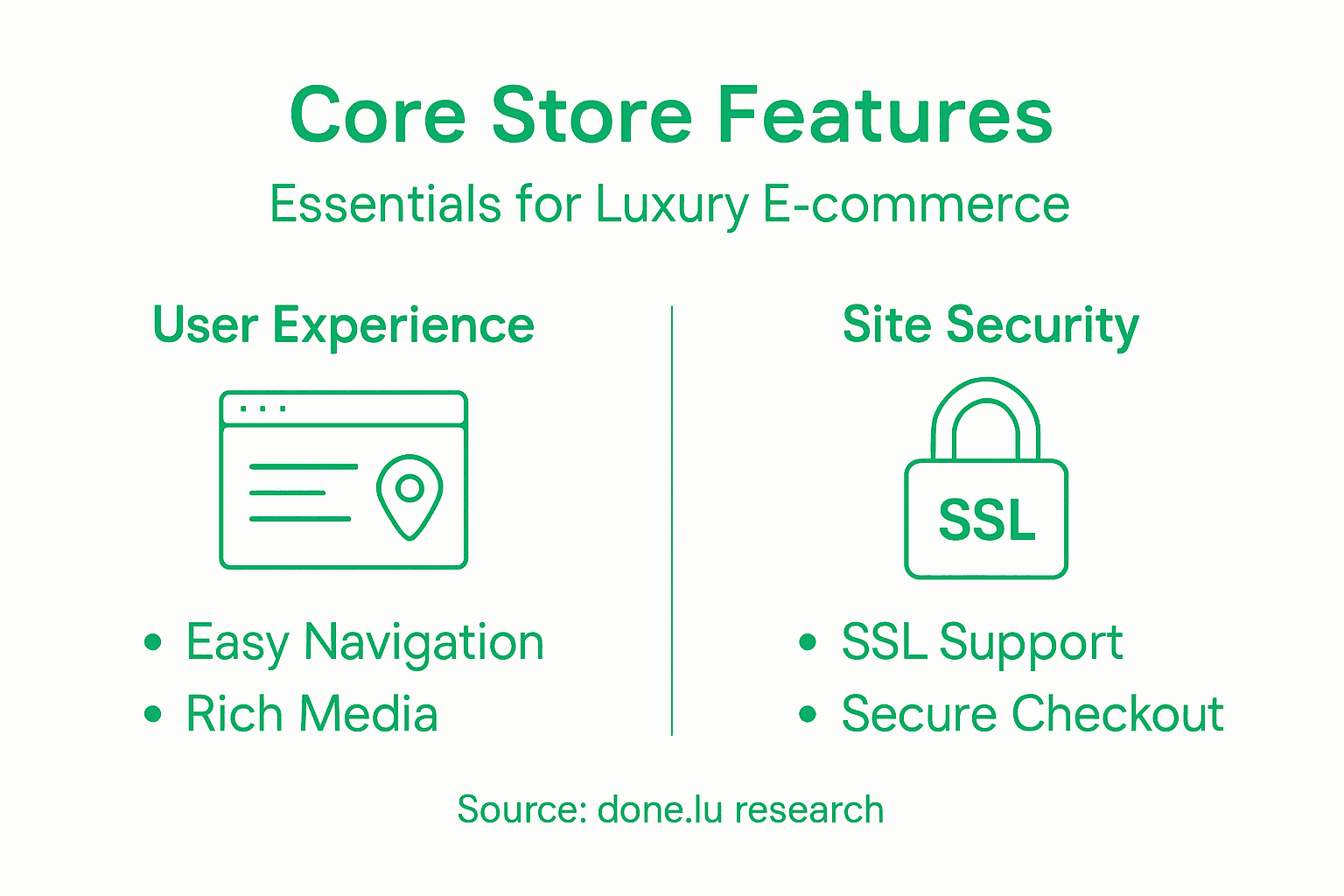
Key features of high-performing online stores include:
- Responsive Design: Seamless performance across all devices
- Advanced Search Functionality: Intuitive product discovery tools
- Personalization Engines: AI-powered recommendations
- Multiple Payment Options: Flexible transaction methods
- Robust Security Protocols: Protecting customer data and transactions
User Experience stands at the core of effective online stores. Brands must create digital environments that are not just visually appealing but also incredibly intuitive and user-friendly. This means developing interfaces that guide customers effortlessly from product discovery to final purchase.
Critical technical considerations for online stores involve:
- Minimizing page load times
- Implementing secure checkout processes
- Developing mobile-first design approaches
- Creating clear navigation pathways
- Integrating comprehensive customer support options
Successful online stores don’t just sell products; they create seamless, engaging digital shopping experiences that anticipate and exceed customer expectations.
Pro tip: Conduct regular user experience audits and A/B testing to continuously optimize your online store’s performance and conversion potential.
Legal, security, and compliance essentials
Navigating the complex landscape of e-commerce requires a comprehensive understanding of legal and regulatory frameworks. Global e-commerce legislation presents multifaceted compliance challenges that demand strategic attention from online retailers. Businesses must develop robust systems to protect consumer rights and maintain digital integrity.
Key legal and security considerations include:
- Data Protection Regulations: Adherence to GDPR and CCPA standards
- Intellectual Property Rights: Protecting digital content and brand assets
- Cybersecurity Protocols: Implementing advanced threat prevention mechanisms
- Consumer Privacy Frameworks: Ensuring transparent data handling practices
- Cross-Border Compliance: Managing international legal requirements
Cybersecurity represents a critical foundation for digital business operations. Online stores must implement comprehensive security strategies that protect sensitive customer information, prevent unauthorized access, and maintain transaction integrity. This involves creating multi-layered defense systems that anticipate and mitigate potential digital threats.
Critical compliance priorities for e-commerce platforms involve:
- Regular security audits and vulnerability assessments
- Implementing end-to-end encryption
- Maintaining transparent privacy policies
- Developing incident response protocols
- Conducting ongoing staff training on security best practices
Effective legal compliance is not just about avoiding penalties, but about building trust and demonstrating commitment to customer protection.
Pro tip: Engage legal and cybersecurity experts to conduct comprehensive compliance reviews at least twice annually to stay ahead of evolving regulatory landscapes.
Costs, risks, and common mistakes
Developing an e-commerce platform involves navigating a complex landscape of financial investments and potential pitfalls. E-commerce development presents strategic challenges that require careful planning and resource allocation. Understanding the potential risks and financial implications is crucial for successful digital retail strategies.
Common financial and operational risks include:
- Initial Development Costs: Significant upfront technology investments
- Platform Scalability Expenses: Ongoing infrastructure maintenance
- Security Implementation: Cybersecurity protection investments
- Compliance Management: Regulatory adherence expenditures
- Technical Skill Recruitment: Hiring specialized digital talent
Budget Overruns represent a critical concern for many e-commerce initiatives. Many businesses underestimate the complexity of digital platform development, leading to unexpected financial challenges. Successful organizations develop comprehensive financial models that account for both visible and hidden costs associated with digital transformation.
Below is a summary of cost and risk factors for e-commerce development:
| Financial Factor | Impact on Business | Risk Mitigation Strategy |
|---|---|---|
| Initial Tech Investment | High upfront spending | Detailed financial planning |
| Scalability Maintenance | Ongoing infrastructure | Regular performance reviews |
| Security Investment | Protects consumer trust | Proactive cybersecurity upgrades |
| Compliance Expenditure | Avoids legal penalties | Frequent compliance audits |
| Digital Talent Recruitment | Enables technical growth | Targeted hiring, staff training |
Most frequent mistakes in e-commerce development involve:
- Inadequate initial market research
- Overlooking mobile user experience
- Neglecting cybersecurity investments
- Poor inventory management systems
- Insufficient customer support infrastructure
E-commerce success demands a holistic approach that balances technological innovation with strategic financial management.
Pro tip: Create a contingency budget of 20-30% above your initial project estimate to manage unexpected development challenges and technological adaptations.
Strategies for sustainable digital growth
Successful e-commerce requires a holistic approach that balances technological innovation with strategic planning. Sustainable digital growth demands comprehensive strategic frameworks that integrate advanced technologies and ecological considerations. Modern digital businesses must create adaptable strategies that drive both economic performance and environmental responsibility.
Key strategies for sustainable digital growth include:
- AI-Powered Personalization: Enhancing customer experience through intelligent recommendations
- Green Technology Integration: Reducing digital carbon footprint
- Mobile Commerce Optimization: Creating seamless cross-device experiences
- Data-Driven Decision Making: Leveraging real-time analytics for strategic insights
- Supply Chain Digital Transformation: Improving operational efficiency
Digital Innovation represents the cornerstone of sustainable e-commerce development. Companies must continuously evolve their technological infrastructure, focusing on scalable solutions that minimize environmental impact while maximizing operational efficiency. This approach requires ongoing investment in cutting-edge technologies and adaptive business models.
Critical components of sustainable digital growth strategy involve:
- Implementing advanced technological infrastructure
- Developing robust data privacy frameworks
- Creating flexible, scalable digital platforms
- Investing in continuous employee digital skills training
- Establishing transparent sustainability metrics
Sustainable digital growth is not just about technological advancement, but about creating meaningful, responsible business ecosystems that balance innovation with environmental consciousness.
Pro tip: Develop a comprehensive digital roadmap that includes quarterly technology audits and sustainability performance assessments to ensure continuous improvement and adaptability.
Elevate Your Luxury Brand with Expert E-Commerce Development
Luxury brands face unique challenges in crafting exclusive yet accessible digital experiences. The article highlights critical pain points such as maintaining brand exclusivity, delivering personalized customer journeys, and integrating advanced security protocols. Concepts like headless e-commerce architectures and hybrid omnichannel strategies reveal how flexibility and seamless online-offline integration unlock digital growth while preserving sophistication.
At Done.lu, we understand the emotional drive behind creating an immersive luxury shopping experience that resonates deeply with discerning customers. Our tailored e-commerce development solutions focus on responsive design, secure payment integration, and customized user experiences to reflect your brand’s unique narrative and craftsmanship. By leveraging growth-driven design and digital marketing expertise, we help luxury retailers avoid common pitfalls such as overlooking mobile optimization or underinvesting in cybersecurity.
Transform your online store into a premium digital boutique that captivates and converts. Discover how our team can partner with you to build scalable, elegant platforms that align with your vision and business goals. Visit our main page at Done.lu to explore our portfolio and request a consultation today.
Boost your luxury brand’s digital presence now with expert guidance designed for lasting sustainable growth.
Looking for a comprehensive partner to elevate your online sales? Visit our web development services page to learn more.

Frequently Asked Questions
What are the critical components of e-commerce development for luxury brands?
E-commerce development for luxury brands includes platform selection, user experience design, payment integration, inventory management, and mobile responsiveness.
How can luxury brands maintain exclusivity while expanding online?
Luxury brands can maintain exclusivity by using owned digital shops, engaging in hybrid omnichannel strategies, and employing cross-border digital channels to connect with a sophisticated audience.
What role does technology play in luxury e-commerce development?
Technology facilitates the creation of customized digital experiences that reflect luxury branding, offering features like advanced search functionality, AI-powered recommendations, and robust security protocols.
How can luxury brands ensure a high-quality online customer experience?
Luxury brands can enhance online customer experiences by investing in high-quality visual content, providing personalized interactions, and ensuring seamless navigation across devices.